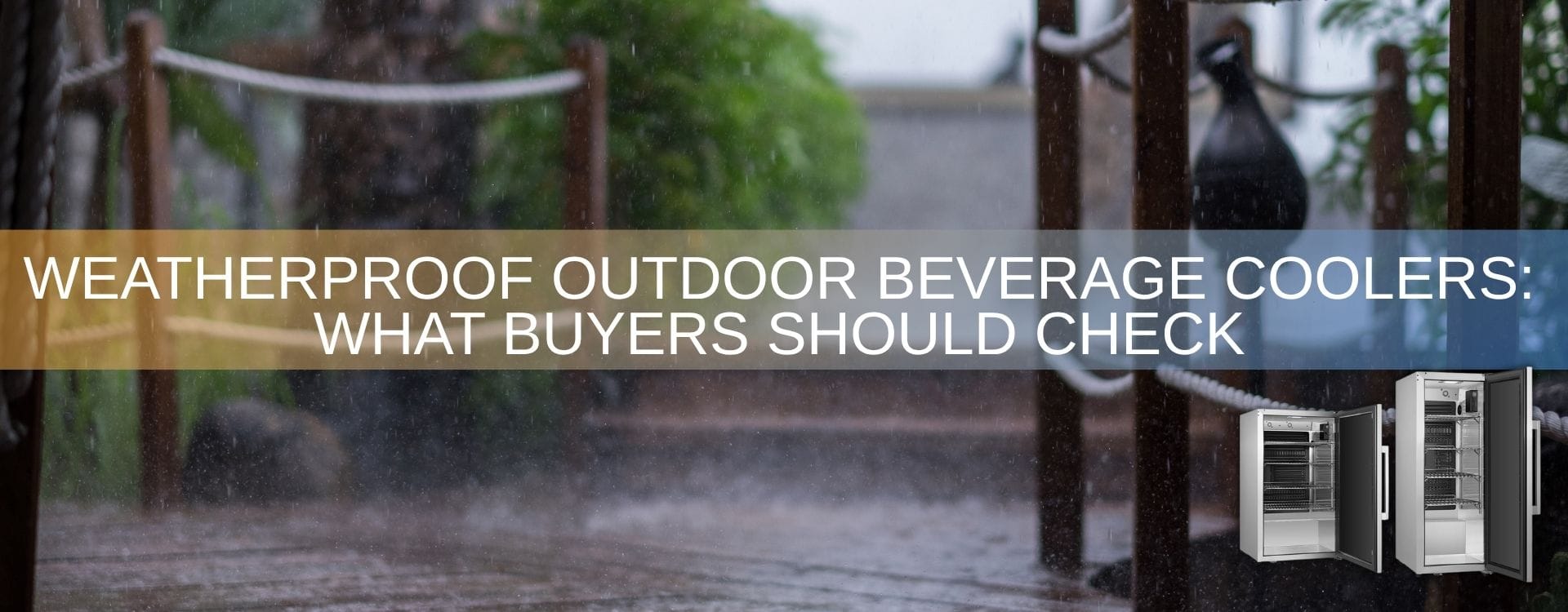
Outdoor beverage coolers are subjected to rain, humidity, and direct sunlight on a daily basis. They also have to cope with dust, temperature fluctuations, and corrosive air. No matter how high the quality of a fridge is in the showroom, a shiny stainless steel body does not necessarily mean it is meant for outdoors.
It’s a matter of looking beyond the surface for buyers. A true “weatherproof” outdoor beverage cooler is thoroughly tested with regard to the entire unit, the door, the electrical components, the vents, the hardware, the cabinet, and the installation site. This guide spells out every component of that check to help consumers make informed comparisons with products.
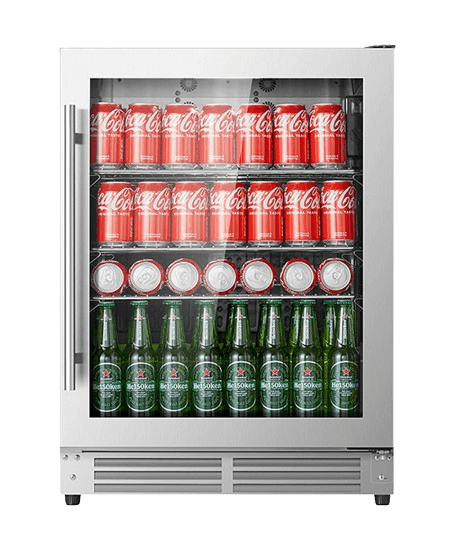
Understand the Weather Conditions the Cooler Must Survive
Rain, Splashing and Moisture Exposure
Water doesn’t fall straight down all the time. The origin of where it actually originates from and where it will accumulate is something a buyer needs to consider. This is because a person standing on a pool deck can experience very different effects from a rainstorm falling from above.
- Consider wind-driven rain and not just vertical rainfall
- Check exposure from pools, sprinklers, outdoor sinks and hoses
- Determine if the cooler sits fully exposed, partly covered or under a roof
- Inspect door joints, control panels, vents and cabinet seams for gaps
- Verify that water will run away and not become stagnant around the cabinet
Weather resistance does not mean waterproof. Most outdoor refrigerators will withstand bad weather conditions but are not designed to withstand flooding or submersion. Always adhere to manufacturer’s recommended exposure guidelines and installation procedures.
Heat, Sunlight and Seasonal Temperature Changes
Sunlight can raise cabinet and door temperatures well beyond the surrounding air. Dark countertops, stone walls and paving reflect extra heat onto the unit throughout the day. Shade reduces this stress and extends appliance life significantly.
- Verify the fridge is rated for local summer heat
- Check if the model can stay outside through cold winters
- Avoid units whose limits sit too close to local extremes
Parts are slowly worn down over months or years by the daily heating and cooling. This repeated stress is felt throughout seals, adhesives, coatings and electronics. Poorly built joints weaken from constant expansion and contraction, so commercial projects need materials built for years of outdoor exposure.
Humidity, Condensation and Coastal Air
Humid air will condense readily on glass doors and metal surfaces, particularly during the night when temperatures are low. Doors open frequently throughout the day, allowing more moisture in. Strong sealing and insulation reduce this condensation problem considerably.
- Inspect more than just the visible front panel
- Remove salt deposits before they damage metal
- Ask how the unit performs after long salt exposure
Pool chemicals, cleaners, grease, and smoke also accelerate corrosion. Units close to pools or grills require more frequent cleaning, and material type should always be tailored to the actual installation environment and not just a general guess.
Examine the Construction of a Weatherproof Outdoor Beverage Cooler
A weather-proof outdoor drink cooler is as durable as its weakest link. Buyers should carefully inspect all the surfaces and joints.
Check the Entire Cabinet, Not Just the Front Door
Certain brands incorporate only stainless steel on the front panel. Even if the hidden panels are not exposed to elements like dust and moisture, they may still be susceptible to the same conditions for several years without anyone realizing that damage has occurred.
- Confirm the sides, rear panel, base and vent grille are protected
- Check whether hidden areas use the same grade of metal
- Welds and folded edges should look consistent and sealed
- Screws, hinges, handles and brackets should resist rust
- Replaceable hardware makes long-term maintenance easier
Evaluate the Door and Sealing System
The door gasket does much of the protective work on any outdoor unit. It needs to be in contact with the frame equally on all sides and without any gaps. If the seal is not tight enough or not even, it allows hot air and moisture to enter, gradually increasing energy costs.
- Misaligned doors can leave small gaps behind
- Self-closing or positive-closing designs improve sealing
- Hinges should stay stable through frequent use
Solid doors usually block sunlight and heat better than glass doors. Glass doors help with product display but need good insulation and proper glazing. Anyone choosing a glass door should also plan carefully for condensation control.
Protect Controls and Electrical Components
Control panels should never sit where rain can collect or pool. Buttons and displays need to handle moisture and heat shifts without failing over time. Recessed or protected controls lower the risk of accidental water damage.
- Power cord openings and wiring routes must stay protected
- Cable entry points should never funnel water inward
- Wiring must meet local rules for outdoor installation
Always confirm the outdoor use claim in writing before purchase. Certification papers should match the exact model and target market being sold. Outdoor use should never quietly cancel the warranty either, so this point deserves a direct question to the beverage cooler manufacturer.
Examine Ventilation Openings and Drainage Design
Vent grilles allow airflow but can also let water inside if placed poorly. Weather protection should never turn into a sealed, overheated box, since airflow and rain protection both matter equally in a good design.
- Vents should allow airflow without becoming rain channels
- Adjustable feet can raise the cabinet above wet flooring
- Flooring should slope away from the unit where possible
- Drainage channels must stay clear of leaves and grease
Use Installation Design to Improve Weather Protection
Place the Outdoor Beverage Cooler in a Sheltered Position
Overhead protection matters more than most buyers expect at first. A shaded spot away from grills and heaters also helps the unit last much longer, since heat, smoke and sparks can damage exterior finishes over time.
- Install under a roof, canopy or weather resistant enclosure
- Extend the cover far enough to reduce wind driven rain
- Keep the unit away from strong afternoon sun and dark stone
- Follow minimum clearance advice from both appliance makers
Prepare the Floor and Surrounding Cabinetry
A stable, level base is necessary for the entire unit (s) to remain stable over time, and should never be placed inside a sealed, moisture trapping cavity. Access for maintenance is also an important factor as technicians must be able to reach back panels, wiring and drains without having to disassemble the entire home kitchen.
- The fridge should sit on a level, water-resistant surface
- Use weather-resistant cabinetry materials around the unit
- Technicians need access to rear panels, wiring, and drains
- The appliance should come out without dismantling the whole kitchen
Plan Safe Outdoor Electrical Connections
Power supply choice matters for safety and long-term reliability. Cords should never get pinched behind the appliance and service access should not weaken the weather protection built into the cabinet design.
- Use an outlet rated for damp or wet locations
- Have a qualified electrician handle the wiring work
- Position connections above areas where water may collect
- Avoid extension cords unless specifically approved
Avoid Common Installation Mistakes
Choosing the wrong product type causes most outdoor failures and sealing a unit too tightly creates its own set of problems. A covered patio does not automatically make an indoor model safe to use and cabinetry should never block air intake or exhaust paths.
- Indoor fridges often lack outdoor electrical and moisture protection
- Ventilation instructions apply even with added weather protection
- Pressure washing can force water into seams and controls
- Use mild cleaning methods the manufacturer recommends
Verify Weatherproof Performance Before Choosing a Supplier
Ask for Evidence Behind the Outdoor Rated Claim
Technical specifications reveal the truth behind marketing claims. Importers should also check the requirements of their end-market before making a big order.
- Confirm the stated ambient operating range
- Verify installation clearance and weather protection requirements
- Ask if electrical and safety certificates cover outdoor use
- Check if corrosion, water exposure and outdoor use are covered
- Review exclusions tied to flooding, rain and salt air
Evaluate Weather Resistance Testing
Testing methods differ a lot between suppliers, so it helps to ask specific questions rather than accept a general outdoor rated label. Hardware, fasteners and hidden panels should also be evaluated, not only the visible finish.
- Ask whether the full appliance or single parts get tested
- Salt spray testing may apply for coastal installations
- Outdoor units should be tested across their stated ambient range
- B2B buyers can request test reports before bulk orders
Inspect Samples Before Bulk Purchasing
A hands on inspection reveals details specs cannot show and it should always happen before committing to a large order. Recording every observation helps compare multiple suppliers fairly before approving mass production.
- Examine seams, gasket contact, hardware and vent grilles
- Check whether water could collect around controls or panel joints
- Observe how water moves across the top, door and vents
- Test the sample in cabinetry similar to the final project
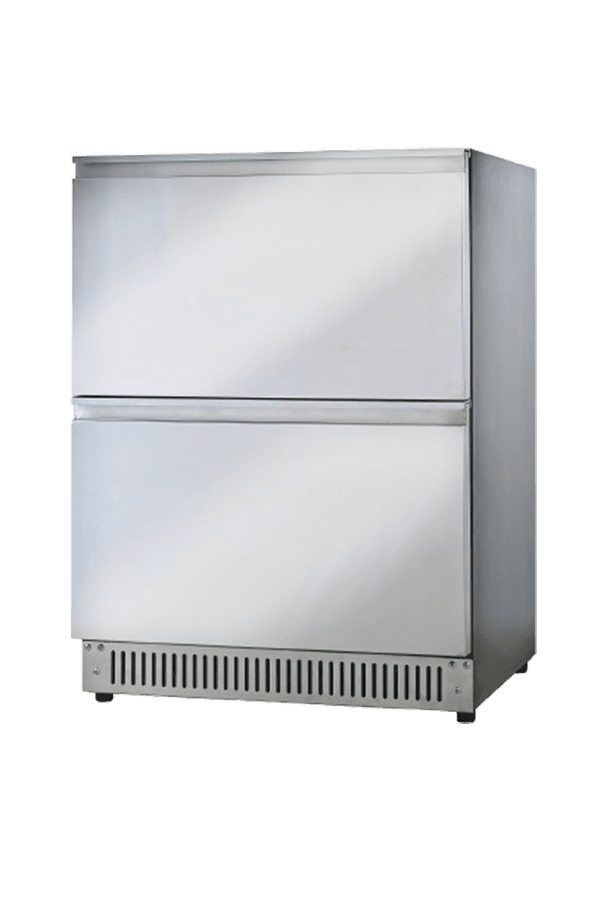
SUNNAI Outdoor Refrigeration for Weather Exposed Projects
SUNNAI focuses on outdoor refrigeration built specifically for real weather exposure. It’s perfect for outdoor kitchens, hotel terraces, poolside bars, rooftop bars and upscale residential projects. They are made to be used outdoors, not modified from units that were originally built for indoor use.
Distributors and project buyers can work directly with SUNNAI on specification and product development. Cabinet materials, dimensions, ventilation, controls, door types and market compliance can all be reviewed together before an order is placed. OEM/ODM cooperation helps adapt products for different climates, installation formats and sales channels.
SUNNAI pairs German engineering supervision with large-scale manufacturing. Its 20,000 square meter facility includes a lab, automation, and a certification system. Annual production capacity supports international distribution and project-based buying.
Conclusion
An outdoor beverage cooler should be able to deal with rain and a few hot afternoons. Purchasers should thoroughly inspect water entry points, corrosion resistance, and temperature exposure before buying. Sealing, ventilation, electrical protection, and drainage are as important as the outermost finish.
It is important that even a well-constructed outdoor fridge can be effective if it is properly sheltered, aired and properly maintained. Reliable electrical installation for the unit and the users who use it every day.
It is always important for buyers to request actual technical documentation and independent test data before placing a B2B order. Stainless steel looks and vague outdoor-ready marketing claims are simply not enough proof on their own.
FAQ
Can an outside refrigerator be subjected to direct rain?
The majority of units with an outdoor rating are designed to withstand splashing and light rain but are not completely waterproof. Even strong direct rainfall over a prolonged period can cause damage. Long-term reliability: Always recommended to have overhead cover.
Does Stainless steel make an exterior refrigeration unit rust-free?
Stainless steel is highly resistant to rust, but the grade of stainless steel and the coverage play a significant part. Lower grades or hidden untreated panels can still corrode. Buyers should check the grade used on every surface.
What kind of stainless steel is suitable for marine outdoor refrigeration?
Marine grade stainless steel is more resistant to salty coastal air than regular grades. Coastal projects should confirm the grade used on hidden panels too.
Can an outdoor beverage cooler stay outside during winter? This depends on the unit’s rated ambient temperature range. Some can withstand freezing temperatures, and others must be brought into an interior building. Please consult the manufacturer’s low temperature limit first.
What to do to keep an outdoor refrigerator away from the sun?
Structures providing shade, as well as overhanging or canopied areas, have an effective shading effect on direct sun. The further away it is from reflective walls or dark paving, the better it will help! Good airflow around any shade structure still needs to be maintained.