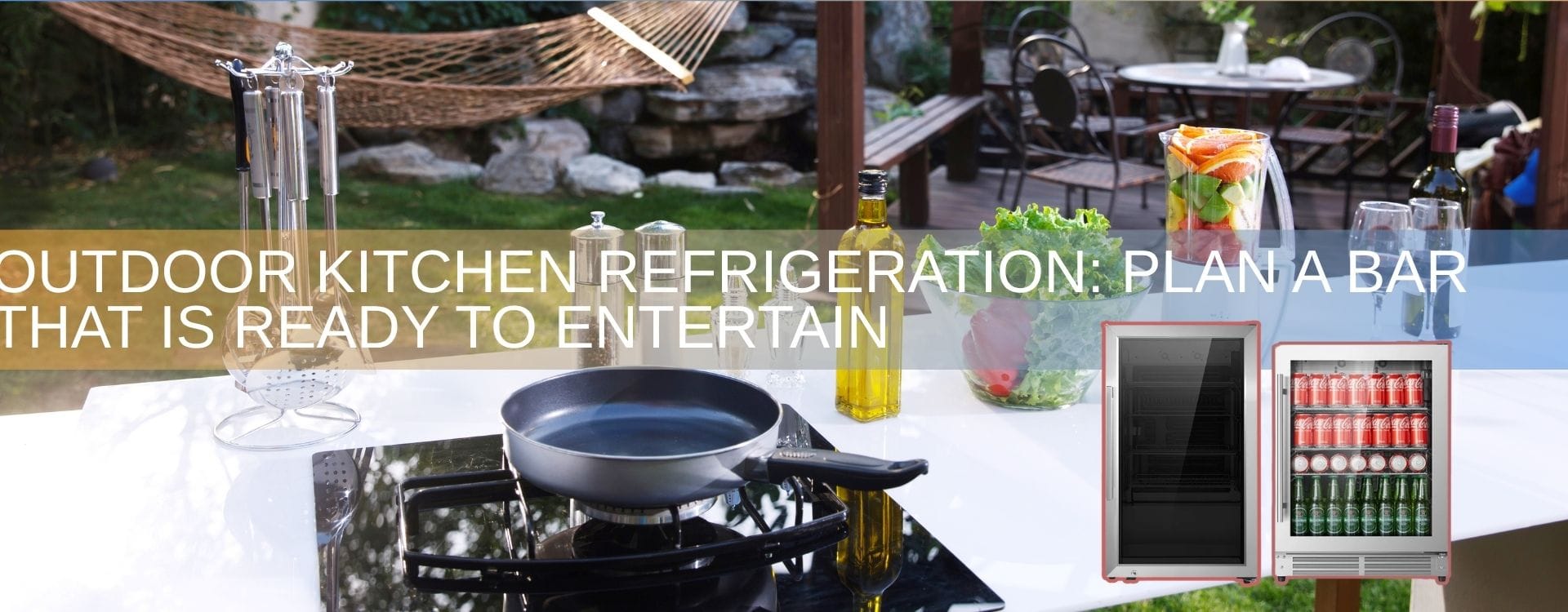
There is more to your outdoor bar than counter space, stools, and string lights overhead. These components create the appearance of an inviting atmosphere but are unable to transform it into one that functions properly. What distinguishes a functioning bar from a simply aesthetically pleasing bar that may look great in a photograph is the refrigeration system, which is typically less visible.
Refrigeration for storing chilled items ensures that the event goes as smoothly as possible. Your guests have easy access to drinks when they’re readily available, freeing up the host from having to make several treks through sliding doors for ice or beer to replenish what has been consumed.
When you determine the demand for a bar is high enough to warrant a system, you can then begin planning which units are suitable for your home, so first decide what your outdoor bar must hold.
What Your Outdoor Drink Station Needs to Serve
Before investing in a refrigeration system, consider your projected outdoor bar usage.
Build the Beverage Menu Before Choosing Equipment
Buying refrigeration units prior to deciding on what is going into them often results in poorly executed outdoor bar plans. Start your menu plan first rather than making purchasing the appliance first.
Typical home bar items include a handful of items falling into a few main categories:
- Beer, soft drinks, sparkling water, packaged juices, and canned beverages
- Specialty ingredients such as wine, champagne, cocktail mixers, and any specialty products that would serve as excellent additions.
Once the desired beverages have been identified, determine just how much you’ll want on hand in advance.
Estimate Capacity for Everyday Use and Larger Gatherings
Daily use of your outdoor bar and larger, more frequent gatherings should guide the size selection process for refrigerating units. Choosing a system that’s too large because of an imagined scenario for one day out of the year will lead to wasted energy and an unnecessary investment.
Plan the system to cater to household use, then take a count of guests and plan for an adequate quantity of drinks per guest. Allow for the addition of ice, mixers, and any other essential items you may anticipate needing to have at your home due to large parties or for last-minute additions.
| Planning Scenario | Sizing Approach | Overflow Strategy |
| Everyday household use | Size to weekly consumption, not party peaks | Not usually needed |
| Occasional gatherings (10-20 guests) | Add moderate buffer capacity | Insulated tub for ice and backup cans |
| Frequent entertaining or hospitality use | Consider dual-zone or multiple units | Dedicated ice bin plus secondary cooler |
Rather than sizing the main fridge around the biggest possible party, plan an overflow strategy instead. Insulated tubs or temporary ice bins absorb the surge during big events, while the outdoor beverage refrigerator stays organized for the products guests reach for most.
Choose the Right Service Style
How guests actually get their drinks shapes the rest of the design.
- Self-service drink station – places popular beverages where guests can see and reach them without help, and keeps that access separate from wherever food prep is happening so the two don’t create a bottleneck.
- Host-operated cocktail bar – keeps refrigerated ingredients directly below or beside the mixing area, with tools and bottles arranged in the order they get used during a pour.
- Family-friendly entertainment station – needs a clear split between alcoholic and non-alcoholic drinks, with kids’ beverages in an obviously separate, easily identified section.
Design the Outdoor Bar Around an Efficient Cold-Storage Workflow
Once you know exactly how much stuff your outdoor bar will need to store, you need to organize your space in a way that makes drinking, mixing, and cleaning seamless.
Divide the Bar into Three Functional Zones
A well-designed outdoor bar is separated into three zones that work together, rather than compete over counter space:
- Cold storage zone is where your outdoor beverage fridge, ice bin, and refrigerated ingredients go, keeping your most used items nearest to the serving area.
- Prep & pour zone is the place to open, mix, and garnish drinks and store essential tools without bumping into the fridge door.
- The cleanup & waste zone is where your sink, drains, towels, and trash bins can fit. It should completely remove dirty dishes and empty bottles from the serving area.
Position the Outdoor Beverage Refrigerator for Faster Service
Your outdoor fridge location may be one of the most important deciding factors in how quickly you can serve cocktails. It should be at your most utilized drink station-it might mean a seamless look via built-in installation or an accessible under-counter model that delivers your coldest drinks close at hand.
Don’t forget to make sure your beverage fridge door swings accommodate your traffic patterns on your deck or patio and will avoid creating bottlenecks when your guests try to grab a refreshing beverage.
Match the Refrigerator Configuration to the Drink Inventory
Not every outdoor bar needs the same type of unit.
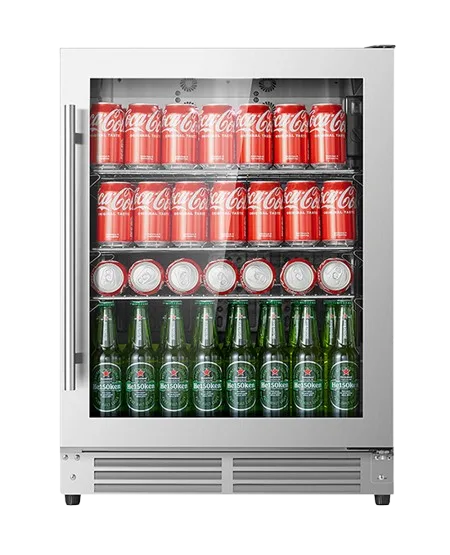
- Glass-door beverage center – keeps drinks visible without repeated door openings, which also looks great in both residential backyards and hospitality settings. Sunnai’s outdoor beverage refrigerators are commonly built in glass-door configurations for exactly this reason.
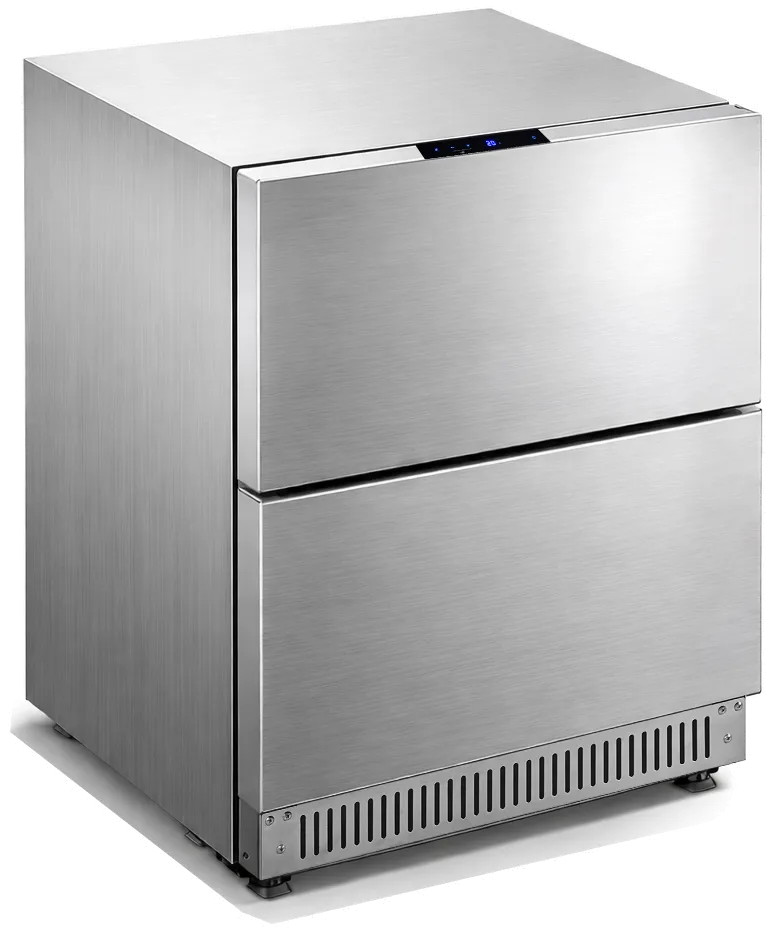
- Solid-door or drawer refrigerator – conceals ingredients and backup stock, which works better where visual integration matters more than product display. The Sunnai stainless steel double-drawer outdoor fridge is a common fit for this use case.
- Multiple-unit or dual-zone layouts – separate wine from colder beer and soft drinks, and make sense for bars serving a broad menu or hosting frequent events. Pairing an outdoor cooler with a dedicated wine cooler covers this scenario well.
Configuration is only half the equation. Equipment also has to actually survive outside, which is where a lot of buyers get caught off guard.
Select Outdoor Refrigeration That Can Handle Real Entertaining Conditions
Layout matters, but the equipment itself also needs to perform reliably in outdoor conditions throughout the year.
Confirm That the Unit Is Designed for Outdoor Placement
It is incredibly common to see stainless steel finishes and automatically think they’re suited for the outdoors, which can lead to some very expensive headaches. A stainless exterior has absolutely no bearing on your cabinetry insulation, electrical protection, seal, or cooling system that may be inside. Do your research on the whole unit.
Pay particular attention to water resistance:
- Door seals, control panel gaskets, and all exterior seams are important.
- Ask if anti-condensation features were specified (essential if the cabinet will be poolside or on a damp patio).
- Ensure your unit has an official waterproof certification and not just marketing language.
Sunnai’s outdoor-rated beverage coolers are built with an IPX4 waterproof rating and UV-resistant materials specifically to handle this kind of exposure, which matters more as outdoor kitchens move into humid and coastal climates.
Compare Cooling Performance Under Heavy Use
Entertaining conditions are harder on a refrigerator than everyday household use, so equipment needs to be evaluated against that reality rather than a quiet indoor showroom.
Confirm the refrigeration system stays stable during hot-weather operation. Some units perform fine at 70 degrees and struggle badly once ambient temperatures climb into the 90s, which is exactly when a backyard party is most likely to happen.
Temperature recovery matters just as much. Party use means far more frequent door openings than normal storage, and a fridge that recovers quickly keeps the next round of drinks properly cold instead of lukewarm.
Ventilation and installation format round this out. Front-vented equipment is built for proper built-in installations, but only if the manufacturer’s required airflow and service clearances actually get preserved during the build.
Choosing an Outdoor Refrigeration Manufacturer for B2B Projects
Appliance brands, distributors, outdoor-kitchen suppliers, and hospitality buyers evaluating a beverage cooler manufacturer face a different set of decisions than a single homeowner. This isn’t a niche corner of the market either.
In a 2025 ICFA survey, 59% of households intend to buy new outdoor furnishings and accessories this year, compared with 76% for Millennials. That kind of demand growth explains why sourcing regularity is just as crucial as product aesthetics.
First, narrow down your product to what you actually need:
- Focus your product on exactly what you need: Backyard beverage coolers are a natural fit for outdoor kitchens, roof deck bars, poolside serveries, and hotel decks.
- Wine coolers make sense only when wine is core to beverage operations, not a fallback option.
- Customization and compatibility are key. Factor in dimensions, installation type, door configurations, shelving, finishes, temperature settings, as well as any private-label considerations.
- OEM/ODM services are especially relevant if you are an appliance brand, distributor, or hospitality supplier stocking a comprehensive product line, rather than just buying one unit.
This is where Sunnai fits as a scalable outdoor refrigeration partner. Its outdoor beverage cooler range covers glass-door, stainless steel solid-door, and drawer configurations, with IPX4-rated waterproofing, anti-condensation design, and UV-resistant materials built specifically for outdoor entertaining conditions.
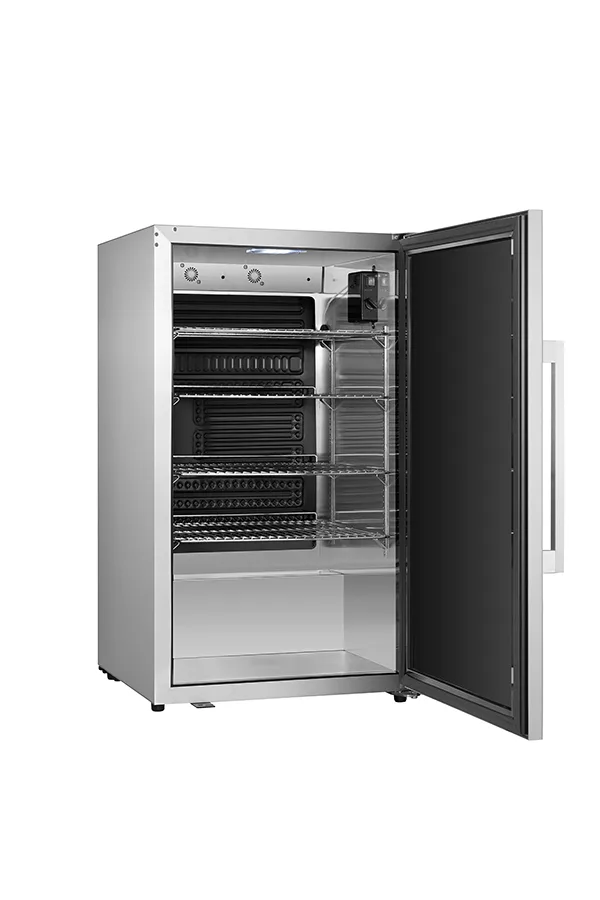
The lineup includes both a built-in undercounter beverage fridge suited to compact bar cabinetry, and a freestanding stainless steel outdoor beverage fridge for projects needing a standalone unit.
Beyond the outdoor line, Sunnai also manufactures dedicated wine cooler and general beverage cooler product families, which matters for buyers building a broader drink-storage lineup rather than a single SKU.
| B2B Buyer Priority | What to Evaluate |
| Product fit | Category match to project type (residential vs. hospitality) |
| Certification | CE, CB, GS, and IPX-rated waterproofing |
| Customization | OEM/ODM, private label, dimensions, finishes |
| Manufacturing scale | Production capacity, lab testing, lead times |
Sunnai operates 20,000 sqm production facilities, with an annual production of over 150,000 sets, backed by internal R&D centers, international certifications, and automatic production lines.
And it is precisely that scope of work and the laboratory facilities that B2B customers look for in order to assess any company for long-term supply rather than just a simple order. Full OEM and ODM support is outlined on Sunnai’s OEM & ODM services page.
Complete the Drink Station for Safe and Convenient Entertaining
With refrigeration in place, a few supporting details help turn the bar into a space that’s both practical and enjoyable to use.
Plan Electrical, Plumbing, and Service Access
Outdoor refrigeration needs properly protected outdoor outlets and circuits that meet local code, not a temporary extension cord run from the kitchen. That shortcut works for one party and becomes a liability for everyone after it.
Add the Accessories That Improve Drink Service
Some upgrades make life easier from day to day:
- Shaker, ice bin, bottle opener, cutting board, and garnish caddies for cocktails
- Glassware storage, protected or inverted
- A dry storage area for bar tools, coasters, straws, and napkins
- Ambient lighting at a low level for general visibility, without glare from a glass fridge door, plus task lighting for prep surfaces
Wet preparation should be well-separated from electrical controls to be sure of a safety-first system. Accessories make a bar a nice thing to use. Upkeep is what keeps a bar nice to use for years to come.
Make the Bar Easier to Maintain Throughout the Year
A cleaning routine keeps the whole system running well. Clean up spills immediately, scrub shelves, seals, and handles, and keep ventilation grates clear of obstructions that would restrict airflow and overwork the compressor.
Build the Bar Around the Way You Entertain
The real secret to a successful outdoor drink station isn’t in how it looks; it’s in the functional need for it. And the need begins with the menu, not design: First, define the menu. Second, figure out capacity.
Next, find actual outdoor-rated refrigeration, capable of handling outdoor conditions for years. And finally, identify the electrical utilities and ongoing maintenance practices required. For the appliance brand, the distributor, the contractor, or hospitality supplier, it looks a bit different still.
If you’re sourcing outdoor beverage refrigeration for a project, brand line, or hospitality build, Sunnai’s team can walk through configuration, certification, and OEM options directly. Learn more about the company or reach out through Contact Sunnai to discuss your project requirements.
FAQ
Can an indoor mini fridge be used outside under a covered patio?
No. Indoor models aren’t sealed with anti-condensation technologies or wiring protection to account for fluctuations in temperature and humidity – even with a cover. Outdoor-rated refrigerators are designed specifically to manage this kind of exposure.
How large should an outdoor beverage refrigerator be for entertaining?
Base your primary outdoor refrigeration unit size on a typical week of home use, not the capacity to handle your largest party size. If entertaining in larger groups is routine, rely on insulated tubs and temporary ice bins during parties rather than attempting to account for peak attendance.
Is a glass-door or solid-door refrigerator better for an outdoor bar?
If serving in a self-serve format, glass doors are beneficial for viewing options and limiting door opening, and allow back stock to be placed elsewhere. Solid door models offer cleaner integration in bars, and keep supplies hidden while making space available for such purposes.
What is the difference between built-in and freestanding outdoor refrigeration?
Built-in refrigerators are cabinetry flush with frontal venting, but must be positioned with clearance specific to manufacturer’s guidelines. Freestanding models are vented from the sides/back, and require no custom cabinetry.
How can I protect an outdoor beverage fridge from rain, heat, and sunlight?
Minimize the sun exposure on the unit, keep it clear of grills, and ensure the unit is “rated for outdoor use” (usually an IPX rating of 4 or higher for moisture). Regularly cleaning your seals and vents will also assist your appliance in operating efficiently under varied conditions.