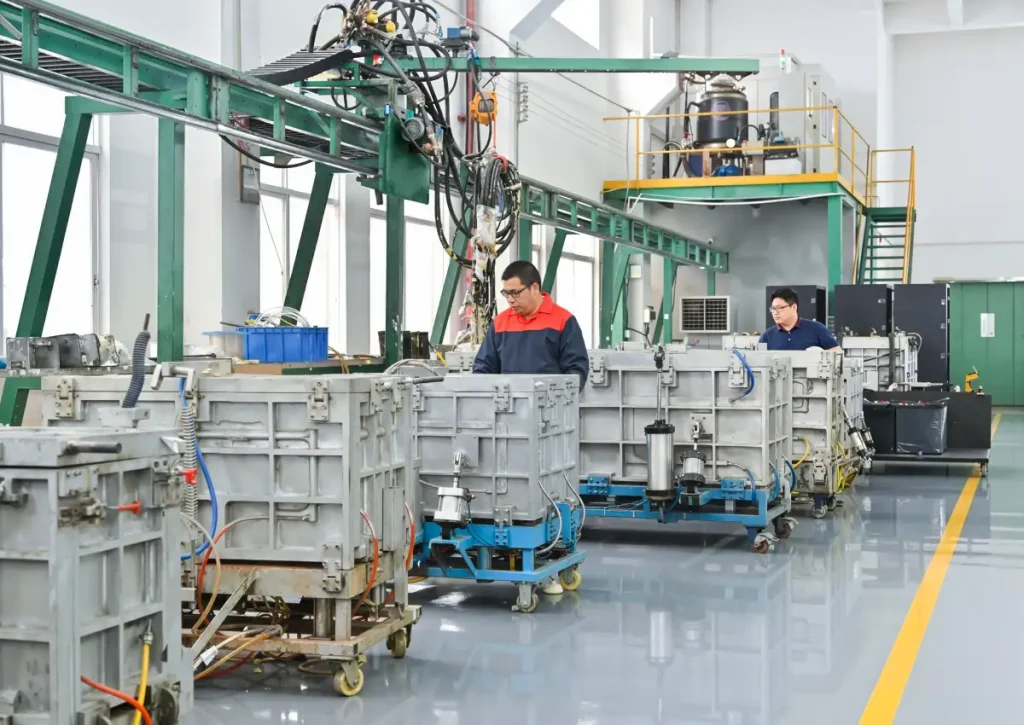
Foaming is carried out for a full 30 minutes to ensure uniform insulation and long-term thermal stability. Many factories shorten this step. After foaming, dry ice cleaning is used to remove residues more thoroughly, improving internal cleanliness and long-term reliability.
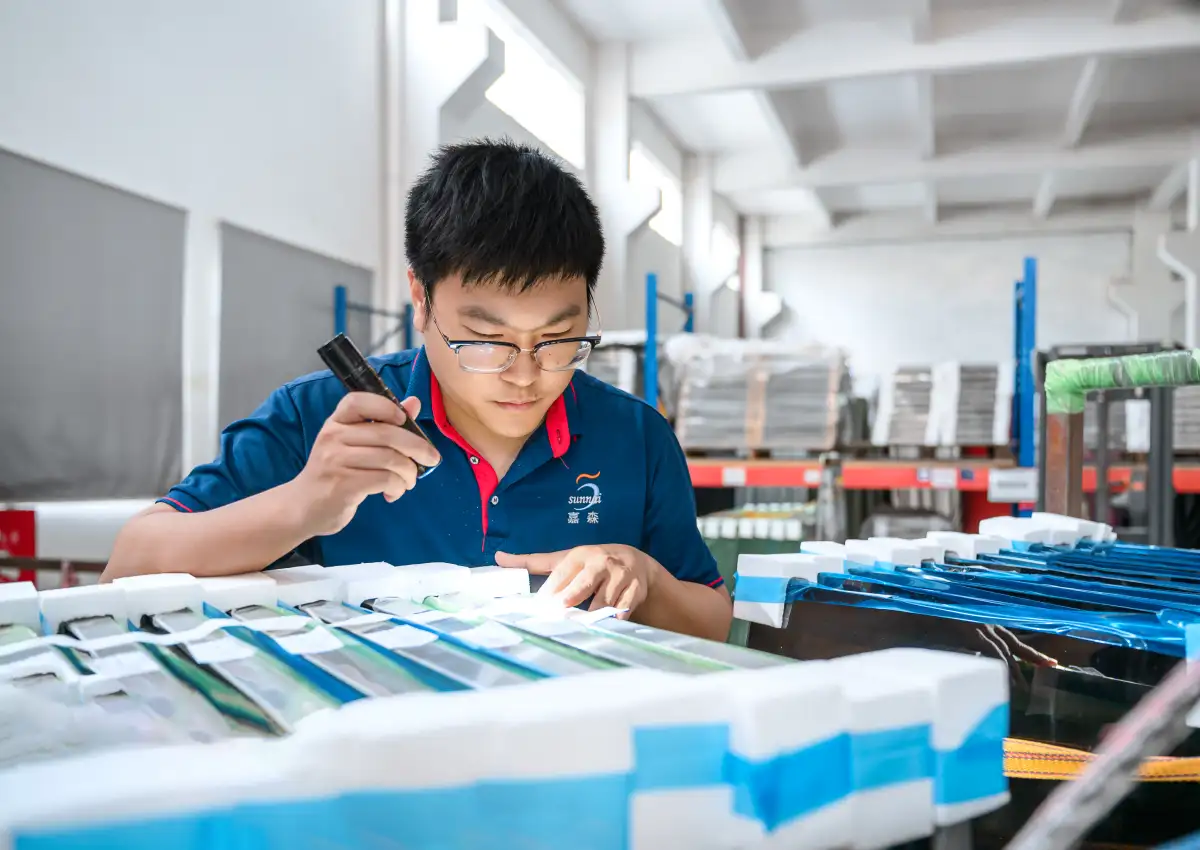
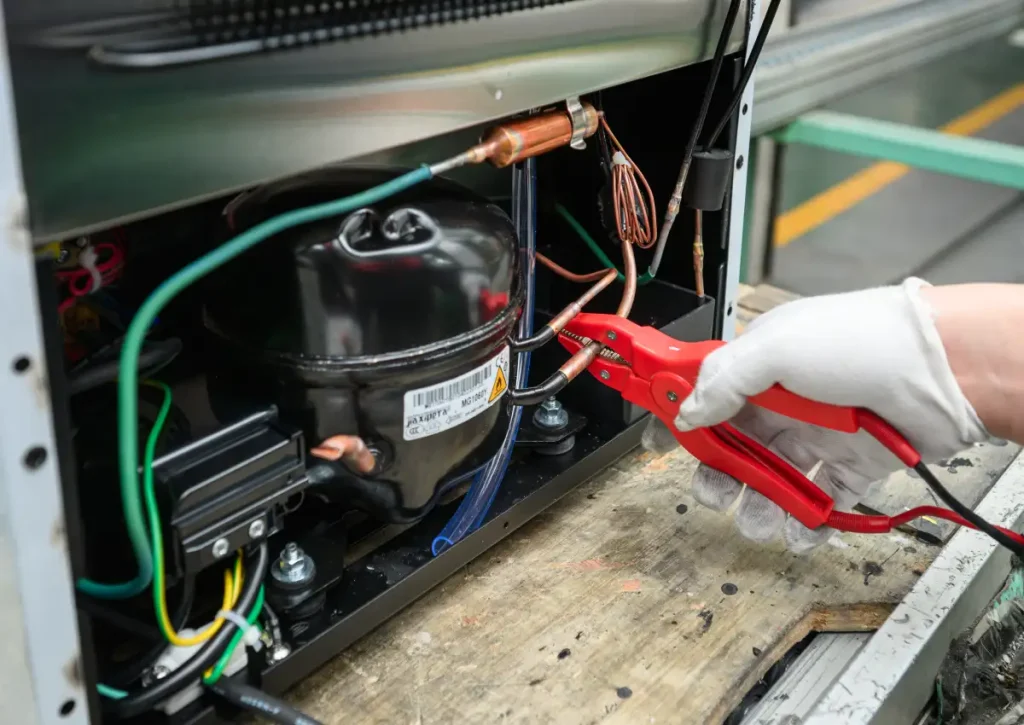
Leak detection is performed three times at different stages of production. This layered approach reduces the risk of hidden refrigerant loss and ensures that potential issues are identified early, not after installation or during long-term operation in the field.
Vacuuming is fully automated and precisely calculated for each unit, with a minimum cycle of 30 minutes. During refrigerant charging, the system verifies whether vacuum conditions were sufficient and continues vacuuming if needed, eliminating guesswork common in manual processes.
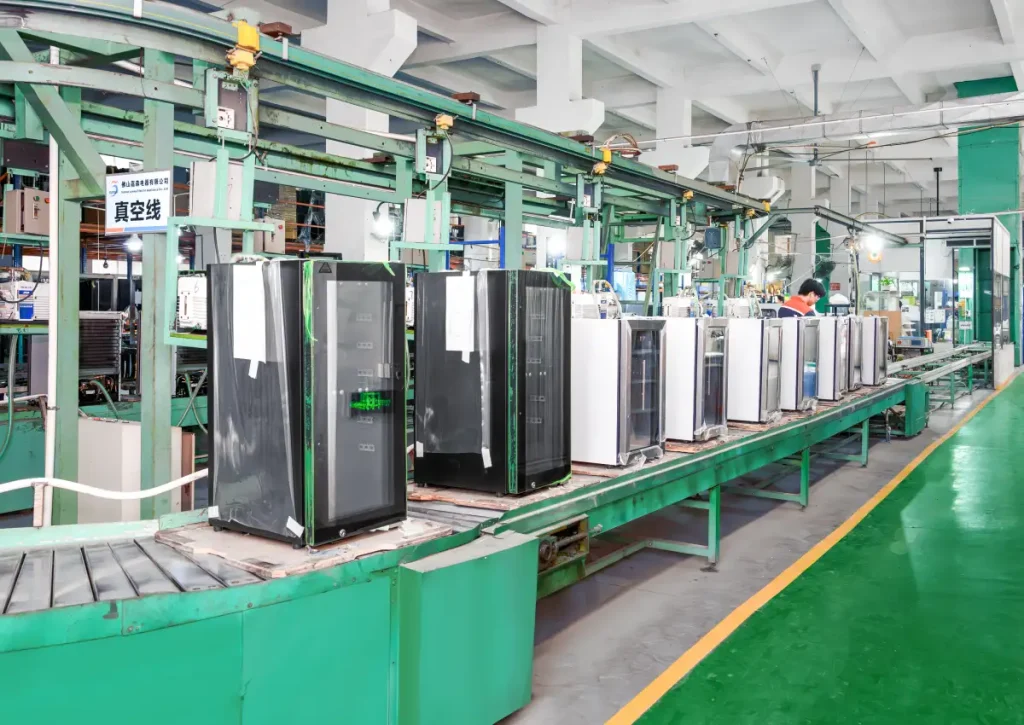
Each unit undergoes testing in a dedicated inspection room, covering high pressure, low pressure, and leak performance. Refrigerant loss is measured with a precision of up to 0.1 g per year, ensuring compliance with demanding international standards.
Products are automatically transferred to the aging test floor, avoiding manual lifting that can cause scratches or deformation. Each unit is powered on at 5°C, then shut down, and monitored for 8–10 hours to verify stability under real operating conditions.
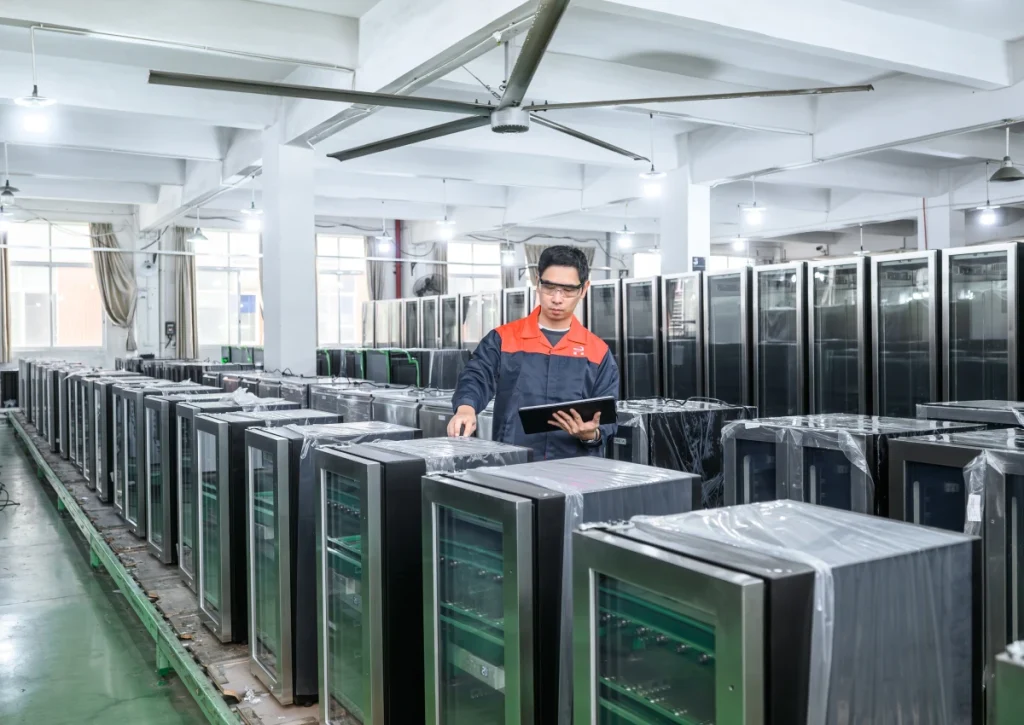
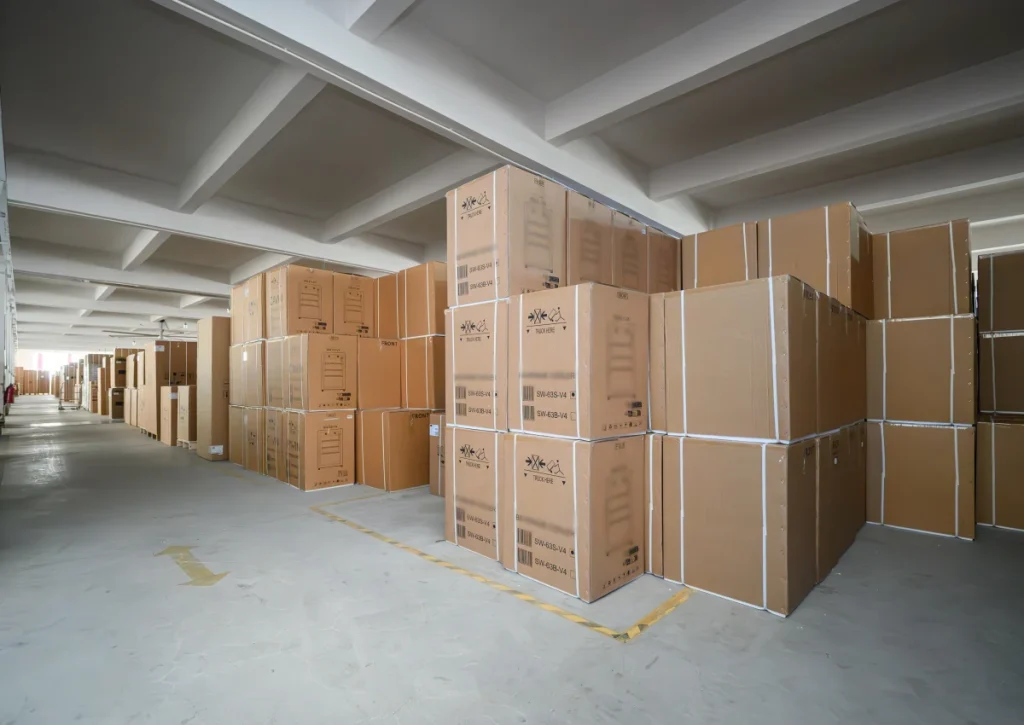
During packaging, vacuum suction equipment lifts each unit without manual handling. Foam protection is positioned first, followed by precise placement of the product, minimizing cosmetic damage and ensuring consistent packaging quality for long-distance transportation.