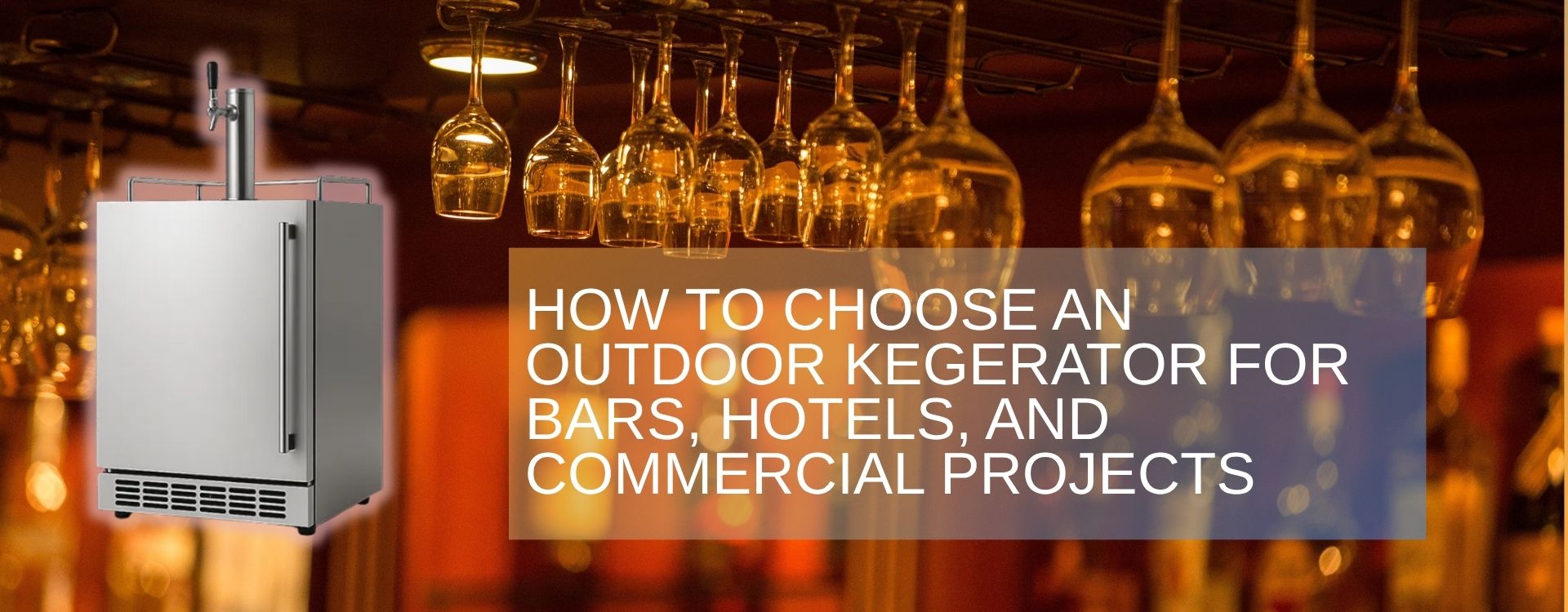
Introduction: An Outdoor Kegerator Is More Than a Beer Refrigerator
The fastest way to ruin an outdoor bar isn’t bad cocktails. It’s warm draft beer, foam city pours, and staff sprinting back inside every three minutes because the only cold storage is buried in the main kitchen.
That’s why outdoor kegerators show up in real projects—restaurant patios, hotel terraces, resort pool bars, rooftop lounges, event decks. Not for “weekend vibes.” For throughput.
Yes, a kegerator is a refrigerated cabinet that keeps a keg cold while supporting draft dispensing. But in commercial work, the buying question isn’t “how many taps?” It’s: Does this unit actually fit the beverage plan, the install conditions, and the service volume—without becoming a maintenance hobby?
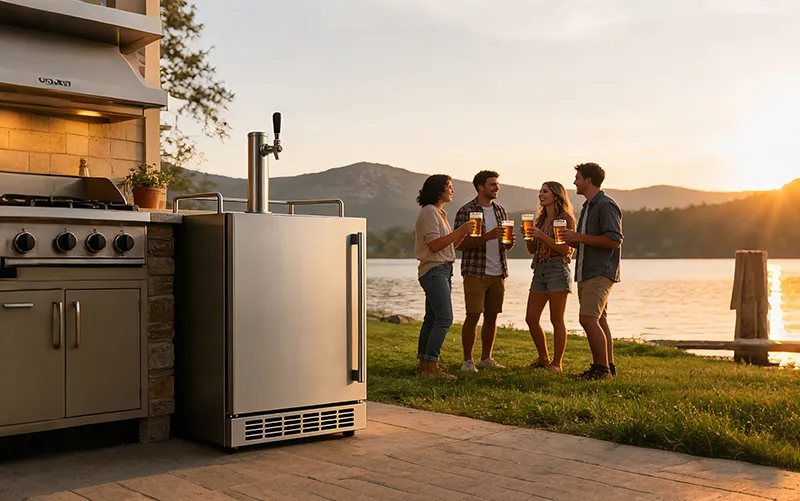
1. Start With the Beverage Program and the Keg Size You Need
1.1 What Size Keg Fits in a Kegerator?
People love saying “full-size keg” like it’s universal. It isn’t. In the U.S., the common “half barrel” is 15.5 gallons, and you’ll also see quarter barrels (7.75 gal) and sixth barrels (5.16 gal) all the time.
Here’s the part procurement teams miss: interior clearance beats marketing labels. Coupler height, CO₂ cylinder placement (inside vs outside), compressor hump, and shelf rails can turn a “fits a half barrel” claim into a bad day. So confirm the keg format your distributors actually deliver before you freeze the spec. (And if you’re running imports, confirm the keg valve/coupler style too—more on that in a minute.)
1.2 Match Tap Capacity to the Bar’s Service Model
One tap is fine when the program is honest about it: one flagship draft, a small terrace bar, a VIP lounge that sells steady but not frantic.
Two+ taps make sense when you’re rotating craft, splitting beer + hard seltzer, or doing “one light, one IPA, one seasonal” like every mid-size patio in America.
And think about backup kegs. Peak service doesn’t care that your storeroom is upstairs, across the ballroom, through two fire doors.
1.3 Plan the Entire Draft System, Not Just the Refrigerator
A working draft system is a chain: keg + coupler + gas + regulator + lines + tower/faucet + drip tray. Miss one link and you’ll be pouring foam and excuses.
Couplers matter because the keg valve dictates what fits—North America commonly uses D-system, while many European imports use other systems (S, etc.). You don’t “pick” a coupler based on beer style; you match the keg hardware.
Gas setup matters too. CO₂ is standard for most beers, but mixed gas/beer gas shows up in stout service and specialty programs. If your concept might change, don’t buy yourself into a corner with a one-trick configuration.
2. What Makes a Kegerator Suitable for Outdoor Hospitality Use?
2.1 Evaluate Construction for Outdoor and High-Use Environments
Outdoor hospitality kills “indoor-only” builds. Salt air, pool chemicals, greasy hands, standing water from mopping, sunscreen—pick your poison.
Material choice isn’t cosmetic. 304 stainless is used because it’s easier to keep clean and resists corrosion better than cheaper constructions, which is exactly why you see it positioned for outdoor refrigeration builds.
And don’t get hypnotized by the word “outdoor.” If a unit doesn’t state an IP rating, don’t pretend it’s fine in driving rain. Put it under cover, detail the surround correctly, and keep water where it belongs—away from electrics.
2.2 Check Cooling Performance Against the Actual Installation Climate
Draft beer problems are usually temperature problems wearing a foam mustache. A common target is around 36–38°F for dispensing and storage.
Now compare that goal to the real site: direct sun on a stainless face, hot air trapped inside millwork, a grill three feet away, doors opening nonstop during a pool rush. Manufacturer ambient ratings exist for a reason—use them, don’t guess.
For example, SUNNAI’s SY-series outdoor units list 16–38°C ambient operating conditions on multiple models. If your install lives outside that, design changes beat wishful thinking.
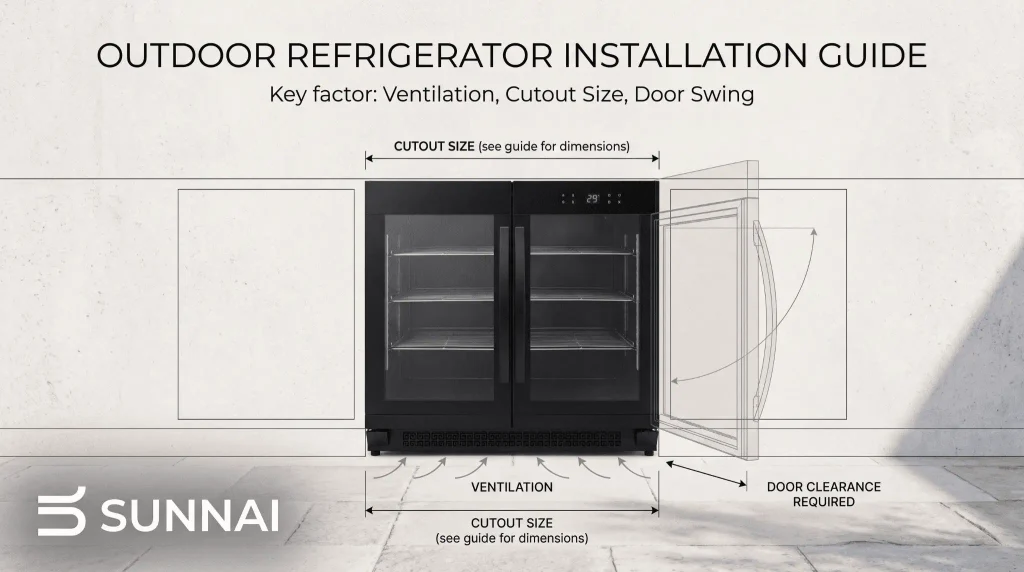
2.3 Installation, Ventilation, and Workflow Matter
Most “kegerator failures” I see aren’t compressor failures. They’re cabinetry failures.
You need to lock down: footprint, door swing, tower height clearance, service clearance for keg swaps, and—big one—ventilation path. Units built for built-in installs typically call out front ventilation (and yes, that changes your millwork).
Then place it like you actually run a bar: keg changes shouldn’t block the main customer lane, and staff shouldn’t deadlift a half barrel while wedged between a host stand and a planter.
3. Using an Outdoor Kegerator in Real Hospitality Projects
3.1 Outdoor Bars and Restaurant Patios
A patio kegerator earns its keep when it becomes a draft point close to the action—not a novelty tucked in a corner.
Done right, it cuts trips to indoor cold storage, keeps pours consistent, and lets you staff the patio without treating the kitchen walk-in like a revolving door.
3.2 Hotels, Resorts, and Event Venues
Hotels love flexible hardware because concepts change. Pool bar in summer, private events in shoulder season, brand takeover weekend, then back to “quiet luxury.”
So you want gear that’s cleanable, serviceable, and standardized across properties. If the terrace station can also function as packaged beverage cold storage when draft isn’t needed, that’s not a bonus—it’s how you justify the footprint.
3.3 SUNNAI SY-163 Outdoor Kegerator: A Flexible Option for Commercial Projects
Let’s use a real unit as a reference point: SUNNAI SY-163 Outdoor Kegerator. It’s a 163L cabinet designed to fit a 15.5-gallon U.S. standard keg, built in 304 stainless (interior/exterior, plus drip tray) for high-use environments where cheap materials get ugly fast.
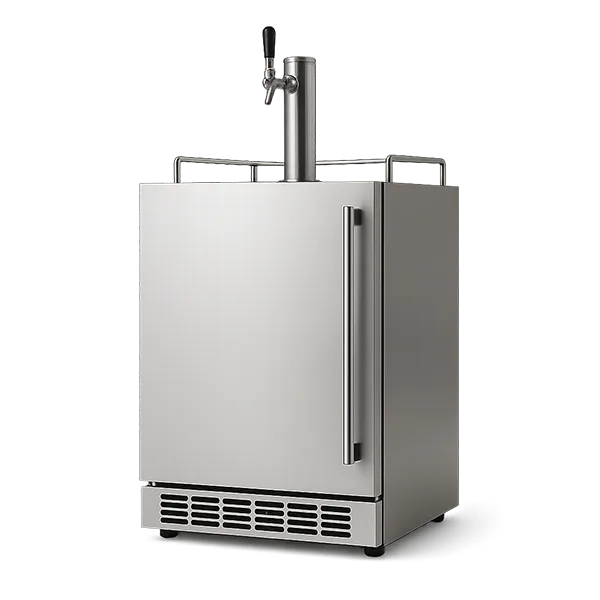
Spec-wise, it gives you comparison anchors: 0–14°C temperature range, 16–38°C ambient range, compressor cooling, and digital control. That’s the stuff you line up against your climate reality and your beer target temp—because “it cools” is not a spec.
The project-friendly angle is the convertible layout: six removable metal shelves mean the cabinet can switch from keg duty to packaged beverage cooler duty when the draft program is seasonal or event-based. And for distributors and multi-site rollouts, OEM options (tap configurations, branding, design adjustments) are on the table—useful when you’re trying to standardize a platform without making every bar look identical.
One honest limitation: the SY-163 page does not publish an IP rating. So don’t sell it internally as “weatherproof.” Treat it like professional equipment: install it smart, protect it from direct water exposure, and keep ventilation clear.
4. Are Kegerators Worth It for a Bar or Hospitality Project?
4.1 Evaluate Value Through Service Volume, Not Just Purchase Price
If draft sales are real and frequent, a dedicated kegerator can pay back in service speed and consistency.
If draft is occasional, you’ll feel the hidden costs faster: cleaning discipline, gas management, line issues, staff training, and the simple fact that neglected draft systems taste like regret. (The Brewers Association draft manual exists because this goes wrong constantly.)
4.2 Consider Space Efficiency and Beverage Flexibility
A kegerator compresses cold storage + dispensing into one point. That’s why it works in tight patios and terraces.
Convertible designs can stretch value. If you know the keg program will go quiet for parts of the year, a cabinet that converts to packaged beverage storage stops being dead weight.
4.3 Build a B2B Procurement Checklist Before Buying a Kegerator
Before you sign anything, lock down:
- Keg format(s), coupler type(s), and whether gas is CO₂ or mixed gas
- Cabinet dimensions, door swing, ventilation approach (built-in vs freestanding)
- Temperature range + ambient operating range (site reality, not brochure fantasy)
- Certifications and approvals needed for your market (and proof, not promises). Example: some SUNNAI outdoor models list approvals like GS/CE/CB/RoHS/ErP/NRTL; confirm what applies to your SKU and destination.
- Warranty terms, spare parts plan, lead time, packaging, and after-sales support (especially for multi-property programs)
Conclusion: Choose the Outdoor Kegerator Around the Project, Not Just the Tap
Pick the outdoor kegerator that matches the keg format, service volume, climate, install constraints, and staff workflow—not the one with the prettiest tower.
Treat it like a system purchase, not a box purchase. And if your program shifts seasonally, flexible platforms like the SY-163 are worth evaluating on specs, install reality, and how easily they switch roles when draft isn’t the job.
FAQ
What is the difference between an indoor and outdoor kegerator?
Outdoor units tend to focus on materials and construction meant for harsher conditions (like stainless builds) and may include stated outdoor protections (some lines cite IPX4). Verify rating per model—don’t assume.
What temperature should an outdoor kegerator be set at?
Most draft guidance targets about 36–38°F for storage/dispense, adjusting for beverage style and carbonation. Setpoint is only half the story—line length, pressure, and tower temperature matter too.
Can an outdoor kegerator be built into a bar or outdoor kitchen?
Yes—if the unit is designed for built-in installs and ventilation is handled correctly. Products that call out front ventilation are typically meant for this kind of integration.
How many taps should a commercial kegerator have?
As many as your menu can support without turning into dead inventory and stale lines. One tap for a single flagship draft. Two+ taps when rotation and volume justify the cleaning and gas complexity.
What should hospitality buyers check before buying a kegerator?
Keg fit (real interior clearance), couplers, gas plan, ambient rating, ventilation, service access for keg swaps, and certification paperwork. Then the boring stuff that saves you later: parts availability, warranty process, and supplier capability at scale.