Introduction: An Outdoor Refrigerator Is Not Simply an Indoor Model Placed Outside
Outdoor kitchens used to be a rich-guy flex. Now they’re everywhere—hotel terraces, pool bars, rooftop restaurants, event decks that run from brunch to midnight. And every one of those projects has the same “small” decision that turns into a service nightmare: someone picks a fridge because it looks outdoor.
Bad move.
A shiny stainless door tells you almost nothing about whether the unit can hold temperature in July heat, survive a damp coastal night, or avoid sweating itself to death behind a tight built-in grill. Choose the wrong rating and you don’t just get warm beer—you get compressor run-time spikes, higher power bills, early corrosion, and warranty arguments that end with the manufacturer pointing at one sentence in the manual you didn’t read.
Homeowners care about fit and finish. Distributors care about returns and support calls. Hospitality operators care about recovery speed and uptime. Contractors care about dimensions, ventilation clearances, and not getting blamed when the cabinet guy boxed the unit in like a coffin.
So let’s talk about what actually matters—environment range, moisture, airflow, materials, certifications, and real-life usage. Not showroom vibes.
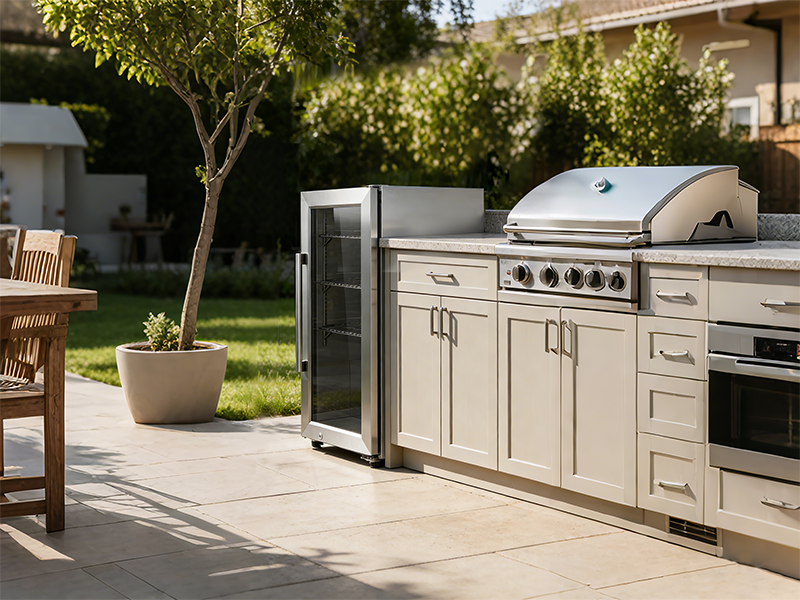
Outdoor Conditions Place a Different Load on the Refrigeration System
Ambient Temperature Changes Cooling Performance
Indoor refrigerators live an easy life. The room is insulated. The thermostat doesn’t see wild swings. Air conditioning does half the work. The compressor runs in a pretty predictable band, and designers count on that.
Outside? Different story.
You get direct sun on the door. Hot stone countertops radiate heat into the cabinet. A rooftop unit can sit in a pocket of trapped air that’s 15°F hotter than the official “ambient.” Then night hits and the temperature drops fast—sometimes enough to confuse controls that were never designed for it. And if winter freezing is in play, some units simply aren’t built to behave well at low ambient temps. They can short-cycle, struggle with thermostat logic, or stop maintaining stable cabinet temps.
Now add the part spec sheets love to hide in plain sight: the rated operating range. The only honest way to select an outdoor refrigerator is to check the manufacturer’s minimum and maximum ambient temperature rating, then compare it to the actual installation climate and microclimate (sun exposure, wind, enclosure heat). “Outdoor style” is not an outdoor-use rating. It’s a costume.
Humidity and Condensation Create Additional Challenges
Heat is one problem. Moisture is the other one people ignore until the door frame is dripping.
Humid air boosts condensation. That shows up around gaskets, glass, control panels, and cabinet seams—especially in coastal zones, pool decks, and tropical installs where the air feels like a wet towel. Repeated condensation isn’t just ugly; it accelerates corrosion on small hardware and can creep into places you don’t inspect until something fails.
Door design matters more outdoors than inside. Strong magnetic gaskets reduce warm-air infiltration. Self-closing doors help when staff are moving fast and the fridge is basically a pit stop. If you’re using glass-door display models, you may need heated glass or an anti-condensation setup, because fogged glass turns “merchandising” into “guess what’s inside.”
And here’s the boring detail that becomes expensive: ventilation. Restricted airflow drives up compressor temperature and energy draw. Built-in installs often require front-breathing systems—and the grille has to stay clear. No fake “decor panel” blocking the intake. No napkin storage stuffed in the vent. People do this. Then they act surprised.
Usage Patterns Are Often More Demanding Outdoors
Outdoor units get opened a lot. Pool bars, terraces, clubs—high traffic, constant door swings, warm humid air dumped into the cabinet every minute. That means pull-down and recovery speed stop being “nice specs” and become daily reality.
Then someone loads it wrong. Warm beverages dumped in at peak hours. Shelves packed tight so air can’t circulate. A unit can be “powerful” and still struggle if the interior airflow is choked. Adjustable shelving isn’t just convenience—it’s how operators keep products organized without blocking vents.
Commercial projects can’t depend on cooling that works only in perfect conditions. If temperature bounces around during service, beverage quality suffers, food holding becomes shaky, and staff start babysitting the unit. That’s not what you’re buying.
Construction Differences Protect the Refrigerator from Outdoor Exposure
Cabinet Materials Must Resist Corrosion
Outdoor refrigeration leans heavily on stainless steel for a reason: it tolerates moisture better than painted steel. But don’t get hypnotized by stainless on the door. The questions are: Which grade? Which parts are stainless? What about the fasteners?
Because the weak points are usually small: hinges, handles, screws, vent grilles, and the seams where panels meet. Coastal salt air and pool chemicals are basically a corrosion speed-run, and those tiny components become the first failure points. Even a good-looking unit can start pitting around corners and attachment zones where moisture sits.
Interior construction matters too, especially for B2B: smooth surfaces clean faster, removable shelves reduce downtime, and tougher liners handle repeated loading. Outdoor products that are actually designed for exposure tend to treat these details as defaults, not upgrades.
Electrical and Control Components Need Additional Protection
Moisture and electronics are not friends. Control boards, wiring, switches, and displays need decent protection—enclosures that keep water from collecting around connections and components that don’t freak out in damp air.
And don’t ignore the install side. Outdoor power should be done like a grown-up project, not like a weekend hack. Local requirements often call for ground-fault protection (GFCI) for outdoor outlets, and extension cords are not a “temporary solution” in a commercial environment—they’re a liability.
Certification also isn’t a checkbox you add later. Buyers should verify the unit’s intended-use listing for the market it’s entering. Residential vs commercial requirements can differ, and importers need to confirm compliance per destination country before containers ship. Customs delays are a brutal way to learn that lesson.
Insulation and Sealing Support Temperature Stability
Outdoor heat loads the cabinet harder. That makes insulation quality a money issue, not a nerd issue. Better insulation lowers compressor workload and smooths temperature swings. Weak insulation drives longer run time, higher bills, and more cycling.
Gaskets matter just as much. Poor sealing means warm air leaks in, moisture follows, and condensation gets worse. Replaceable gaskets are practical—because in busy venues, doors get abused and seals wear out. Misaligned doors can cause constant sweating and nonstop compressor activity, and you’ll chase symptoms forever if the seal is the real problem.
Locks and closure systems aren’t paranoia. They protect inventory in shared spaces and prevent “door not fully shut” disasters—common in resorts, clubs, and event venues where staff change every shift.
Using an Indoor-Rated Refrigerator Outside Creates Business Risks
Temperature Instability Can Affect Stored Products
Start simple: warm drinks sell slower. A fridge that can’t pull down fast in high ambient heat won’t hit the serving temp guests expect, and during peak service the cabinet can drift up every time the door opens.
Food storage gets trickier. Outdoor heat adds load, frequent openings add load, and operators end up checking temps more often because they stop trusting the equipment.
Wine is its own headache. Repeated temperature swings aren’t what you want for wine storage, and glass-door units are more exposed to sunlight and radiant heat. If someone insists on an outdoor wine cooler, pick a model intended for that environment—not a pretty indoor unit shoved onto a patio.
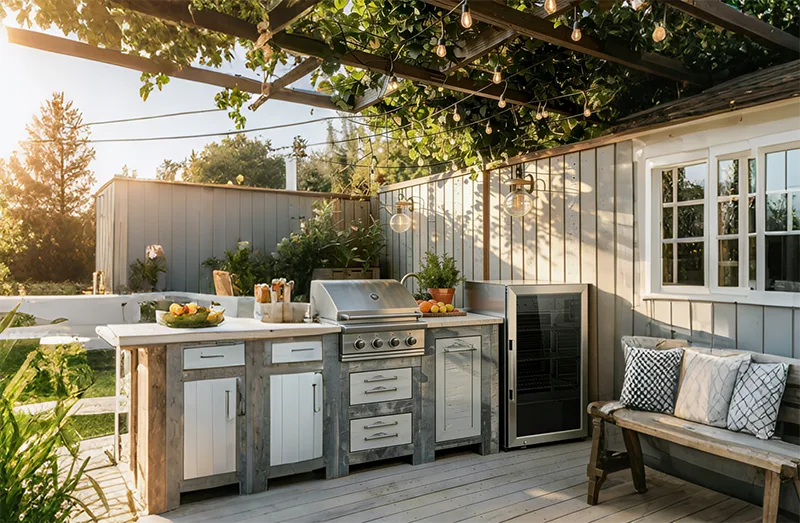
Component Wear May Increase
High ambient temps push longer compressor cycles. Longer cycles mean higher electricity use, more heat in the system, and faster wear. That’s not theory. It’s basic physics with a bill attached.
Then corrosion shows up where you can’t see it—fasteners, wiring, coils, cabinet joints. Pool chemicals and coastal salt can accelerate damage and turn a “simple repair” into a parts scavenger hunt. And no technician can “fix” a unit that’s being used outside its rated conditions. You might get it running again… until the weather shifts back and the problem returns.
Warranty claims also get messy fast when the installation doesn’t match the intended environment. Outdoor misuse is the easiest denial in the book.
The Lowest Purchase Price May Produce a Higher Total Cost
Upfront price is only one line item. B2B buyers should total up electricity, maintenance, repairs, and replacement timing. A cheaper indoor unit might look like savings—until it dies early outside and you pay twice.
Downtime is the real killer in commercial spots. Lost sales, staff workarounds, spoiled inventory, angry guests. It adds up faster than the equipment cost.
Serviceability matters. Are parts available locally? Can techs access components without uninstalling half the bar? Who owns warranty labor—distributor, contractor, factory? And don’t forget project costs: wrong dimensions delay cabinetry, missing certifications can freeze a launch at the border, and repeated failures burn the reputation of retailers and contractors who recommended the unit.
How B2B Buyers Should Specify Outdoor Refrigeration
Match the Outdoor Rated Refrigerator to the Application
Residential outdoor kitchens: people want quiet operation, clean integration, and practical storage. But the basics still apply—confirm built-in vs freestanding, check ventilation, and make sure dimensions match standard outdoor cabinetry so nobody starts cutting stone at the last minute.
Hotels, restaurants, entertainment venues: recovery speed and storage capacity beat “nice finishes.” Look for locks, service access, and a design that survives constant door openings and daily turnover. Also confirm whether the project needs residential listing, commercial listing, or both depending on jurisdiction and use case.
Coastal and poolside installs: ask for extra corrosion resistance where it counts, and avoid placements where water or chemicals collect—like next to a splash zone or under a drip line. Plan routine cleaning and surface care, because “stainless” doesn’t mean “maintenance-free.” It means “less bad when you keep it clean.”
SUNNAI Outdoor Refrigeration for OEM and ODM Programs
If you’re buying at volume, the conversation shifts from “is it pretty?” to “can this factory keep shipping the same product without surprises?”
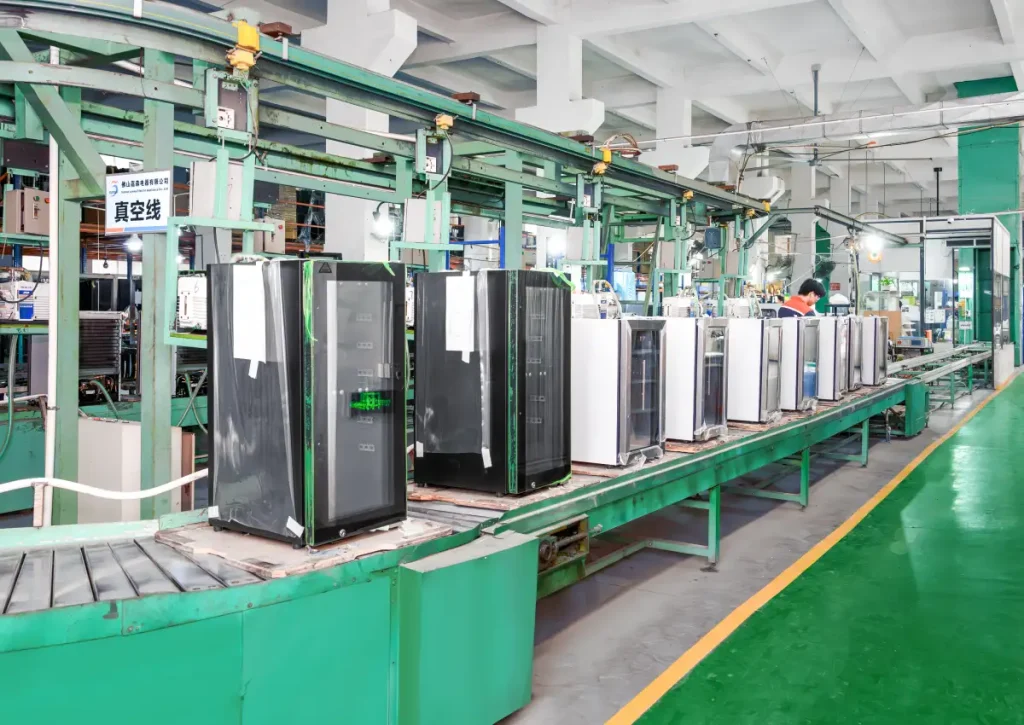
SUNNAI positions itself as an OEM/ODM outdoor refrigeration and beverage cooler manufacturer, with a stated 20,000 m² facility and annual capacity over 150,000 refrigeration units—paired with German engineering supervision and China-based production. That kind of setup is aimed at buyers who need scale, cost control, and repeatability, not one-off custom builds.
On customization, the usual OEM/ODM levers show up: cabinet dimensions, interior storage layout, door finish, handles, control interfaces, branding, packaging, and region-specific voltage requirements. For distributors and project customers, that matters because “one SKU for every country” is how you end up with returns, adapter hacks, and service calls.
SUNNAI also lists quality and compliance markers—ISO9001, BSCI, Sedex, CE, GS, NRTL, REACH, RoHS—and claims lab testing and automated production to support consistency. The practical takeaway: ask for documentation, test reports, and market-specific certification coverage before you commit, because paper fixes problems faster than apologies.
Review the Technical Specification Before Ordering
Don’t sign off based on photos and a door handle.
Confirm:
- Environmental performance: min/max ambient operating temperature, humidity handling, condensation control features, corrosion provisions, and any restrictions on sun, rain exposure, or freezing conditions.
- Installation requirements: built-in vs freestanding, ventilation direction and clearance, electrical supply, leveling, drainage (if applicable), and countertop protection.
- Commercial and supply-chain needs: destination-market certification, MOQ, lead time, spare parts plan, warranty terms, and packaging tests for international shipping.
Plan for Correct Installation and Maintenance
Give the unit shelter—but don’t suffocate it. A covered countertop helps with sun and rain, but airflow clearances must stay open.
Reduce direct sunlight. Avoid standing water. Follow winterization steps in freezing climates. Check water lines, drains, and seals before cold seasons hit.
And yes, schedule maintenance. Clean condenser areas and grilles. Inspect gaskets, hinges, fasteners, and stainless surfaces. In commercial operations, record cabinet temps—because “I think it was cold enough” is not a maintenance log.
Outdoor-rated equipment is usually weather-resistant, not invincible. Treat it like gear, not furniture.
Conclusion: Choose Refrigeration for the Environment, Not Just the Space
Indoor-rated and outdoor-rated refrigerators are built for different conditions. Pick based on ambient range, humidity, corrosion exposure, installation type, and door-opening frequency—not on looks.
Residential buyers should focus on stable performance and clean installation fit. B2B buyers also need certification coverage, customization options, production consistency, parts support, and lifecycle cost math that includes downtime.
Work with a manufacturer that understands outdoor use, and you’ll buy fewer problems.
FAQ
What makes a refrigerator officially rated for outdoor use?
A real outdoor-use unit is designed and listed for operation in wider ambient conditions and damp environments, with construction and electrical protection suited for exposure. The proof isn’t the finish—it’s the stated operating range, intended-use listing, and documentation.
Can I use an indoor refrigerator on a covered patio?
Sometimes it “works” until it doesn’t—like the first heat wave, the first humid week, or the first winter cold snap. Covered doesn’t mean climate-controlled, and warranties often don’t love creative interpretations of “indoor.”
What temperature range should an outdoor refrigerator be able to handle?
There isn’t one magic number. You match the manufacturer’s min/max ambient rating to the site’s real conditions—including sun traps and enclosure heat. If your peak days or cold nights fall outside that range, you’re buying instability.
Are outdoor refrigerators completely waterproof?
No. Weather-resistant is not the same as waterproof. Most are not meant to be blasted with hose spray or left in standing water, and ventilation openings still exist for a reason.
Is a stainless steel refrigerator automatically suitable for outdoor installation?
Not even close. Stainless on the exterior can hide indoor-grade hardware, weak sealing, or electronics that hate humidity. Treat stainless as a material choice, not a rating.