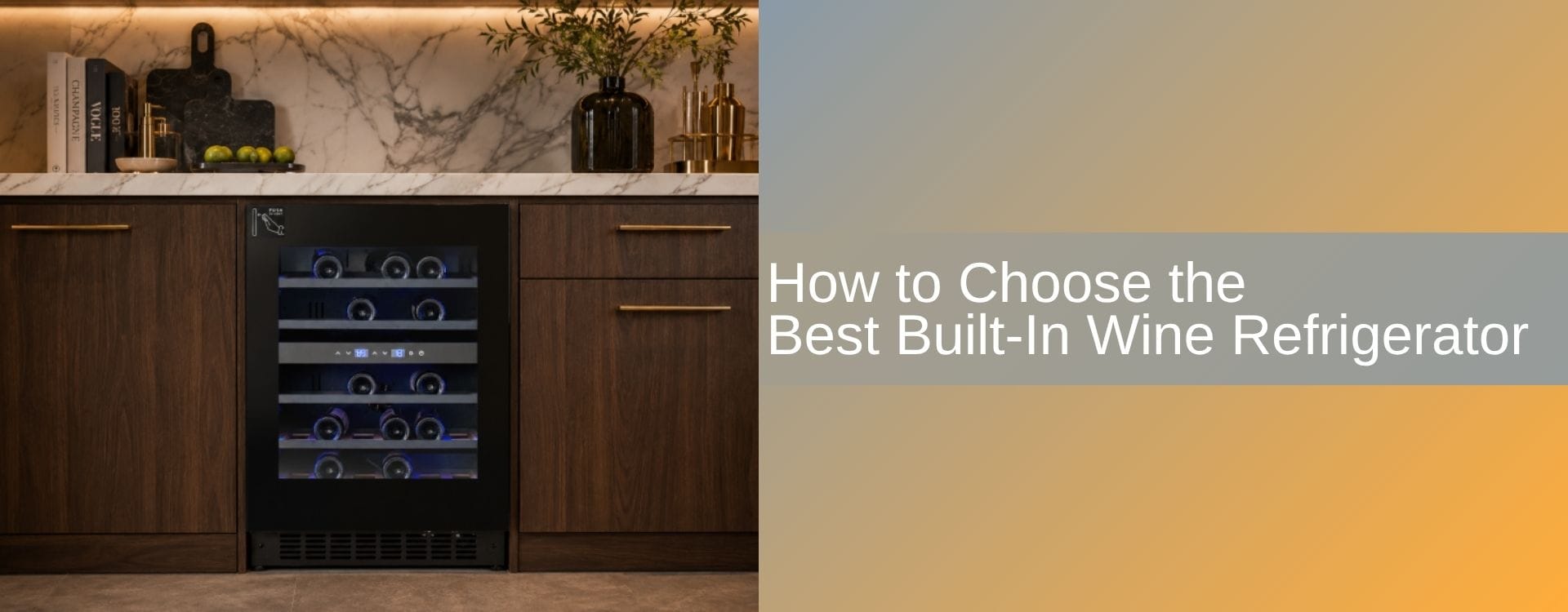
Introduction
Built-in wine refrigerators have shifted from a “nice-to-have” appliance to a defining feature in luxury residential and commercial spaces because they solve three high-end priorities at once: performance (proper wine care), presentation (a showroom-like display), and integration (a seamless, architectural look).
Across luxury kitchens, dedicated wine rooms, home bars, restaurants, hotels, and other hospitality venues, demand is growing for refrigeration that feels custom—flush-fit, quiet, reliable, and consistent—without the compromises often associated with standard wine storage appliances.
What separates the best built-in wine refrigerator models from basic wine coolers is not just aesthetics. It is the combination of:
- stable, precise temperature control
- true front-venting design for safe built-in installation
- collection-friendly storage and shelving
- lower vibration and noise
- durable materials and construction that support long-term use
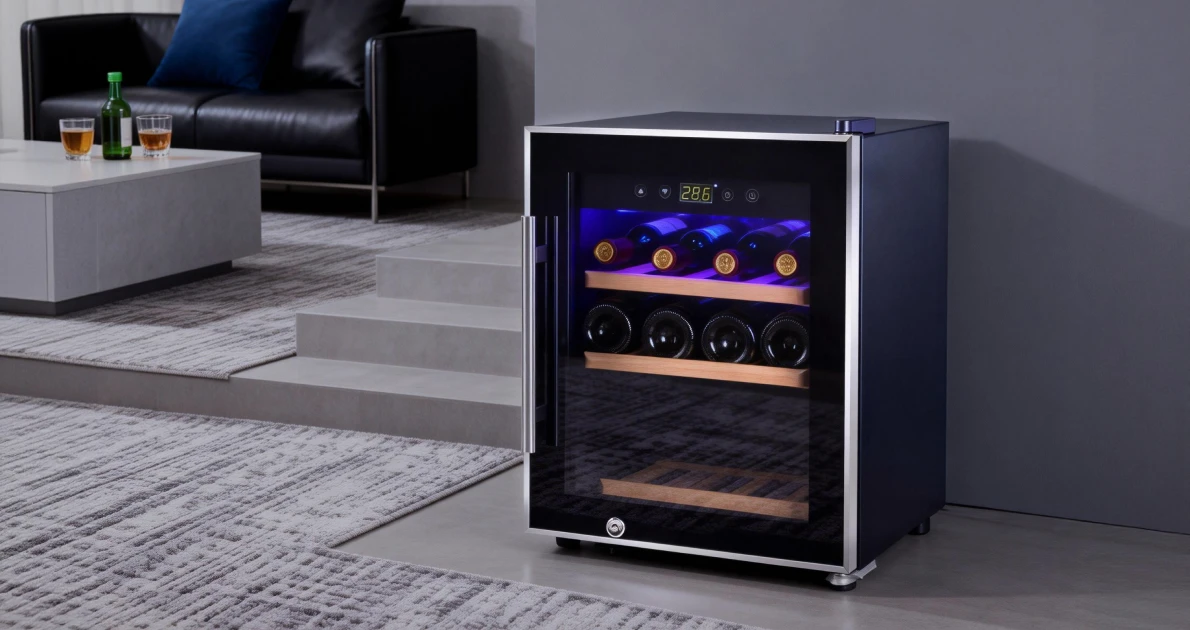
What Makes the Best Built-In Wine Fridge Stand Out?
Precise Temperature Stability for Wine Preservation
Consistent storage conditions are the core job of a wine fridge. Wine is sensitive to temperature swings—rapid fluctuations can speed chemical reactions in the bottle, push corks to expand and contract, and generally age wine faster and less predictably than intended.
Key performance outcomes to look for:
- Stable temperature (low swing, tight control): the best units hold a steady set point rather than repeatedly drifting above and below it throughout the day.
- Protection from “hot spots” and “cold corners”: good airflow design and sensor placement help keep the entire cabinet consistent, not just the center shelves.
- Serving vs. long-term storage capability: long-term storage commonly targets around 55°F (13°C) for many wines, while serving temperatures vary by wine style. Dual-zone designs are useful when both functions are needed.
Advanced Cooling Technologies
For built-in performance—especially in busy homes or restaurants—compressor-based systems are typically favored because they handle:
- warmer indoor ambient environments
- frequent door openings
- larger cabinet sizes
- faster recovery after temperature disruptions
Look for:
- Compressor + fan-driven circulation for even cooling
- Intelligent controls that maintain stable set points and, in dual-zone models, separate targets for different wine styles
- Fast temperature recovery after doors open, which is particularly important in hospitality service
Seamless Built-In Integration
Front-Venting Design Advantages
A true built-in wine fridge should be front-venting. That is what makes it suitable for undercounter or cabinetry installation because it:
- exhausts heat through the front grille or toe-kick area
- helps avoid trapping hot air behind the unit
- supports long-term refrigeration reliability by improving heat dissipation
This is one of the biggest “gotchas” in premium projects: many attractive units look built-in but are not designed for enclosed installation.
Premium Aesthetic Appeal
High-end integration usually means:
- flush installation with minimal protrusion beyond cabinetry
- clean reveal lines and handle alignment with surrounding appliances
- finishes that complement modern interiors, such as stainless steel, black glass, or panel-ready designs where available
Also evaluate the display experience:
- UV-reducing glass doors to help reduce light exposure
- soft, even LED lighting rather than harsh hotspots
- shelf presentation that supports bottle visibility and label-forward display where required
Storage Capacity and Flexibility
Bottle Configuration Options
Stated bottle counts often assume standard 750 ml Bordeaux bottles. Real collections include Burgundy bottles, Champagne, and larger formats, so flexibility matters.
Look for:
- adjustable shelves that can be repositioned for taller bottles
- shelf spacing that does not require removing several shelves just to fit a small number of larger bottles
- shelves that glide smoothly under load, especially when racks are full
Single-Zone vs. Dual-Zone Cooling
- Single-zone is ideal when you primarily store wine for aging at one stable temperature, the unit is dedicated to one style, or maximum simplicity is preferred.
- Dual-zone is ideal when you actively serve both reds and whites, the refrigerator works as a ready-to-pour station, or you need flexibility for a mixed collection.
Premium project reality: dual-zone is often chosen not because it is universally “better,” but because it matches how people actually use the space—especially in entertainment-driven homes and hospitality settings.
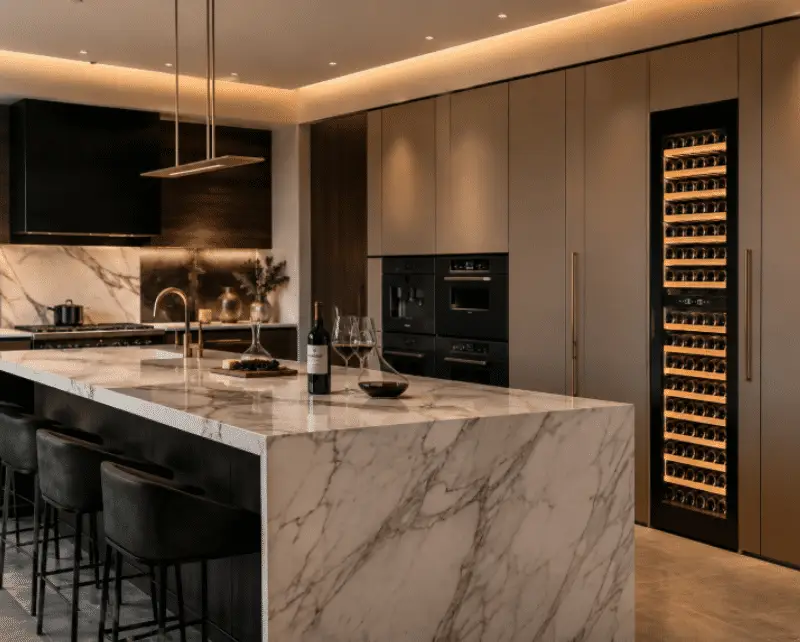
Choosing the Best Built-In Wine Cooler for Different Project Types
Residential Luxury Kitchens
Daily Convenience
In a luxury kitchen, a built-in wine fridge earns its place by enabling:
- immediate access to ready-to-serve bottles
- better hosting flow without repeated trips to a separate cellar
- a polished appliance wall or undercounter composition
It can also strengthen the perceived specification level of a kitchen because buyers increasingly recognize integrated refrigeration as a premium feature.
Noise and Energy Considerations
Open-concept layouts raise the bar:
- quiet operation matters if the unit sits near living or dining areas
- vibration control matters both for wine care and perceived product quality
- energy efficiency matters for an appliance that operates continuously
Practical specification checks for project submittals:
- confirm the unit is rated for undercounter or built-in use and uses front ventilation
- confirm required clearances and airflow requirements
- confirm door swing and handle clearance so the door will not collide with adjacent cabinetry or appliances
Home Bars and Dedicated Wine Rooms
Design Integration and Access
Home bars and dedicated wine rooms place more emphasis on display, bottle accessibility, and coordination with millwork. A built-in wine cooler should support the layout rather than force the layout to adapt around the appliance.
Key considerations include:
- undercounter dimensions and front-venting requirements
- door swing, drawer or shelf pull-out clearance, and traffic flow
- lighting and glass design that present the collection without overwhelming the room
- low noise and vibration when the wine room is adjacent to living or entertaining spaces
Collection Planning
For dedicated wine storage areas, plan around the actual bottle mix rather than relying only on the advertised bottle count. Projects with Champagne, Burgundy, magnums, or mixed formats may require more flexible shelf spacing and a lower real-world capacity than the nominal specification suggests.
Hospitality and Commercial Projects
Restaurant and Hotel Applications
In hospitality, the wine refrigerator becomes part of the guest experience:
- consistent presentation and temperature control
- predictable serving temperatures during peak hours
- a professional appearance behind the bar, in a lounge, or within a restaurant display
Reliability Requirements
Commercial use places heavier demands on equipment:
- frequent door openings
- warmer kitchen or bar environments
- long daily operating hours
Look for:
- proven compressor systems designed for continuous operation
- durable hinges, effective door seals, and shelving that can tolerate repeated loading
- controls that are easy for staff to use correctly and difficult to mis-set accidentally
Also consider procurement realities:
- serviceability, parts access, and clear technical documentation
- warranty clarity and response expectations
- supplier capability for multi-unit or multi-site rollouts
Why Manufacturer Capability Matters for Built-In Wine Refrigerator Projects
Built-In Wine Cooler Options for Different Project Requirements
For premium projects, model selection should start with the project specification rather than a one-size-fits-all product list. Depending on the application, buyers may need different combinations of:
- single-zone or dual-zone temperature control
- undercounter or full-height built-in configurations
- different bottle capacities and shelf layouts
- stainless steel, dark glass, or other finish options
- residential, hospitality, or branded retail positioning
For distributors and project buyers, a manufacturer with a broad wine cooler platform can make it easier to build a coordinated range while maintaining consistent engineering and visual language across multiple SKUs.
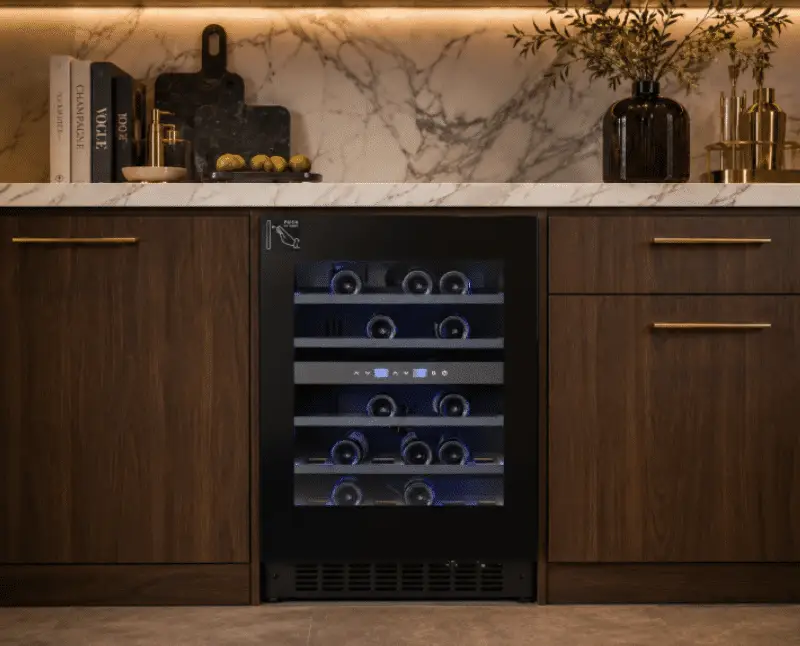
OEM & ODM Support for Built-In Wine Refrigerator Projects
For brand owners, distributors, developers, and hospitality procurement teams, the product itself is only one part of the decision. OEM and ODM capability can be equally important when a project requires a specific size, appearance, feature package, or market position.
SUNNAI specializes in premium refrigeration solutions, including wine coolers, and supports B2B partners with product development and manufacturing capabilities. Relevant project support can include:
- model and capacity selection based on target market needs
- custom finishes, controls, shelving, lighting, and branding options
- engineering development and prototyping for new configurations
- documentation and certification planning for target markets
- transition from development samples to repeatable mass production
For a serious sourcing program, the best practice is to confirm the complete specification package early—cabinet dimensions, ventilation design, temperature range, electrical requirements, certifications, packaging, service expectations, and warranty scope.
Manufacturing Consistency for Multi-Unit Projects
A premium built-in wine refrigerator project should be evaluated beyond the first sample. Developers, hospitality operators, and private-label brands need repeatable quality across batches and over time.
Key supplier questions include:
- How are temperature-control consistency and refrigeration performance verified?
- Are critical components and materials controlled across production batches?
- Can the manufacturer maintain stable lead times and output for larger orders?
- How are quality inspections documented before shipment?
- What parts, technical support, and after-sales resources are available after launch?
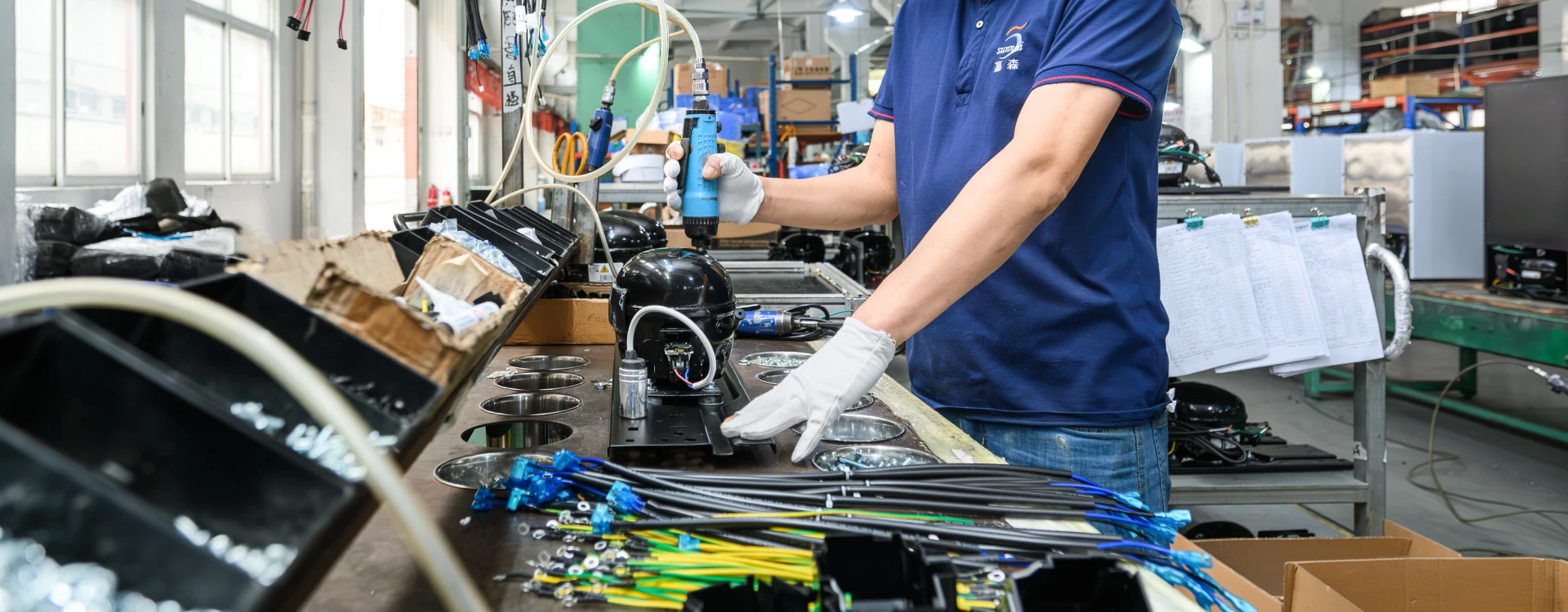
SUNNAI operates as a Sino-German joint venture specializing in premium refrigeration, with a 20,000 m² manufacturing facility, annual output exceeding 150,000 units, and certifications including ISO9001, BSCI, Sedex, CE, GS, NRTL, REACH, and RoHS. For B2B buyers, these capabilities are most useful when they translate into consistent specifications, documented quality control, and reliable production support.
Evaluating the Best Rated Wine Refrigerators Before You Buy
Performance Indicators That Matter
Cooling Accuracy
- How closely does the unit hold the set temperature?
- Does it drift under heavy use or warmer indoor ambient conditions?
Temperature Consistency Across Storage Zones
- In dual-zone units, does each zone behave independently and predictably?
- Are top, middle, and bottom shelves reasonably consistent?
Recovery Speed After Door Openings
Recovery speed is particularly important in hospitality settings or homes where the refrigerator is opened frequently during entertaining.
Humidity Management
- Wine storage generally benefits from moderate humidity to help protect cork integrity.
- Many wine refrigerators do not actively set humidity, but good sealing and stable cooling can help reduce extreme drying.
Build Quality and Longevity
Premium longevity is usually driven by unglamorous parts:
- door hinges—sag and misalignment can cause seal failure
- door gaskets and seals—poor sealing causes temperature instability and compressor overwork
- shelf structure—warping, rattling, or weak supports reduce long-term usability
- insulation quality—important for efficiency and temperature stability
- compressor and control board quality—the heart and brain of the system
Certification and Compliance
For premium and commercial procurement, certifications matter because they reduce project and market-entry risk. Confirm:
- electrical safety certifications relevant to the target region
- energy or efficiency requirements where applicable
- documentation required by distributors, developers, or project specifiers
- whether the exact model and configuration—not only the manufacturer—meets the required market standards
Built-in refers to the installation and ventilation design; it should not be treated as a substitute for any separate environmental or application rating.
Manufacturer Support and Supply Chain Reliability
This is where “best rated” on a retail website often fails to tell the full story—especially for multi-unit projects.
Look for:
- clear warranty coverage for the intended residential or commercial application
- access to technical assistance and product documentation
- parts availability and a defined support period
- stable production capacity and consistent lead times
- packaging designed to reduce damage in international or multi-site shipping
- project support from development through mass production, especially for private-label and OEM programs
Conclusion
The best built-in wine fridge is the one that combines:
- temperature precision and stability
- true built-in, front-venting integration
- durable construction for long service life
- aesthetic alignment with premium interiors
- a configuration that matches the actual collection and use case
To choose confidently, evaluate:
- the project type and installation conditions, such as a luxury kitchen, home bar, dedicated wine room, restaurant, or hotel
- storage goals, including aging vs. ready-to-serve use and single-zone vs. dual-zone requirements
- long-term reliability, including build quality, service support, parts availability, and warranty terms
For distributors, developers, hospitality operators, and private-label brands, partnering with an experienced refrigeration manufacturer can be as important as selecting the right model. Support, consistency, and scalability determine whether the project continues to perform at a premium level after year three, not just on day one.
With experience in premium wine refrigeration, OEM/ODM development, and large-scale manufacturing, SUNNAI supports global partners seeking reliable built-in wine refrigerator solutions for residential, hospitality, retail, and branded appliance programs.
FAQ
Are built-in wine fridges better than freestanding wine refrigerators?
They are “better” when you need seamless integration and safe undercounter installation. Built-in units are typically front-venting, which supports enclosed installation. Freestanding units can offer excellent performance and value, but many require open airflow around the cabinet and should not be installed inside tight cabinetry.
How long do high-quality built-in wine refrigerators typically last?
In premium residential use, a well-built unit can often serve for many years, but lifespan varies with ventilation quality, ambient heat, door-seal integrity, compressor and control quality, and maintenance. In hospitality environments with frequent door openings, service support and parts availability become a larger part of long-term reliability.
What temperature should a built-in wine fridge be set to?
A common all-purpose storage target is around 55°F (13°C) for long-term wine storage. Serving temperatures vary by wine style, with whites generally served cooler and reds somewhat warmer. Dual-zone units help maintain two temperature ranges without repeated resetting.
Is a dual-zone wine refrigerator worth the extra cost?
Yes when the refrigerator is used for ready-to-serve wine across multiple styles, such as reds, whites, and sparkling wines. If the priority is long-term storage consistency for a collection at one temperature, a single-zone model can be simpler and highly effective.
How much ventilation does a built-in wine refrigerator need?
A built-in wine refrigerator should follow the manufacturer’s specified ventilation and clearance requirements. True built-in models usually use front ventilation so heat can escape through the front grille or toe-kick rather than accumulating behind the cabinet. Project teams should confirm required clearances, keep the ventilation path unobstructed, and follow the installation drawing for the exact model.