
Introduction
Getting refrigeration for a sheltered beachfront home as opposed to a windswept hotel terrace is a different proposition. A common misconception is that any ‘outdoor rated refrigerator‘ made from stainless steel will withstand the marine environment. In fact, you have to take a holistic approach to procurement if you’re to avoid premature failure due to chloride attack.
The atmospheric salt aerosol is a continuous liquid electrolyte, and without proper specification, standard cabinets will start to suffer micro-pitting within months. This guide covers the four key operational phases:
- Site Micro-Climate Audit
- Component-Level Metallurgy Verification
- Strategic Micro-Placement
- Formal Handover of The Procurement
1. Assess Coastal Exposure Before Comparing Refrigerators
1.1 Identify How Salt and Moisture Reach the Installation Site
Airborne marine chlorides can travel considerable distances inland, so shoreline distance by itself doesn’t determine site severity. The Australian Stainless Steel Development Association has classified land within 3 miles of crashing surf as a high-risk zone for corrosion. Secondary sources of salt, such as saltwater pools, add to the problem.
In combination with morning humidity, which can routinely exceed 65%, the airborne salts will form a concentrated electrolyte film along the panel seams. FEMA 499 has also demonstrated that windblown salt aerosol will tend to accumulate on the unwashed leeward surfaces and thus will result in accelerated crevice corrosion in the crevices under overhangs where the natural rain will not be able to wash the deposits away.
1.2 Translate Residential and Hotel Conditions into Purchasing Requirements
In the luxury coastal property, the fridges are going in and out of service seasonally and are subject to a degree of neglect. That allows the salt crust to build up on the metal in a way that’s difficult to get rid of. The masonry islands are also a much more closed environment and will trap the coastal moisture around the chassis.
On the commercial side, the hotel bars are a completely different proposition. They’re under constant mechanical duty, with the doors being opened all the time; the units are going through a massive amount of thermal cycling and are being constantly restocked with wet drinks.
Downtime is a revenue killer, so the commercial specifier will want front access to all the components for maintenance. The residential buyer is going to be looking for quiet, for a seamless look and finish. The commercial hotel buyer is going to be looking for a unit that can recover temperature quickly and that has the most robust hinge pivot integrity possible.
2. Check the Cabinet, Hardware, and Cooling System Separately
2.1 Evaluate Stainless Steel Grades and Surface Finishes
Buyers have to insist on component-specific mill certs rather than just go for the ‘all stainless’ type of description. 304 will perform reliably in inland service, but marine chlorides will easily penetrate its passive layer and result in tea staining. 316 contains molybdenum, which gives it a far superior resistance to pitting and achieves a PREN of 23-25 as opposed to 18-20 for 304.
That said, no alloy is completely immune to pitting without regular rinsing. Surface micro-roughness is important. An electropolished finish will reduce the amount of salt that will stick to it. Unpassivated welds will create localized galvanic cells, and the manufacturer will have to chemically pickle the external welds. Buyers should completely disregard the “rust-free” marketing.
Metallurgical and Exposure Matrix: Outdoor Kitchen Metallurgy
| Feature | Grade 304 | Grade 316 | Coastal Impact |
| Composition | 18% Cr, 8% Ni | 18% Cr, 10% Ni, 2–3% Mo | 316’s Molybdenum blocks chlorides |
| Corrosion Risk | High tea staining (<3 mi from surface) | High resistance; minimal pitting | 304 needs frequent rinsing |
| Typical Use | Cabinets, internal liners, chassis | Handles, fascias, coastal hardware | Verify 316 usage in contracts |
| Passivation | Pickled welds & edges | Electropolished/acid passivated | Unpassivated seams oxidize quickly |
2.2 Inspect Fasteners, Door Hinges and Concealed Connections
Galvanic corrosion will rapidly attack the hardware when you have stainless steel panels being joined with zinc-plated screws in a conductive salt moisture environment. To eliminate the phenomenon, the following parts must match austenitic stainless steel:
- Hinges
- Brackets
- Structural Screws
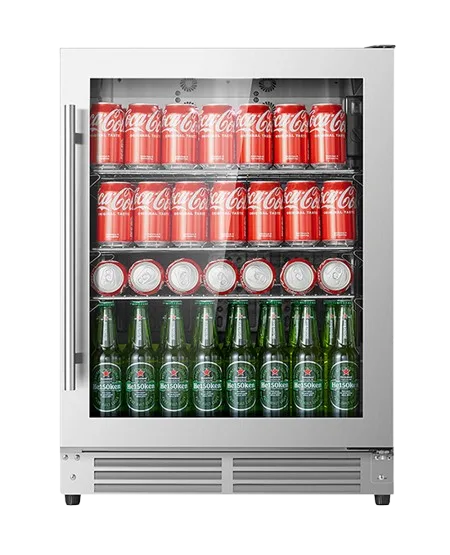
Request photographs of the concealed undersides (e.g., the level plates) where salt runoff will collect. Look at the magnetic gasket channels for the drain relief slots to ensure that there is no standing saltwater. Field testing has shown that the zinc-plated fasteners will often fail well before the cabinet body itself. As such, the self-closing cams and pivot bushings must be UV-stabilised nylon or bronze rather than bare ferrous metals.
2.3 Verify Condenser Protection and Supporting Evidence
Outdoor condenser coils are in a tough environment. Salt crusts forming across the fins and tubing will lead to rapid galvanic pitting and refrigerant leaks. High-performance units will have a factory-applied electrophoretic (E-coat) coating to provide a uniform seal in all the micro-crevices of the assembly against the corrosive air. You must confirm that this coating is applied to the entire assembly (including the copper U-bends and tube sheets).
You need to look at the manufacturer’s ASTM B117 salt spray reports carefully. Don’t just take the lab hours and assume that translates into field service life, as the lab chambers don’t have UV exposure and thermal cycling. Finally, you need to make sure the coating thicknesses don’t, in fact, insulate the fins, as that will stop the fins from working properly and will result in higher compressor head pressures.
3. Choose Placement That Limits Exposure and Preserves Cooling
3.1 Compare Sheltered and Exposed Beverage Stations
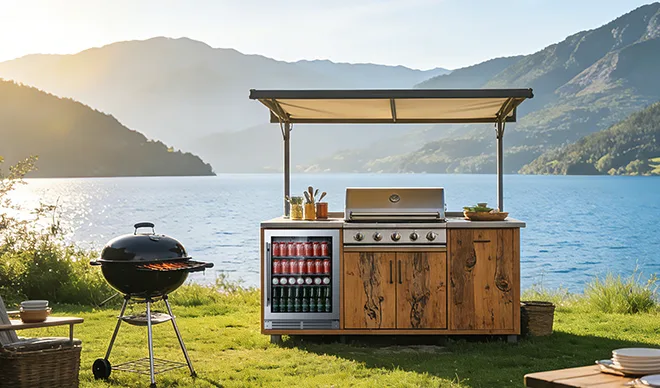
Position residential undercounter coolers on the leeward side of the masonry islands, away from ocean wind corridors and splash zones. The odd thing is that putting fridges under deep patio roofs actually increases the corrosion risk, as the rain will never get to wash the windblown salt crusts away.
For exposed hotel bars, you can go ahead and fit architectural wind deflectors (as long as you don’t block the airflow). Keep the units out of unshaded afternoon sun, as the skin temperatures will go above 60°C, and that will force the compressors to cycle continuously. Elevate the stations on the masonry curbs to prevent washdown pooling and isolate them from the chlorinated pool mist, which will synergistically accelerate the degradation of the stainless steel in conjunction with the sea air.
3.2 Coordinate Ventilation, Drainage and Service Access
For outdoor refrigerator installation, verify that built-in units have genuine front breathing lower louvers with partitioned intake and exhaust chambers to stop heat short-circuiting within the island cavities. Follow the manufacturer’s manual exactly with regard to required rear and side clearances. The fridge must be level with a 1-degree backward tilt to ensure the evaporator condensate will drain freely into the evaporation pan.
The outdoor floor must have a positive slope to drain away from the kickplate to prevent water ingress via the high-pressure hose. The surrounding masonry should be designed with removable kickplates so that the condenser can be pulled and cleaned by the technician. The unit must be on an independent GFCI-protected branch circuit to avoid nuisance tripping.
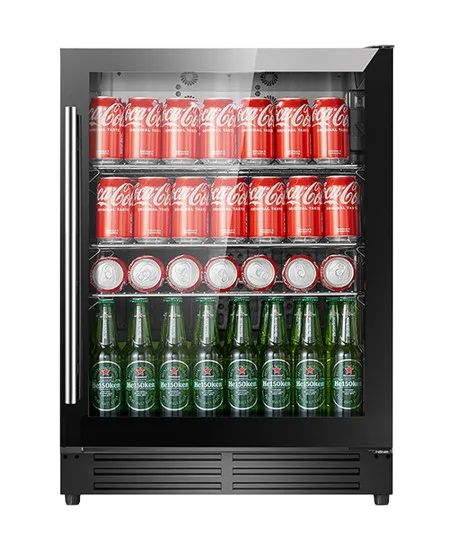
3.3 SUNNAI Outdoor Beverage Cooler: Use SY-51 as a Configuration Review Example
Audit of the SUNNAI SY-51 Outdoor Beverage Cooler is a good example of a submittal review. The specs state a heavy-duty Grade 304 stainless steel cabinet and SN-T climate classification, which doesn’t necessarily prove the unit is marine-suitable. The specifier must go to SUNNAI and request written confirmation to resolve any catalog inconsistencies (e.g., solid 304 front versus stainless framed glass door).
The required queries must include a request for documentation of the hardware alloy grades and the factory-applied condenser coil barrier coating. It’s a unit that’s ideal for a sheltered coastal patio or a covered hotel bar. Its success is predicated on site drainage and wind deflection being confirmed. For a more severe application, the buyer can take advantage of SUNNAI’s OEM/ODM manufacturing to contractually specify a marine-grade hardware package.
4. Complete the Procurement Checklist and Maintenance Handover
4.1 Obtain a Documented Configuration Before Approving the Order
Require the suppliers to provide a formal, signed submittal specifying the exact metallurgical grades of the cabinet, the fasteners, and the hinges. Include in the procurement file verified close-up production photographs of the door brackets and the leveling legs. Carry out an audit of the warranty fine print to confirm marine zone coverage and note any saltwater exclusions.
Get an initial allocation of the model-specific replacement gaskets and hinges prior to placing the volume orders. Include in the specification that factory-substituted hardware is not to be implemented without prior engineering approval. Require the overseas OEMs to supply factory inspection records that confirm pickling of the weld seams prior to the goods leaving the factory.
4.2 Agree on Basic Care and Inspection Responsibilities
Mandate a weekly schedule for wiping down the external stainless steel with fresh potable water and a microfibre cloth to dissolve the salt crusts before pitting occurs. HCl cleaners, bleach and abrasive pads, which will destroy the passive oxide layer, are to be absolutely avoided. Carry out quarterly visual audits of hinge tightness, gasket elasticity, and condenser grille lint build-up and record all this in the staff maintenance logs. For in-depth care and inspection for outdoor refrigerators, refer to our guide “Complete Maintenance and Care Protocols for Commercial Outdoor Refrigeration”.
Conclusion & Strategic Procurement Summary
Successful coastal refrigeration procurement requires a 4-part methodology:
- Site Exposure Measurement
- Component-Specific Metallurgy Verification
- Proper Ventilation Design
- Strict Cleaning Regime
Generic ‘outdoor rated’ marketing claims will not give you the assurance of whole-unit resistance to marine chloride attack. Protection of the fasteners and condensers is absolutely critical.
Commercial hospitality and luxury architects must make their purchasing decisions on the basis of verified technical submittals rather than generic catalog cut sheets. If you’re looking for reliable commercial-grade cold storage, then you need to work with a manufacturer that you can verify, and you need to look at SUNNAI’s full engineering range of outdoor refrigeration and custom OEM/ODM configurations that are engineered to the highest standard for the most demanding global environments.
FAQs
Can an outdoor refrigerator be installed near the ocean?
Yes, assuming it’s purpose-built and UL/ETL outdoor-listed and made of heavy-gauge stainless steel. It must, however, be protected from direct spray of the surf and constantly flushed with fresh water to remove salt crusts deposited from the air.
Is 316 stainless steel necessary for coastal installation?
Not always. For areas within 3 miles of crashing ocean waves, Grade 316 is strongly recommended, while Grade 304 is reliable in protected or secondary coastal zones if rinsed often and used with protective hardware.
Where should a fridge be on a coastal hotel terrace?
Put it on the leeward side of architectural windbreaks (out of direct sun and pool splash zones). Unobstructed front louver airflow, positive floor runoff drainage, and full technician maintenance access are all essential.
Does installing a refrigerator under a roof prevent salt corrosion?
No. While roof shelters block overhead rain, airborne marine salts still settle on surfaces. Because rain never naturally washes sheltered surfaces, unrinsed salt accumulates, making regular hand-rinsing essential.
What documents should buyers request before ordering a coastal outdoor refrigerator?
Inquire about a material schedule down to the component level. It should include production images of the hinges and fasteners up close. Ask for certifications for the condenser coating that have been validated, terms of the outdoor warranty, and written confirmation of the exact door configuration that was delivered.