When we talk about champagne, most people think the basic quality depends on the brand or price. But in reality, there is something else that silently maneuvers a lot about your drinking experience. It is the temperature of the champagne.
You can have an expensive bottle but if it is too cold or too warm, the taste will be totally different. The bubbles might disappear too fast. The aroma might feel plane. And sometimes you cannot even explain why it does not really taste and feel right.
That is exactly why it is very important to know what is the best champagne fridge temperature. In this guide, we will go through the details related to this topic along with a guide for perfect serving and storage of champagne.
Why Champagne Temperature Matters More Than Most People Think
Champagne is not like other drinks. It is made with carbon dioxide, delicate aromas and a very balanced combination of compounds. All of these react differently in different temperature ranges.
So you really need to know what is the best champagne fridge temperature to enjoy your drink to the fullest.
The Relationship Between Temperature and Flavor Expression
Champagne reacts strongly to temperature changes. Even the small shifts can change its taste and aroma. You can think of temperature as a simple control mechanism. It decides how much of the flavor can you actually experience.
● When Champagne Is Colder
When you serve or drink cold champagne it will feel crisp, sharp and very refreshing. It will give you a clean and energetic taste. This is why many people prefer it well chilled.
However, if this drink is too cold, it can also hide delicate aromas. Therefore, the fruit and floral notes become less noticeable when temperature is too low. It will leave mostly freshness and acidity.
● When Champagne Is Warmer
As temperature increases, champagne opens up. It starts to reveal more aroma and flavor complexity. You will notice deeper notes that were hidden when cold.
However, it also becomes slightly less crisp. The bubbles also feel softer and this reduces that sharp refreshing character.
Impact of Temperature on Effervescence
The bubbles in champagne are one of its important characteristics. The temperature or chillness also plays a role in how they behave. It will impact everything from how bubble are formed in the glass and how long they can last.
- Preserving Bubble Structure
The internal pressure of the champagne behaves more steadily when it is properly chilled. This helps preserve the natural structure of the bubbles. It keeps them fine, stable and classy as they rise in the glass.
- Finer Bubbles and Better Mouthfeel
When you properly cool the champagne like in a fridge, the formation of smaller and more refined bubbles are supported. These finer bubbles create a smoother mouthfeel. This makes each sip feel softer and more balanced rather than aggressive or sharp.
Visual Presentation and Service Quality
Temperature levels also influences how champagne looks. At the right chill level, the bubbles rise in a controlled and steady stream. This improves the visual appeal in the glass. It gives that classic luxury sparkle effect.
- Preventing Excess Foaming and Overflow
If champagne is too warm, opening the bottle can lead to excessive foaming. This happens because the gas escapes too quickly. When properly chilled the reaction is reduced. This makes opening the bottle smoother and more controlled.
- Maintaining Carbonation During Service
When the bottle is opened, temperature continues to impact its flavor and feel.
The carbonation of the champagne is held longer in a properly chilled bottle. This means the bubbles stay active throughout the serving process. There will be no fading quickly after pouring.
Different Champagne Styles Require Different Approaches
Not every champagne is the same. Hence, there cannot be the same treatment with every type.
Non-Vintage Champagne
Non-vintage champagne is a commonly used type. It is made for a fresh, lively and consistent taste. Hence it feels light and easy to enjoy.
This type of champagne should be properly chilled for best enjoyment. The most suitable temperature is usually between 6°C and 8°C. At this level, you find the drink as crisp, refreshing and full of energy.
When it is served cold like this, the bubbles feel more active. You will see that the overall experience is clean and refreshing. It is the kind of champagne you will enjoy for celebrations, casual moments or whenever you just want something light and uplifting.
Vintage and Prestige Cuvée Champagne
Vintage and prestige cuvée champagnes are different. They are aged longer and have more depth, complexity and layered flavors.
Because of this you will feel that they do not perform best when they are too cold. A slightly warmer serving temperature is better. This is at about 8°C to 10°C. For prestige cuvée, it can be up to 11°C.
At this temperature, the champagne has more space to open up. You start noticing richer aromas and deeper flavors that stay hidden when it is too cold.
These champagnes are meant to be enjoyed slowly. Instead of just being refreshing, they give you a more detailed tasting experience with notes that can feel fruity, toasty or slightly nutty depending on the bottle.
What Is the Best Temperature for Champagne?
For champagne there is no single best temperature. However, there is a clear range where it can be best. This temperature depends on what you want with it. Freshness, aroma or a more premium tasting experience.
Recommended Champagne Serving Temperature Ranges
You can enjoy champagne within a fairly specific temperature window. However, small adjustments inside that range can be made for little variations.
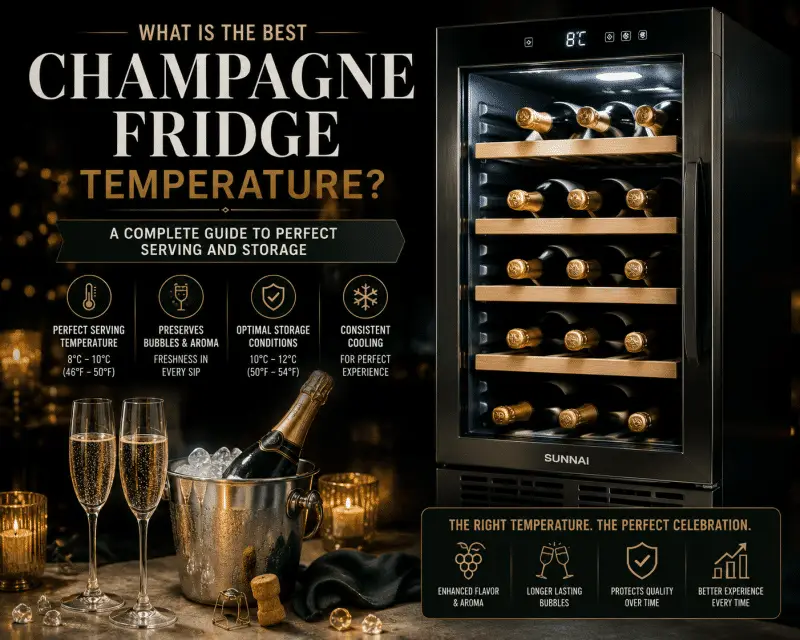
- The standard serving temperatures of champagne are between 6°C and 9°C. This is good for most styles.
- This range helps retain a good balance of freshness, acidity and aromatic expression.
- When chilled within this range you will find the champagne to be more crisp and refreshing. Slightly higher temperatures allow more aroma to open up.
- Personal preference also plays a role. If you prefer a sharper or more rounded drinking experience it more applicable.
- Colder serving styles are often chosen for casual drinking or warm-weather occasions.
- People mostly like warmer serving temperatures when consuming premium bottles. This is because the aroma and complexity matter more.
Champagne Storage Temperature vs. Serving Temperature
You should know that storage temperature and serving temperature of champagne also should be different. Here are some insights.
Long-Term Storage Considerations
When champagne is stored for longer periods, the goal is stability. It is not the taste expression. You need to store the bottle in a stabilized environment. This is because it should not be exposed to sudden temperature changes.
- For long-term preservation the best storage temperatures for champagne are usually around 10°C to 12°C.
- If you keep the temperature stable it helps protect the champagne’s structure and quality over time.
- Fluctuations in temperature should be avoided. They can affect aging and pressure inside the bottle.
- Proper storage ensures the champagne remains in good condition until it is ready to be served .
Preparing Bottles for Serving
Before serving, champagne needs time to adjust. It stabilizes from storage temperature to drinking temperature. This step is important because it directly affects how the champagne will taste in the glass.
- Bottles should be gradually brought down to serving range before opening.
- Sudden temperature changes should be avoided for better consistency.
- Timing matters especially if the bottle is coming from a warmer storage environment.
- When chilled properly before serving it help stable the bubbling and create a balanced flavor.
Common Temperature Mistakes to Avoid
You may think it is easy to know the basics of champagne temperature. However small mistakes can easily be made even then. And this can affect the final experience.
- Over-Chilling Champagne
One mistake that people make cooling the champagne too much. It does feel refreshing at first. But later it actually reduces the overall experience.
- Excessive cold will mute both aroma and flavor
- The champagne will start to taste flat or less expressive
- Subtle complexity will be harder to notice.
- Serving Champagne Too Warm
On the other hand, serving champagne at a higher-than-ideal temperature can also create problems.
- Bubbles tend to disappear faster than expected
- The drink will become less crisp or refreshing
- Your overall experience will be less lively and less balanced
Getting the temperature right is not about perfection—it is about finding that middle point where everything works together smoothly.
How Long to Chill Champagne in a Fridge
Factors That Influence How Long Champagne Takes to Chill
Chilling champagne is not always a fixed timing process. The time it takes can change depending on a few very practical factors.
Here is a brief description.
- Starting Bottle Temperature
If the bottle is warmer at the start it will take longer to reach the best champagne serving temperature.
- Room Temperature Bottles
When you store champagne at room temperature it will require significantly more chilling time than pre-cooled bottles.
- Bottles Stored in a Wine Cooler
Bottles already kept in a wine cooler reach serving temperature much faster. This is due to their stable and pre-chilled condition.
- Bottle Size and Volume
Larger bottles take longer to chill. There is more liquid that needs to be cooled evenly. Standard bottles cool relatively quickly.
Comparing Different Champagne Chilling Methods
There are different ways to cool down champagne. Each method has its own timing and purpose.
- Refrigerator Chilling
The most common method for chilling champagne is using a refrigerator. It is simple and reliable. It works well when you are planning ahead.
Typically, a bottle will take a few hours to reach the best serving champagne temperature. This slower cooling process is actually beneficial. It helps the champagne cool evenly without sudden temperature shocks.
Gradual chilling helps preserve bubble structure and when opened it ensures a more balanced drinking experience.
- Ice Bucket Chilling
The ice bucket cooling method is faster. It is mostly used in social or hospitality settings. Here champagne needs to be served in a short time.
When you combine ice and water in the bucket, the bottle will cool down more efficiently. This method will make the champagne cooler in a shorter time.
It is especially useful in events, restaurants or outdoor gatherings. However, you must be attentive that the bottle is not left for too or it will be over-chilled .
How to Maintain the Ideal Champagne Temperature During Service
● Indoor Entertaining Environments
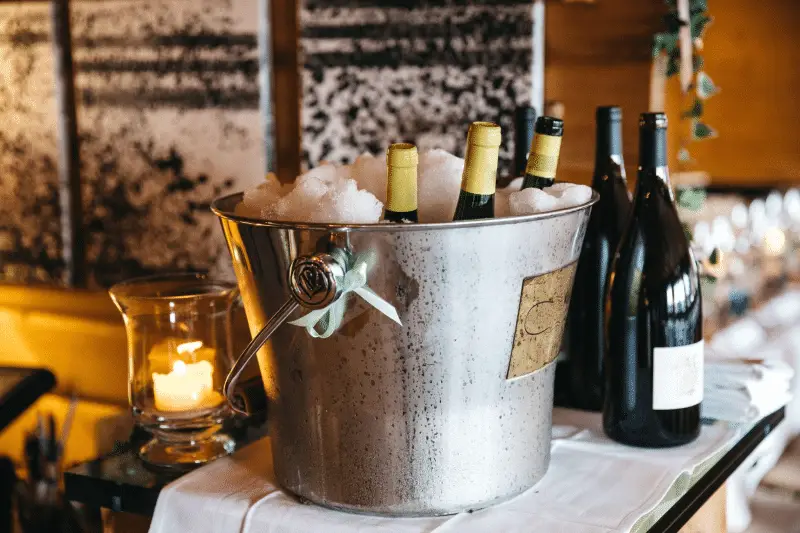
When indoors, champagne generally stays stable for longer. But it still benefits from simple care. You should keep the bottle in an ice bucket or a cool spot. This will enable you to retain its serving temperature throughout the event.
For longer gatherings, it is better to pour gradually and not leaving the bottle open and exposed for too long.
● Outdoor and High-Heat Conditions
In outdoor events, temperature control becomes more challenging. Heat will have an impact on the champagne quickly. Even a short exposure to warm air or direct sunlight will decrease freshness and bubble quality.
In these situations, shade and insulation become important to slow down temperature changes.
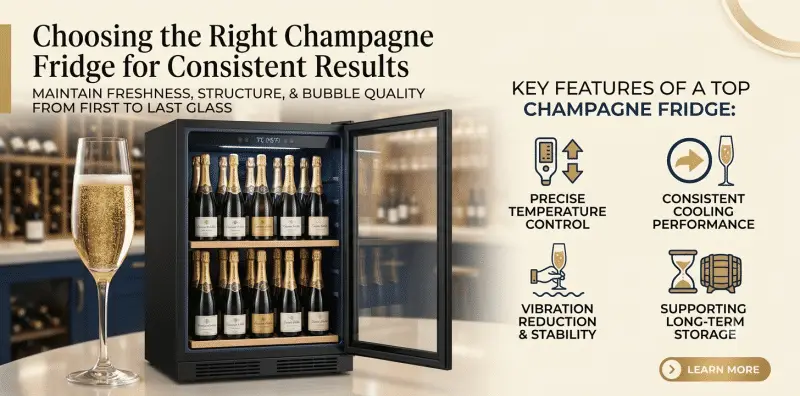
Choosing the Right Champagne Fridge for Consistent Results
In any type of setting we need to maintain the right champagne serving temperature by placing in a champagne fried beforehand. This will ensure that the champagne keeps its freshness, structure and bubble quality from the first glass to the last.
So, selection of the best champagne fridge is very important.
Features That Matter in a Champagne Wine Cooler
- Precise Temperature Control
You need to have accurate temperature settings. This ensures that champagne is always stored and served in the best range with no guesswork.
- Maintaining Best Serving Temperatures
A good cooler keeps champagne consistently within the recommended serving zone.
- Consistent Cooling Performance
Stable cooling prevents sudden temperature fluctuations.
- Vibration Reduction and Storage Stability
Low-vibration systems protect champagne structure during storage. It helps in preservation of long-term quality.
- Supporting Long-Term Storage Conditions
A reliable wine cooler fridge provides stable environments that allow champagne to age safely without quality loss.
Champagne Fridge Temperature Control for Hospitality and Retail Businesses
- Good Customer Experience
Consistent temperature control ensures every customer receives champagne at its best possible quality. Professional cooling systems help maintain the exact serving range across all service hours without variation.
- Enhancing Premium Brand Perception
Well-served champagne improves customer perception and reinforces a high-end hospitality experience.
- Operational Efficiency
Automated cooling reduces manual handling and preparation time for staff in busy service environments.
- Reducing Product Waste
Stable storage and serving conditions help prevent spoilage or loss of carbonation quality.
- Improving Inventory Management
Controlled temperature environments make it easier to track, store and rotate champagne stock effectively.
SUNNAI Wine Cooler Solutions for Premium Beverage Service
For those looking for top-tier performance, SUNNAI offers commercial grade solutions for cooling champagne. Their products are made explicitly for precise champagne temperature management.
Built with highly stable compressor-based cooling systems, the Sunnai wine coolers provide accurate temperature control for sparkling wines and champagne. They fulfill the gap between high-volume commercial demands and refined residential needs.
Hence, your collection stays protected from temperature fluctuations, harmful light and internal vibrations.
Beyond standalone appliances, SUNNAI provides robust OEM and private-label opportunities for B2B buyers, distributors and appliance brands as well. They are backed by large-scale and automated production lines. You can choose from extensive product customization for distributors and retailers.
The Sunnai manufacturing expertise delivers reliable refrigeration performance that keeps every pour absolutely flawless.
Conclusion
At the end of the day, the what is best temperature for champagne? This will always depend on the specific style of wine you are pouring.
However, keeping tight control over that temperature environment is necessary for maximizing the complex flavors, delicate aromas and beautiful effervescence.
Understanding the simple difference between long-term storage and immediate serving temperatures will help you preserve your collection beautifully. For all types of users, opting for a high-quality and precision wine cooler gives you the exact control you need to make every single bottle worthwhile.
For distributors and professional operators looking to deliver that same premium experience on a larger scale, partnering with an experienced manufacturing expert like SUNNAI ensures you have the reliable and world-class beverage cooling solutions needed to keep the bubbles flowing great.
FAQs
What is the best temperature for champagne?
For most bottles, the best serving range of temperature is between 8°C and 10°C (46°F to 50°F). It beautifully balances refreshing crispness with aromatic expression.
How long should champagne chill in the fridge before serving?
If you are using a standard refrigerator, lay the bottle flat for about 3 to 3.5 hours. If you are in a hurry, an ice and water bath will get the job done evenly in about 20 to 30 minutes.
Can champagne be too cold?
Yes. Dropping the temperature below 6°C (42°F) numbs your palate and freezes up the delicate aromas, making the wine taste overly simple and muted.
What is the ideal champagne fridge temperature for long-term storage?
For long-term aging, keep your bottles at a constant, stable temperature between 10°C and 12°C (50°F to 54°F) with moderate to high humidity.
Is champagne served colder than white wine?
Generally, yes. While full-bodied white wines are often enjoyed around 10°C to 13°C to let their oak and weight shine, champagne is kept slightly cooler (8°C to 10°C) to protect its delicate carbonation and preserve a crisp, refreshing effervescence.