
Introduction: Understanding the Meaning of Dry Aged
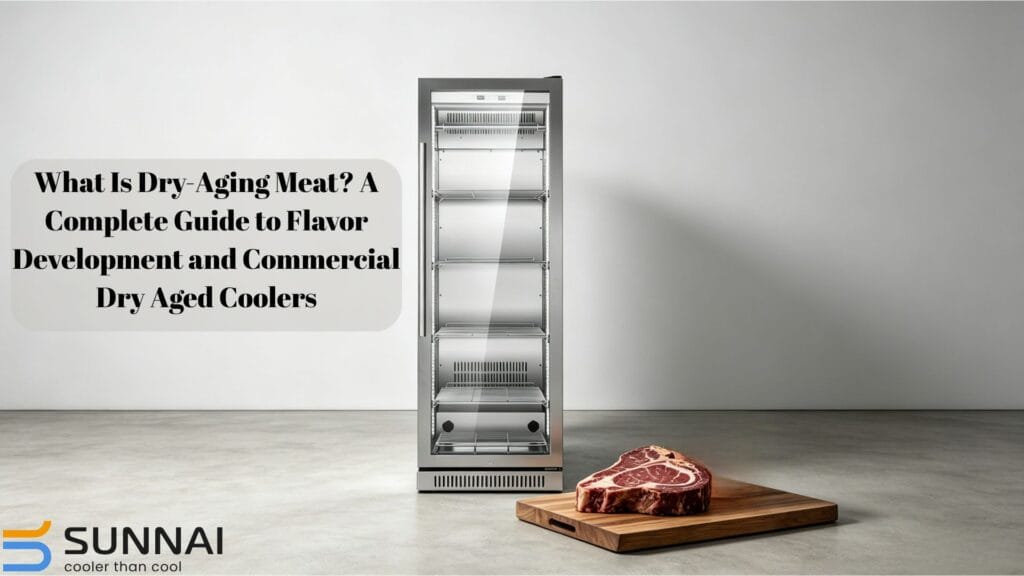
Did you know that people dry-age meat in specially designed dry-aged coolers for up to 45 days? It gives the meat a complex umami flavor with nutty, buttery, and earthy notes. The science behind the progress is much deeper. The beef is stored completely unpacked inside a strictly controlled environment of a dry-aged cooler. During its time inside, two things happen:
- Enzymatic Reaction
- Moisture Evaporation
Together, they physically change the chemical structure of the meat. It makes the meat tender and flavorful. As the meat is continuously losing its water, it starts to shrink and lose its initial weight. In the professional culinary world, the chefs refer to this as “Angels’ Share”. It’s driven by the whiskey-making industry. It means sacrificing little to gain intense flavor. The process of creating dry aging meat, it is a symbol of premium quality.
Let’s understand what dry aging meat is and how it’s created safely inside a dry-aged cooler. As a business owner, converting your meat into dry beef instantly gives at least 25% price increase over everyday beef.
What Does Dry Aged Mean in Meat Processing?
Defining the Dry Aged Meaning
Dry aging is a process that requires taking a whole, unpackaged section of meat after slaughter and resting it in a refrigerated room. It is kept under advance temperature control for a 14 to 60-day timespan. The main goal is to make sure that the myofibrillar protein dramatically increases and causes meat to become tender. As the water escapes at low temperature, it creates a taste that no other cooking method can achieve.
During its resting period in the dry-aged cooler, the meat develops a hard and dry outer crust called pellicle. The crust acts like a protective shell. It may need to be removed later in the process. However, it protects meat while the complex chemical and microbial changes happen. To ensure that the steak remains juicy, butchers must start with high-quality beef. It should have plenty of fat woven through the muscle called marbling.
How is Dry Aging Different from Ordinary Storage?
In a standard fridge, the main target is to keep the food safe. It slows down the natural decay of the meat by providing a static state. Dry aging, on the other hand, is a deliberate maturation process. Here are the key areas in which these two methods differ:
- Packaging: Standard fridges have meat kept inside vacuum-sealed bags to lock in moisture and prevent weight loss, called wet aging. On the other hand, dry aging intentionally exposes the meat to open air to force moisture out.
- Airflow: There are no fans present inside a regular fridge. Dry age coolers require a constant flow of 0.2 to 0.5 m/s. It stops the rot-causing bacteria Pseudomonas from growing. However, it allows the formation of beneficial molds.
- Humidity: Dry-aged cooler use space that is kept at 75% to 85% humidity. It ensures that the meat dries out properly without affecting the product yield. Standard fridges don’t have these features.
- Goal: Regular storage is designed to make the meat last longer. Dry aging sacrifices some meat weight to achieve specific tastes and smells called organoleptic qualities. These develop deep umami and nutty flavor.
What is Aged Beef Called in the Marketplace?
The most common term is Dry Aged Beef. It marks the item as premium in any shopping space. In restaurants, the Chefs will often tell you exactly how long the meat has rested. For instance, 28-Day Dry-Aged Ribeye. The longer the time, the more intense the flavor will be. High-end meat suppliers use terms like Vintage Beef or Reserve Maturation for cuts that have been aged for a long time.
In places like Europe, aged beef is tied to specific regions and traditional methods. These cuts might carry regional legal protections. These are PDO labels, such as Rubia Gallega, to ensure authenticity. A newer niche trend called “Steak Dry Aging” is growing. Instead of large-scale infrastructure, smaller shops and home enthusiasts can age their individual steaks using special moisture-permeable bags.
The Science of Dry Aging: How It Works
Proteolytic Enzymes and Tenderization
The process of making the meat soft and tender involves the meat’s endogenous enzyme system. There are two types of enzymes that make the meat tender:
- Early Tenderizing: After the process of dry aging begins, the calpains start to break down the physical structure of the muscle fibers. These are Z-lines and I-bands, which lead to weakening of the whole muscle’s structure.
- Long-Term Tenderizing: Later enzymes stored in lysosomal proteases called cathepsins take over. They work perfectly in an acidic environment of pH around 5.5. They continue to break down the connective tissue and muscle fibers long after the early enzymes stop working.
Warner-Bratzler shear force calculation provides how hard it is to cut meat after dry aging. It shows a massive difference of three times more tender on day 28 compared to day one.
Flavor Development and Concentration
As the meat ages, the flavor starts to increase. The complex proteins break down into free amino acids or FAAs. The development of Glutamic acid is responsible for the rich umami taste. Over a 35-day aging period, glutamic acid levels can increase by 67%. They go from 23,900 ppm to 40,000 ppm.
Other flavor changes are also happening:
- Nucleotides like ATP break down into savory compounds, inosine monophosphate or IMP, and then eventually hypoxanthine.
- Fat breaks down into simpler fatty acids called lipolysis.
- When cooking the steak, the mix of sugar and amino acids fuels the Maillard reaction, giving an intense flavor.
Overall, these chemical changes inside the meat result in umami synergy.
The Role of Beneficial Molds
Inside a dry-aged beef cooler, the meat grows a healthy and beneficial mold genus Thamnidium. It looks like a white streak on the surface. It acts as a natural flavor and texture enhancer. It secretes enzymes that penetrate into the meat to produce more tenderness. The crust contains yeasts and fungi. These are like Debaryomyces hansenii. The crust releases volatile metabolites that give the beef an earthy taste.
The fuzzy layer on top acts as a biological shield. It forms a mycelial network that blocks disease-causing bacteria from getting inside the meat. As long as the dry-aged cooler keeps the temperature below 3 °C, the molds do not produce harmful toxins.
Table: Comparison of Post-Mortem Aging Methods
| Feature | Wet Aging | Dry Aging |
| Packaging | Vacuum-sealed | Unpackaged/Aerobic |
| Primary Enzymes | Calpains | Calpains, Cathepsins & Fungi |
| Flavor Profile | Metallic, Sour | Nutty, Buttery, Umami |
| Yield Loss | Minimal | 15%–30% |
| Market Value | Commodity Standard | Premium (25%+ hike) |
| Infrastructure | Standard Cold Storage | Specialized Coolers |
Critical Environmental Factors for Successful Aging
Temperature Management
The industry standard for dry aging meat is to keep the dry-aged cooler temperature between 0 to 4C. Ideally, you want to stay around 1 and 2 °C. It’s the sweet spot for psychotropic spoilage bacteria like Pseudomonas from growing. It is also warm enough to allow the meat’s natural tenderizing enzymes to keep working.
In case of temperature extremes, the process is severely impacted. Above 3C for extended periods can lead to the risk of growing dangerous molds that produce toxins. In case we go below -0.5 °C inside the cooler, the meat freezes. It completely stops the enzymatic reactions needed for flavor development.
Humidity Control
To create the perfect protective crust called pellicle on the outside of meat, you need to control relative humidity. RH should be between 75% and 85%. If higher than 85%, the surface of the meat will stay too wet which may lead to slimy spoilage and growth of dangerous bacteria. When the humidity drops below 70%, the meat will dry out too quickly. It can lead to meat weight loss and creates a crust far too thick, increasing trimming waste. With the right control, the moisture level inside the surface of meat (water activity or raw) stays around 0.8, which is low enough to prevent fouling of meat.
Air Circulation and Hygiene
A dry-aging cooler is not just a fridge. There is a constant flow of air that pulls away the moisture. The prevention of wet pockets from forming on the surface of meat acts as a breeding ground for harmful bacteria. The stagnant air inside a dry-aged cooler is one of the main reasons why meat is ruined due to uneven drying and surface rotting.
Cleanliness is just as critical as maintaining the dry air draft. Strict sanitization protocols need to be adhered to for the metal racks inside Dry-Aging so that there is no cross-contamination in the cabinet. Modern setups come with Dry-Aged UV-C sterilization systems. They kill the airborne mold spores and bacteria without damaging the meat.
Why Businesses Invest in Dry-Aging Meat
Standing Out and Attracting Customers
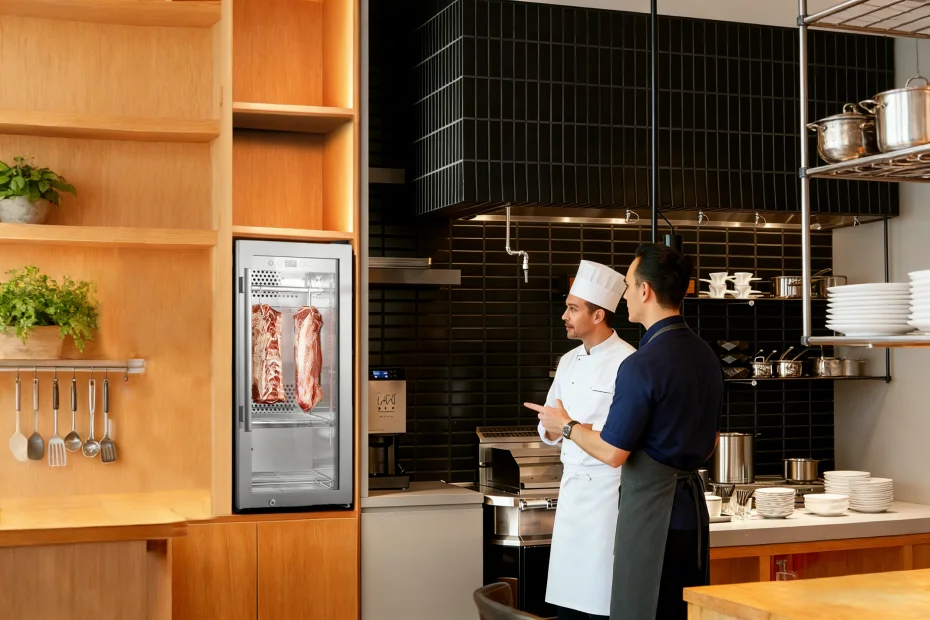
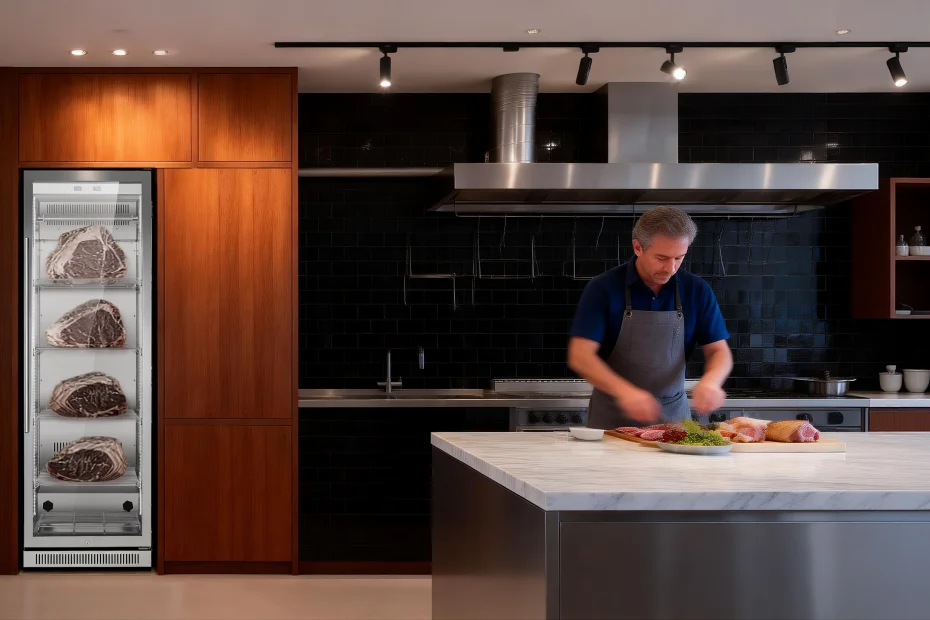
For food service businesses, offering dry-aged beef is a great way to have something unique to offer that others don’t. It allows the display of high craftsmanship when it comes to meat products. To enhance business use, these specialized glass-fronted refrigerators have lighting. They act as powerful marketing tools.
Boosting Profits and Reducing Risks
As the dry-aged beef is a specific niche business, it is regarded as a premium or luxury item. Businesses can charge a premium to, in some cases, double their profit margin per pound in comparison to the standard wet-aged cuts. While the process sounds delicate, investing in professional-grade aging equipment can significantly reduce the operational risks.
As more people are becoming aware of premium meat, it is expanding beyond just steakhouses. Direct-to-customer or DTC services are enhancing revenues for butcher shops. In fact, the online sales are projected to grow to 18.5%.
Choosing the Right Dry-Aged Coolers for Consistent Results
Why Specialized Dry-Aged Coolers Outperform Standard Refrigerators
Regular household fridges are not built to control the dry aging process of meat. They lack the precision sensors needed to keep moisture and temperature levels in the ideal range. These are vital when it comes to food safety in the meat dry-aging process.
Standard units do not have a draft of air to ensure circulation. It can lead to the development of hot spots. The meat in these areas can begin to rot. In a standard fridge, when the door is open, the warm air rushes in and causes temperature spikes.
Premium-grade dry-age coolers solve the problem by using smart programming. The moment the door closes, the system works in boost mode to prevent the temperature spikes from staying too long.

Features Dry-Aging Buyers Should Evaluate
When looking for a commercial-grade dry-aged cooler, you need to be fully aware of its capabilities. Ensuring that the cooler has all the right features to successfully convert a regular beef into a tender and flavorful dry-aged beef without failure.
- Accuracy: In dry-aging applications, long-term stability and consistency of the environment are more important than focusing on ultra-precise short-term readings. The key value of a professional dry-aging cooler is its ability to maintain a stable and continuous aging environment throughout the entire process, ensuring reliable results from start to finish.
- Integrated Monitoring: Temperature and humidity display functions can be integrated as part of the standard control system for basic operational visibility. More advanced monitoring or remote tracking functions can also be provided upon specific request, but these are optional configurations and may involve additional cost depending on system requirements.
- Space and Layout: The interior volume and the shelving arrangement must be evaluated. There should be enough room to allow air to flow through every single piece of meat. It’s vital to protect it from bad mold formation.
- Protective Glass: For aesthetic display units, you will need durable low-E tinted glass. It stops the light from turning the meat an unappetizing gray or brown. It is called light-induced oxidation, which may turn away customers.
- Safety Approvals: For the equipment to be used in the food industry and exported worldwide, it needs to have certifications. These include CE, GS, and ISO9001. It proves the machine is in line with industry rules.
Common Questions on Dry-Aging Beef
Is Old Dry-Aged Beef Always Better?
While the meat ages, it also creates a strong flavor. The noticeable improvements usually hit a ceiling around 35 days. It is considered standard for most cuts of beef.
Going past the 40-day mark is a very specific method used for highly prized cattle breeds like Wagyu. These breeds have massive amounts of fat woven into their muscle. If you push the aging length to the extreme of 120 days, the meat develops a funky profile and tastes similar to blue cheese or earthy truffles. While connoisseurs may love the flavor, it may make the taste too intense for average dining guests.
Financial and Operational Challenges of the Dry-Aged Beef Business
From a business perspective, going beyond the 35-day mark, the profits start to thin.. It is the biggest hurdle for the butcher and restaurants. The physical shrinking of the meat, combined with mandatory slicing of the desiccated outer cast reduce saleable yield.
- Capital in Long-Term Inventory
- Challenging Inventory Management Systems
- Strict Monitoring for Food Safety Compliances
- High Initial Investment
- Cumulative Yield Loss
Conclusion: The True Value Behind the Dry Aged Meaning
The dry aging of beef is a deliberate, delicate and controlled process of using meat’s own natural chemical breakdown. The result is a luxury product that increases profit margins for business owners and creates a premium taste that is unachievable with wet-aged meat. The process is done under controlled temperature, humidity and airflow of a dry-age cooler. The end result is unparalleled tenderness and umami depth in flavor.
For restaurant owners and butchers, the real benefit of dry-aged beef is the product differentiation. You can set a higher price than standard meat. However, to get the perfect results every time and prevent spoilage of meat, professional-grade equipment is necessary. You need premium Dry Aged Coolers from SUNNAI’s line. Their machines are built using Chinese and German manufacturing practices. They have extreme environmental control with UV sterilization capability. The technology ensures that your business can produce premium-quality beef with high yield.
Visit Wholesale Dry Age Refrigerator Manufacturer to explore their complete lineup of industrial-grade equipment. You can also contact them at:
- Email: [email protected]
- Address: No. 8, Road 11, Xingtan Industrial and technology Zone, Xingtan Town, Shunde Foshan China ,528325
FAQs
Q: What is dry aging meat, and how does it work?
The dry aging meat is a highly controlled and monitored method of converting regular beef into highly valuable meat through meat’s natural process. The dry aged cooler ensure that the process follows a specific path with temperature, humidity and airflow control to encourage enzymatic tenderization that leads to unparalleled tenderness and deep, savory, mouth-watering flavor.
Q: What is aged beef called in restaurants and butcher shops?
Customers going to restaurants and butcher shops can refer to the aged beef as “Dry-Aged”. They would have to define the number of days alongwith the label as it defines the beefs flavor and tenderness profile.
Q: How long can dry-aged beef be dry-aged?
Dry-aging the beef is usually done till 35 days. At this point the beef hits the plateau and there is no significant change in its feel and taste. Beyond 40 days is reserved for Waqgyu beef because of its marble profile.