Introduction
The cost of running an outdoor refrigerator can be very misleading. An outdoor unit on a hotel terrace may seem cheap but when you factor in the hot afternoon sun, nearby grill and regular opening of warm canned drinks, your bill will start to look costly. Using a model specific ENERGY rating, electricity rate and installation to calculate your costs will provide a useful budget. Always look at the facts and calculate your costs. Reduce any unnecessary cooling load and compare like-for-like. The ENERGY rating is not the same as the number of Watts on the brochure.
1. Understand What Outdoor Refrigerator Energy Figures Actually Mean
1.1 Rated Power Is Different from Electricity Consumption
Power is measured in Watts and ENERGY in Kilowatt Hours (kWh). One kWh equals 1,000 Watts per hour. Many compressor based refrigerators will run on a cycle and some will have variable outputs meaning the rated power will not be drawn every minute. 24 hours x rated power is not an accurate representation of the amount of ENERGY used daily. The rated power can be used to plan the electrical requirements but for cost calculations, start with the kWh per day or year.
1.2 Read Energy Labels and Test Reports in Context
Ensure the ENERGY rating is model specific. Check the market the model is being sold to and test method. Look at the ambient temperature, set point and kWh. If there is an ENERGY rating and cost provided on the label, use the kWh value and calculate your costs. Where applicable, ENERGY will be measured using standard methods. For example, the U.S. Department of Energy have a method for calculating ENERGY used annually on covered consumer refrigerators. This will help you compare models but does not guarantee the same results as an outdoor unit on a sunny patio with regular servicing. Ask the supplier what method was used and the temperature.
1.3 Identify the Conditions Behind Higher Consumption
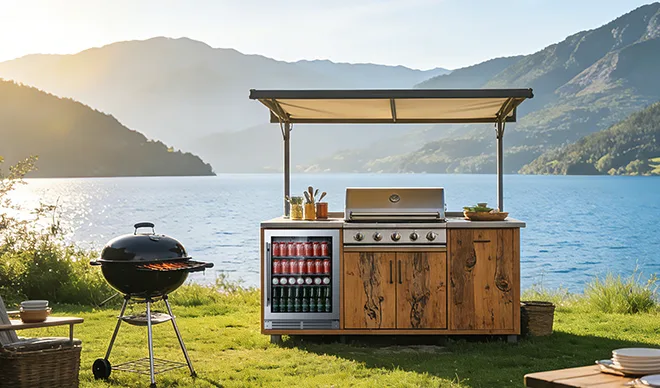
Heat is your enemy. If the ambient temperature is high, the unit is in direct sunlight, there is a pizza oven nearby or the exhaust is blocked this will increase the cooling load. Having the door opened frequently, restocking with warm drinks and having it set too low will also increase the load. It may use more ENERGY on a July pool bar than a mild testing day in Spring. However, having the compressor run for longer does not necessarily mean there is an issue.
2. Turn Reliable Energy Data into a Running-Cost Estimate
2.1 Choose an Appropriate Data Source
Use the ENERGY rating or test result for your model. If installed, use an ENERGY meter or sub-meter with the correct electrical rating. Take the total kWh over several representative days. Note the ambient temperature, set point, stock and how often the door is opened. The initial cool down should be noted separately. Do not use the ENERGY rating of a domestic fridge or wine cooler.
2.2 Calculate Daily, Monthly and Annual Electricity Costs
Use the below formulas:
- Daily Cost = kWh per day x local kWh rate
- Annual Cost = kWh annually x local kWh rate
If you only have the daily costs multiply by the number of days. For example, if the SY-51 had a 1.2 kWh rating, the cost would be 1.2 x 0.20 USD = 0.24 USD per day. 30 days = 7.20 USD and 365 days = 87.60 USD. Use the rate applicable to your location. If there are time of use rates, ensure you use these.
2.3 Build a Budget for Seasonal and Multi-Unit Operation
Use the representative ENERGY rating and apply the correct rate for the season, shoulder season and off season. Add up the kWh per day x days x rate. Do not use one mild day to calculate an annual average. If there are multiple units, multiply the realistic kWh by the number of units. Include servicing, cleaning and servicing costs. The unit with the lowest kWh may not be sufficient during peak service times.
3. Reduce Running Costs Through Installation and Daily Operation
3.1 Manage Heat Exposure and Ventilation
Try to position the unit in a shady area. Avoid positioning near any grills, ovens or hot exhausts. Ensure there is good airflow by keeping inlets/outlets clear. Refer to the manual for the model for the correct cabinet clearances. General advice for ENERGY STAR certified refrigerators and coolers is to avoid heat sources and ensure there is good airflow. Refer to the manual for the correct spacing.
3.2 Improve Beverage Loading and Service Habits
Ensure fast moving stock is easily accessible so staff do not have to hold the door open. Restock in batches as much as possible. Warm cans will cause a temporary increase in cooling load. Ensure there is no blockage to internal airflow and set to the highest temperature possible whilst still meeting your drink service requirements.
3.3 Use Maintenance and Monitoring to Find Waste
Ensure the door is closing fully. Check the seal is not damaged. Clean any accessible vents/condenser areas as much as possible. Keep track of the kWh used. If the kWh is high and the cabinet temperature is dropping, check the seal and airflow or request servicing. Adjusting the thermostat without knowing the cause could make it appear as if the issue has been resolved.
4. Compare Outdoor Refrigeration Options Using Evidence
4.1 Compare Equivalent Capacity and Operating Requirements
Ensure you are comparing net capacity. Ensure the temperature zone, set point, ambient temperature range, installation, airflow, electrical supply and test method are all the same. The kWh is the cost to run but the capacity is the service. A smaller cabinet may use less electricity but you may need an extra unit or more frequent restocking of warm stock.
4.2 SUNNAI Outdoor Beverage Cooler: Use the SY-51 as a Procurement Example
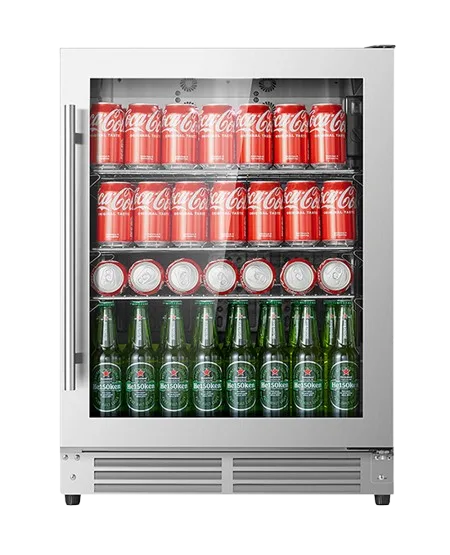
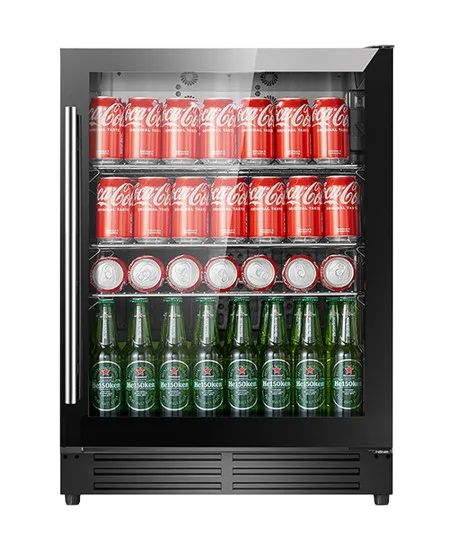
The SUNNAI SY-51 outdoor beverage cooler would be a good example of purchasing for a hotel terrace or outdoor kitchen. The unit has a 150L gross capacity, single temperature zone, 16-38°C ambient temperature range, nominal 220-240V/50Hz electrical supply. It can be freestanding or integrated. Refer to the installation manual for correct clearance and airflow. U.S. customers should ensure the electrical supply is correct.
The specification table does not show the kWh per day or annually. To get an accurate and defensible cost you need to ask for the ENERGY information. Ensure you ask for the ENERGY information for the specific configuration, test method and temperature. Ask for the report.
4.3 Evaluate Ownership Cost and Verified Efficiency Claims
Ensure you are comparing the cost of purchase, electricity, servicing and expected service requirements. Only calculate the payback period if you have like-for-like kWh. Divide the price difference by the annual saving. Just because it is stainless steel, uses R600a refrigerant or says outdoor does not mean it will use less electricity. Whilst the SY-51 mentions using R600a this is a refrigerant specification. Ensure any labels or certifications are proven for the exact model being supplied. A logo does not indicate the cost to run.
Conclusion
Using the correct kWh information and applying the correct rate will give you a defensible cost. Improving the positioning, airflow, stock management and regular checks will help reduce wastage but cannot compensate for lack of test information. Ask for the ENERGY report and test conditions for the specific configuration before ordering. Once installed, take measurements.
FAQs
1. How do warm drinks and frequent door openings affect energy use?
Having warm stock will increase the heat that needs to be removed. Opening the door will let warm air in. Generally, the more often or longer the door is open, the higher the cooling load. The actual kWh will depend on how it is used and the ambient conditions.
2. What temperature setting balances beverage cooling and running costs?
There is no general answer. Set to the highest temperature possible whilst meeting your drink and service requirements. Use a thermometer to confirm and refer to the manual for your model. Advise checking the manual for your cooler.
3. How can I measure an outdoor refrigerator’s actual electricity consumption?
Use an ENERGY meter with the correct electrical rating. Take measurements of the total kWh used over several representative 24 hour periods. Note the weather conditions, set point, stock and door usage. If it is used throughout the year, take measurements during different seasons.
4. Does an energy label predict running costs in an outdoor kitchen?
It will give you an indication of how much it will cost to run in the test conditions. Apply the local rate and take measurements of the installed unit.
5. What energy data should buyers request from an outdoor refrigerator manufacturer?
Ask for the kWh per day/annually for the specific model and electrical supply. Ask for the test method, ambient temperature, set point and report. Ask for information specific to the model and market.