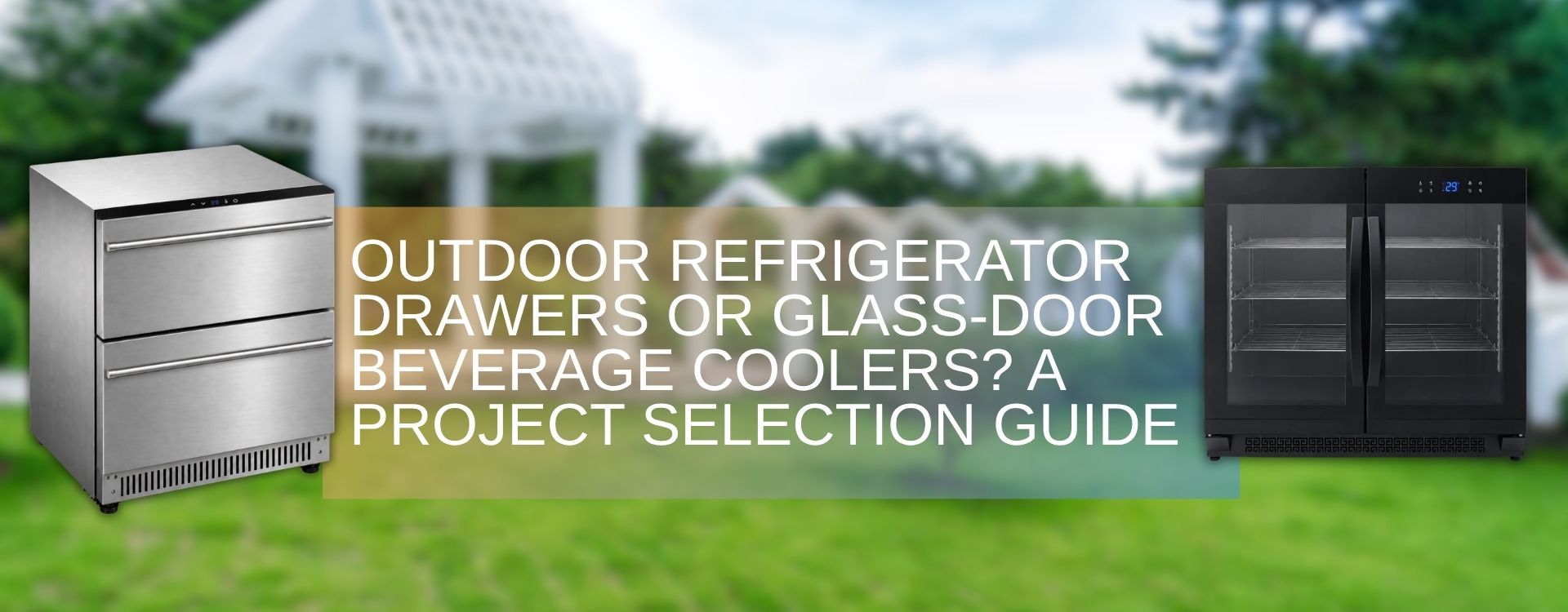
Introduction: Two Ways to Build Refrigeration into an Outdoor Kitchen
Everybody wants “outdoor-rated” on the spec sheet—right up until the first humid Saturday night when the glass door fogs up, the grill is dumping heat sideways, and someone yanks the handle like it’s a gas-station cooler.
Here’s the real split: refrigerator drawers and glass-door beverage coolers can sit in the same undercounter slot, but they’re not doing the same job. One is built for the cook’s workflow. The other is built for drink service and “grab-and-go” guests.
Pick based on what you’re storing, who’s accessing it, and where the traffic goes. Not based on what looks “premium” in a render.
And yes—outdoors changes everything: rain splash, pool humidity, sun load, dust, salt air, and the slow punishment of daily heat/cool cycles. Stainless on the front doesn’t magically fix that.
1. Refrigerator Drawers and Glass-Door Beverage Coolers Serve Different Jobs
1.1 Outdoor Refrigerator Drawers Prioritize Access and Mixed Storage
Drawers are about top-down access. You pull, you see, you grab. No digging behind bottles. No knocking over cans stacked in front of the thing you actually need.
They also tolerate “messy reality” better: food containers, sauces, prep tubs, meat packs, garnishes—stuff that doesn’t stand up nicely on shelves. Split drawers can keep categories separated, which matters when you’re cooking and moving fast.
And drawers don’t try to be decor. Contents stay hidden. That’s a feature when refrigeration is part of the prep line, not a display case.
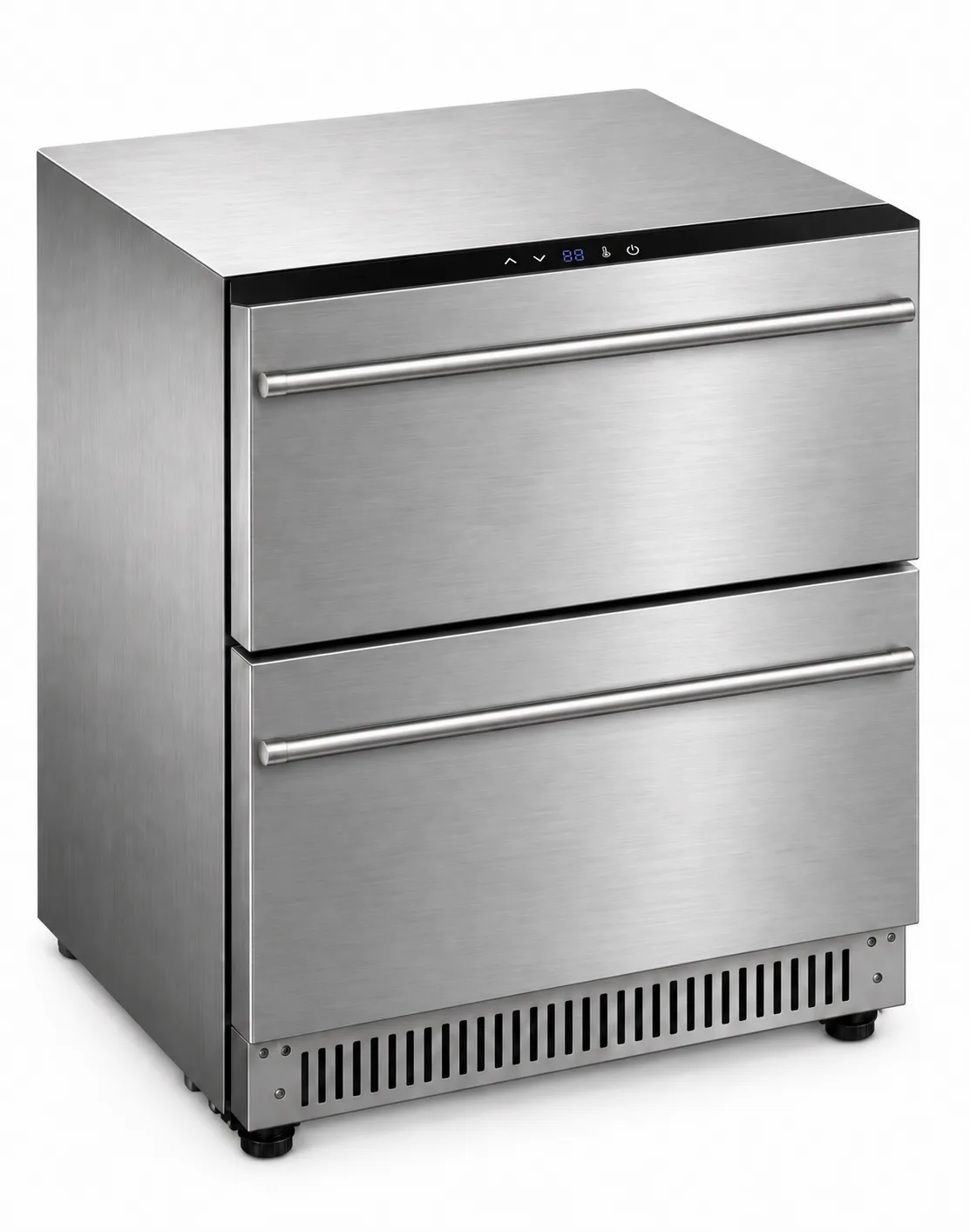
A real drawer-format example from our outdoor lineup is the SUNNAI SY-60—it’s a two-drawer outdoor unit with an upper ice-making drawer and lower refrigerated storage, built for built-in installs with front ventilation and an IPX4-rated outdoor design. It’s a niche tool, not a universal answer, but it shows why drawers exist: access and workflow.
1.2 Glass-Door Beverage Coolers Prioritize Visibility and Drink Service
Glass-door units win at one thing: people can see what’s inside before opening. That reduces door-open time, reduces “inventory guessing,” and stops guests from standing there holding the door open while they debate sparkling vs. still.
Shelving is also built for beverage logic—cans, bottles, mixers, tall stuff—because the cabinet uses vertical space instead of chopping everything into horizontal bins.
Plus, a lit glass-door cooler becomes part of the bar vibe. Love it or hate it, that visual matters on terraces, pool decks, and hospitality builds.
SUNNAI’s outdoor beverage coolers are explicitly positioned for outdoor/semi-outdoor environments and call out temperature fluctuation and humidity exposure as design targets.
1.3 Think About What Guests Should Access
This is where projects go wrong.
- Drawers support a cook-centered workflow. Park them beside the grill or prep run so the cook isn’t hiking across the patio for every ingredient.
- Glass-door coolers support self-service. Put them closer to seating, the bar, the pool gate—where the drink traffic already is.
On larger layouts, the clean move is two cold zones: drawers for food/prep, glass-door for drinks. Stop forcing one appliance to serve two workflows that fight each other.
2. Compare Storage Capacity, Organization, and Everyday Workflow
2.1 Storage Layout Matters More Than Exterior Dimensions
Same footprint doesn’t mean same usable storage.
- Drawers divide capacity horizontally. That’s great for organization, but tall bottles and odd-shaped containers can become a Tetris problem.
- Beverage coolers use cabinet height. You can re-pin shelves as your drink mix changes.
So don’t shop by “liters” alone. Shop by what you’re actually loading: can count, bottle height, and whether you need flat, stackable space for food pans.
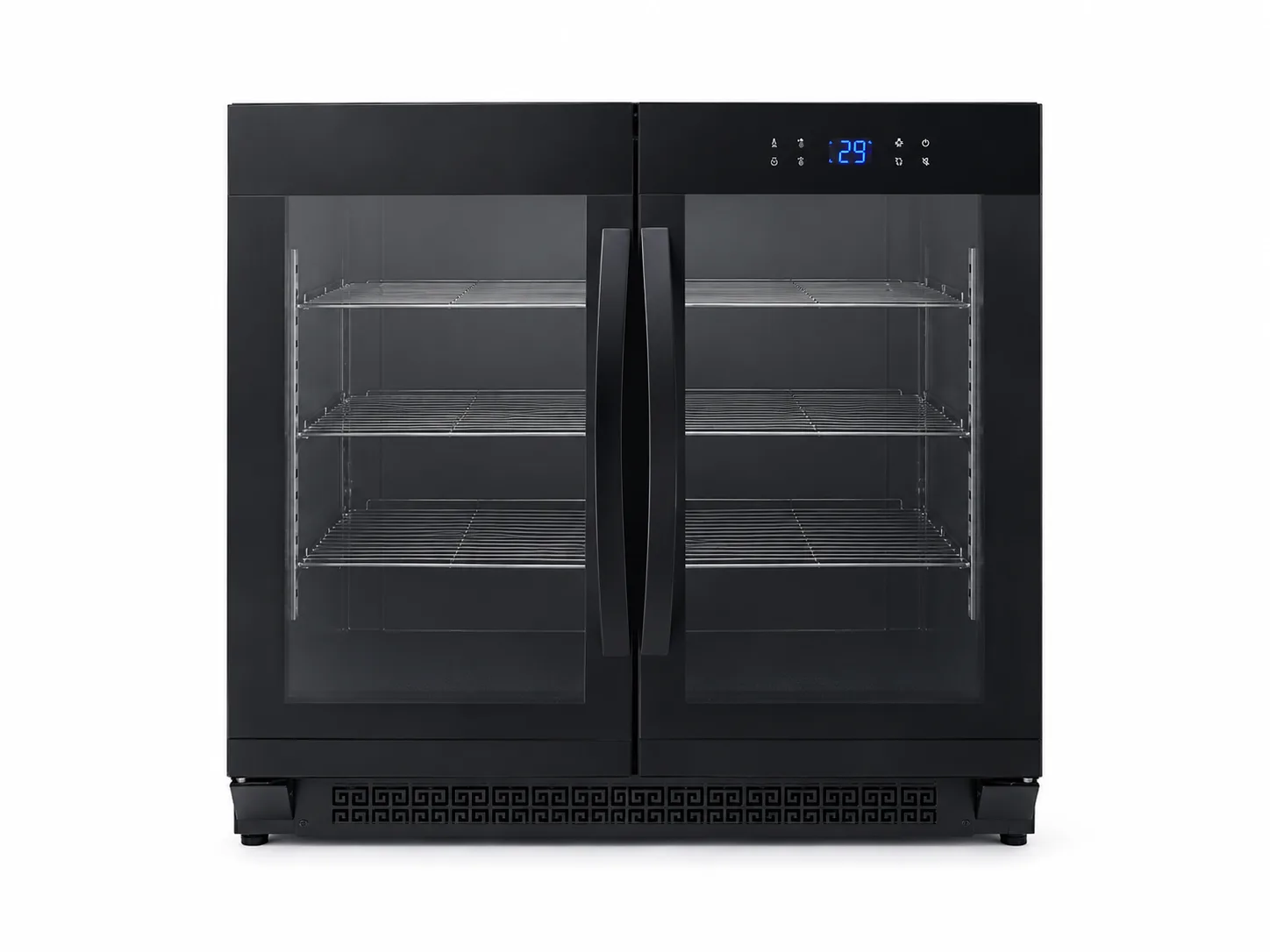
On the SUNNAI SY-51 glass-door outdoor beverage cooler spec, for instance, the headline numbers are 150L gross volume and up to 132 cans—useful because it tells you what the shelves are meant to do.
2.2 Door and Drawer Movement Affect Outdoor Kitchen Flow
Door clearance is not a small detail outdoors—it’s the difference between a fun party and a constant bottleneck.
- Drawers extend straight out into the aisle. If your island run is tight, someone will get hip-checked.
- Hinged glass doors need swing room. Stools, corner returns, and adjacent appliances love to block doors unless you plan the hinge side early.
Basic rule: food cold storage lives near prep. drink cold storage lives near people. That one decision reduces cross-traffic around the grill—where you don’t want guests wandering anyway.
2.3 Visibility Changes Restocking and Inventory Management
Drawers look cleaner because they disappear into the cabinetry. But you don’t know what’s missing until you open them.
Glass-door units make inventory obvious—especially at night with interior lighting—so staff (or homeowners) can restock without playing “what are we out of?” after the guests arrive.
That matters more than people admit on hospitality patios, rooftop bars, and event spaces where beverage SKUs rotate and someone has to keep the line moving.
3. Outdoor Conditions Should Influence the Choice
3.1 Outdoor Refrigeration Is Not Simply Indoor Refrigeration Installed Outside
Outdoor environments are harsh in boring, expensive ways:
- Sunlight can overheat surfaces beyond ambient air temperature, especially around dark stone and reflective walls.
- Humidity drives condensation at night when temperatures drop.
- Salt air, pool chemicals, grease, smoke—they all accelerate corrosion and gunk buildup.
And no, a shiny stainless front panel does not prove the whole cabinet is protected. Buyers need to look at hidden panels, seams, fasteners, vents, and controls—not just the door.
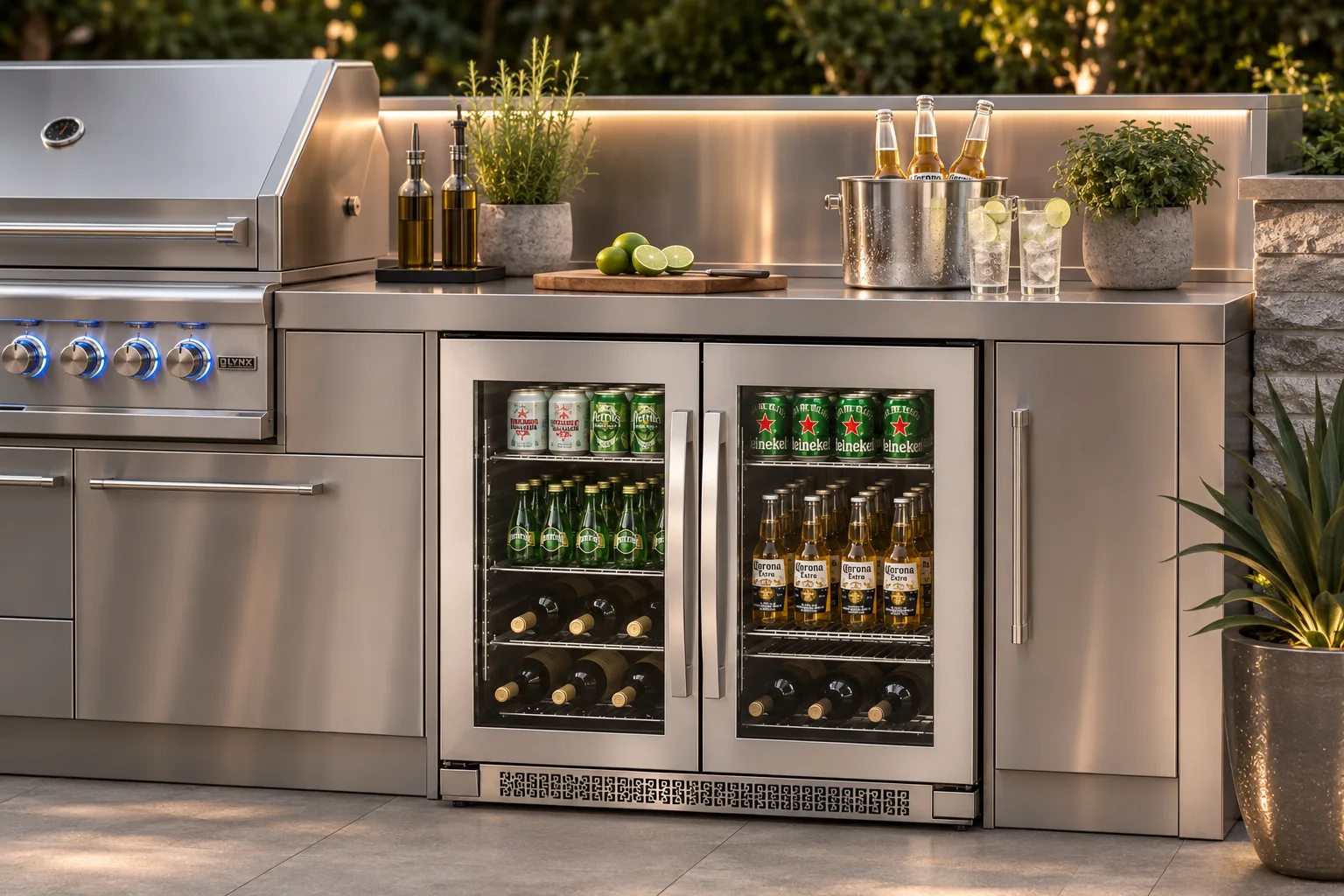
3.2 Glass-Door Models Require Attention to Insulation and Condensation
Glass adds a big thermal surface. Warm humid air + cold interior = moisture looking for somewhere to land.
Condensation gets worse when:
- the door opens constantly during parties,
- the unit sits in direct sun,
- the sealing/insulation is weak.
That’s why sealing quality matters, and why placement matters—shade and distance from heat sources extend appliance life.
SUNNAI’s outdoor refrigeration line calls out anti-condensation door design as part of its outdoor positioning—good, because foggy glass is the “premium” look nobody enjoys living with.
3.3 Outdoor Refrigerator Drawers Have Their Own Design Considerations
Drawers aren’t “easy mode.” They have more sealing edges and moving interfaces than a single door.
Three things to watch:
- Consistent sealing: two drawers means more gasket contact points.
- Load handling: drawers get heavy fast (bottles + food pans + ice bags), so slides and closure design matter.
- Cleaning access: outdoor cooking zones mean spills, crumbs, dust—stuff that gets into tracks and corners.
The SY-60 example shows some of what you want in this format: soft-close drawer operation and an outdoor-built cabinet concept, not a repurposed indoor unit.
4. Choosing Outdoor Refrigeration for Residential and Commercial Projects
4.1 Choose Drawers When Food Preparation Comes First
Choose drawers when the refrigeration is supporting cooking, not hosting.
They make sense for:
- active cook zones (grill, pizza oven, prep counter),
- premium residential builds where you want refrigeration to visually “vanish,”
- mixed storage (ingredients + condiments + packaged items).
If you’re doing a project that also needs ice without dedicating separate space, a drawer-format platform like SUNNAI’s SY-60 (ice-making upper drawer + refrigerated lower drawer) can cover two needs in one undercounter slot—overkill for some homes, perfect for others.
4.2 Choose a Glass-Door Outdoor Beverage Cooler When Drink Service Comes First
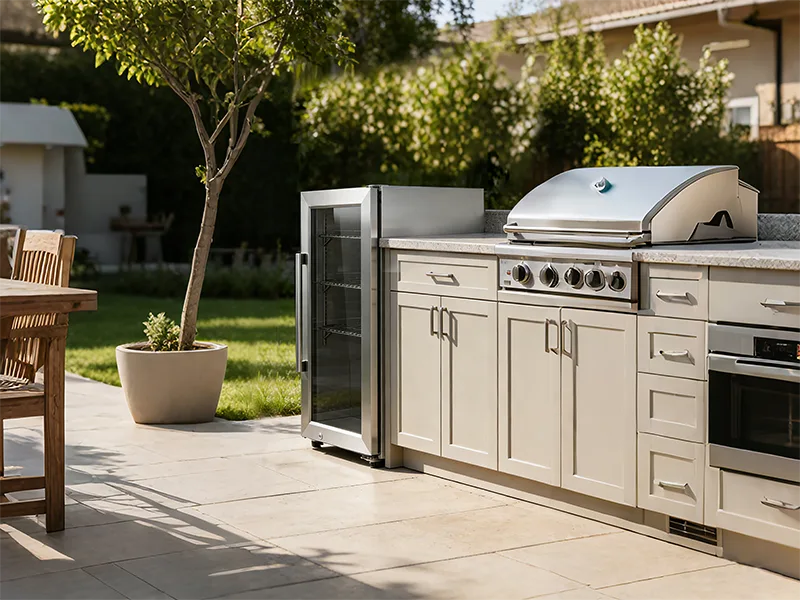
Choose glass-door when drink selection speed and self-service matter.
Best fits:
- outdoor bars and entertainment zones,
- hospitality patios and terraces where staff need quick visual inventory,
- beverage-heavy storage where shelving beats bins.
The nice side effect: guests stop hovering in the cook zone because the drinks are clearly staged somewhere else.
4.3 SUNNAI Outdoor Beverage Cooler for B2B Outdoor Refrigeration Projects
If you want a concrete “this is what a serious outdoor beverage cooler spec looks like” example, use the SUNNAI SY-51 Outdoor Beverage Cooler:
- 150L gross volume, rated up to 132 cans
- single zone, compressor cooling, R600a
- 304 stainless steel cabinet/body
- temperature range 3–16°C with ambient range 16–38°C
- freestanding or integrated placement
- OEM/custom options called out (materials, handle, branding)
Product page (for your procurement docs / submittals): https://www.cnsunnai.com/products/sy-51-outdoorbeveragecooler/
Now the unglamorous part people skip: SY-51’s listed electrical spec is 220–240V / 50Hz. That’s fine for many markets, but it means US projects need the right configuration at the sourcing stage—don’t wait until the units hit the dock.
4.4 Some Projects Benefit from Using Both
A lot of “which should I buy?” debates end with: both, placed correctly.
- Drawers by the grill = cook stays efficient.
- Glass-door cooler by the bar/seating = guests stop invading the prep zone.
- Restocking becomes cleaner: drinks get handled separately from food prep.
Treat outdoor refrigeration like a toolset, not a single appliance doing forced double duty.
Conclusion: Choose the Format Around the Job, Not Just the Look
Refrigerator drawers are strongest when organized food storage and cook access are the priority.
Glass-door beverage coolers are strongest when visible drink storage and self-service are the priority.
Outdoor installs punish lazy planning—clearance, heat exposure, humidity, sealing, and materials decide whether the appliance lives a long life or becomes a stainless headache.
FAQ
Do glass-door outdoor refrigerators get condensation?
Yes, they can—especially in humid climates, at night, and during heavy party use. Condensation is driven by warm moist air meeting a cold surface, and glass is a prime target. Better sealing/insulation and smarter placement (shade, away from heat sources) reduce it.
What should I store in outdoor refrigerator drawers?
Stuff the cook needs fast: packaged ingredients, marinades, sauces, garnishes, food containers, and “backup” drinks that don’t need to be on display. Drawers are about access and mixed storage, not showing off labels.
Are refrigerator drawers worth it for an outdoor kitchen?
They’re worth it when the outdoor kitchen is actually used for cooking—and the drawer is positioned where the cook works. They’re less impressive when the real need is guest drink service. In that case, drawers tend to become hidden clutter.
Where should a beverage cooler be placed in an outdoor kitchen?
Near the bar, seating, or entertainment zone—anywhere guests naturally hang out. Keep it out of the cooking lane so people grabbing drinks aren’t crowding the grill. The goal is fewer collisions, fewer door-open seconds, and less heat load from nearby cooking.
Can an outdoor kitchen use both refrigerator drawers and a glass-door beverage cooler?
Yes, and it’s often the cleanest layout: drawers near prep for food workflow, glass-door cooler near guests for drink workflow. It’s the simplest way to stop one appliance from being asked to do two jobs badly.