
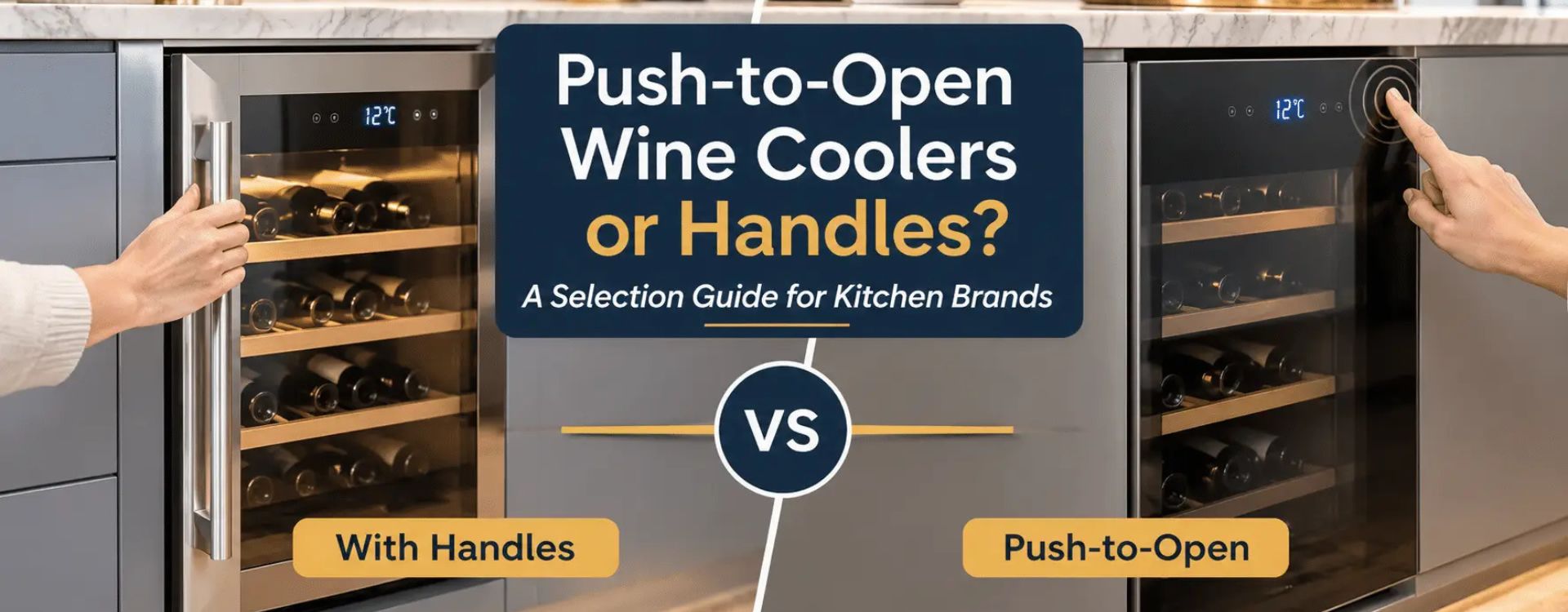
Selecting a wine cooler for a kitchen project may seem quite a straightforward purchase decision. But some things often make you think twice or get confused. The door is one such feature of the wine cooler. The question that often arises is should you go with a wine cooler that has a push-to-open door or the one with handles.
From the face of it, it seems like a small design decision. But the fact is that it might impact more than just its appearance. There can be multiple things to consider here. For example, how someone opens the door. How much space the handle takes up? Does the wine cooler with a handle fits the cabinet design? Is it easy to clean?
For kitchen brands, designers and project buyers, getting this detail right before production can be beneficial. It can save a lot of back-and-forth later.
So, in this article we look at both options: Push to open wine coolers or with handles. We compare how both work, what to consider during installation and which format may suit different kitchen projects.
Push-to-Open vs. Pull Handles: What Is the Difference?
The basic difference between the two is simple.
In a wine cooler with a normal handle the user grips the handle and pulls the door open. In a push-to-open design the user presses the door to activate its opening mechanism.
It does not have an external handle to grip.
Both the wine cooler door options have different mechanism to open and shut the door. The activation method and the amount of assistance the door receives depend on the model.
You should remember that even the push-to-open also does not automatically mean that the door opens fully by itself.
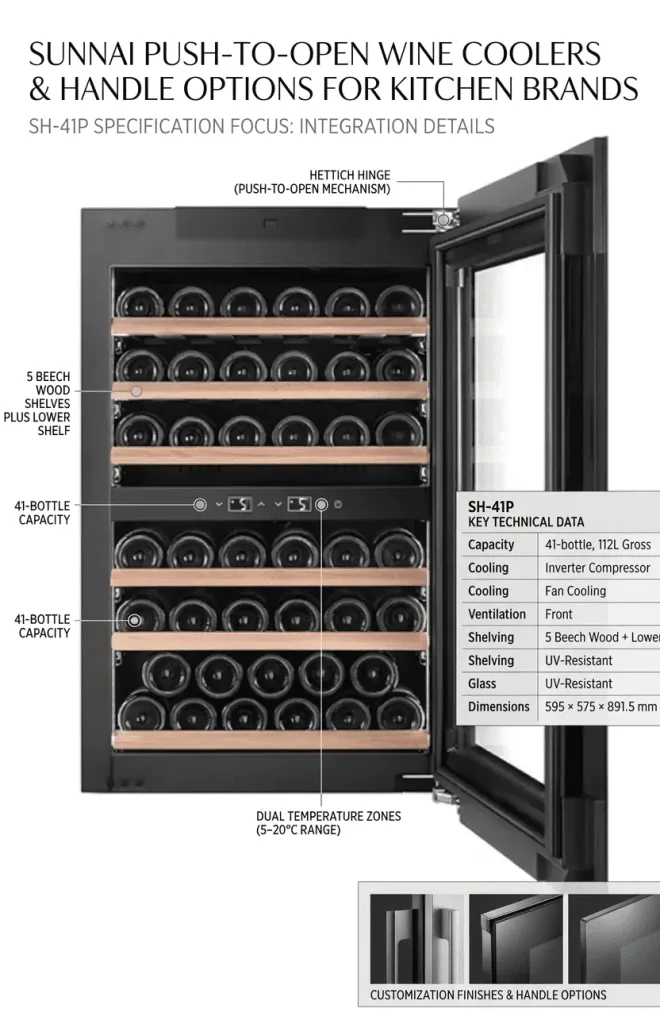
For example, SUNNAI’s SH-41P Wine Cooler has a push-to-open door design. It does not have an external handle. As per product specifications the push-to-open door comes with a soft hinge. It is a built-in model with a 41-bottle capacity and dual temperature zones.
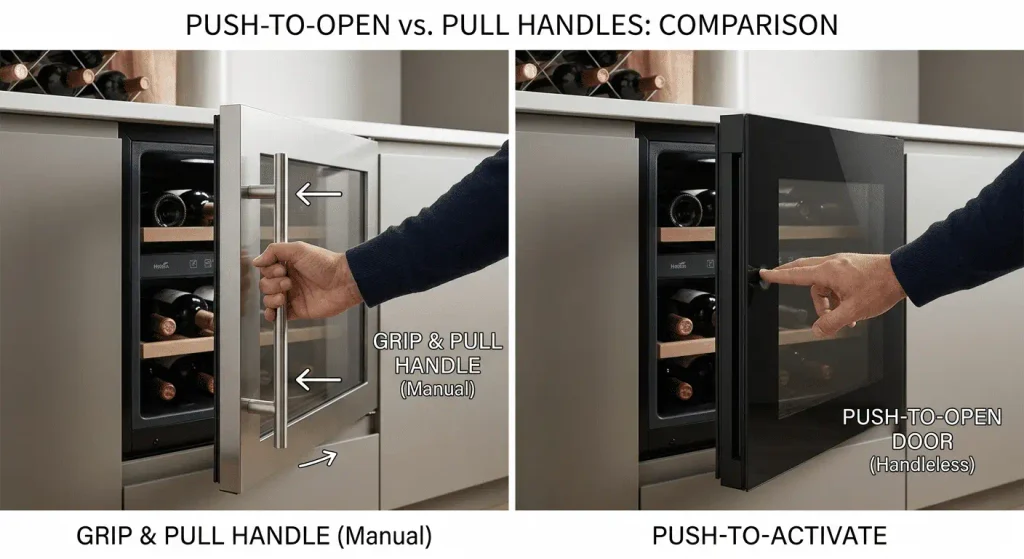
Other wine cooler models by SUNNAI offer the doors with traditional handles. This gives users a familiar handle to grip, pull and open.
They can see where to hold and pull without first learning a different opening action.
Neither option is automatically better than the other. The right choice depends on the kitchen design and the people who will use the appliance.
How Do the Two Door Styles Affect Kitchen Appearance?
This is the point on which the decision is often made by the buyers.
A handle free look for minimalist kitchens
In most minimalist modern kitchens today, we see flat-front cabinets, clean lines and no visible handles on cabinet doors.
In this set up if you add a wine cooler with a prominent pull handle it may disturb the overall outlook.
A push-to-open cooler is a good choice in this interior style. It provides a consistent appearance. There are no external handles projecting from the door. Hence the front looks modest and less cluttered.
This is good for modern apartments, luxury kitchens and interior projects where the appliances are intended to merge into the cabinetry.
However, you must know that a handle-free door does not automatically mean a completely flush installation. Features like the appliance’s body, glass frame, hinges, cabinet opening and installation requirements can also be important for determining how it sits within the surrounding cabinets.
Traditional handles for a coordinated finish
In contrast to the above, there can be a kitchen that has brass, black or brushed-metal cabinet pulls. A wine cooler with a matching handle may look more intentional here.
SUNNAI’s Wine Coolers range provides buyers with several handle options. Standard cylindrical handles can be customized to square profiles or aluminum pull handles. The wine coolers also come in different door finishes. This includes full black glass and stainless-steel alternatives.
One thing to keep in mind here is that a handle shown on one model cannot be added to another. Confirm the available configuration and compatibility with SUNNAI before approving the design.
Do Not Overlook Handle Projection
In a product photograph the handle may look small. But it does take up some physical space in reality.
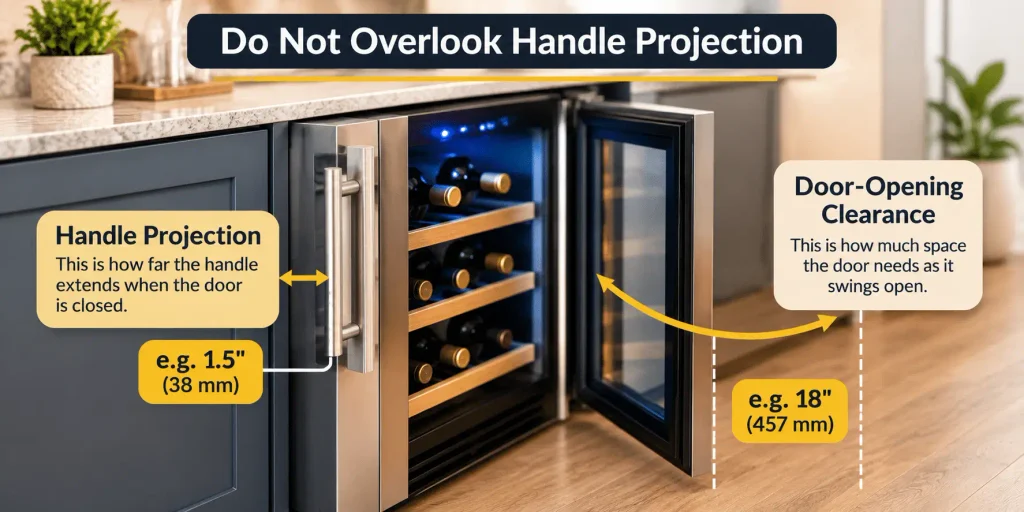
When a kitchen elevation is planned you should see that how far the handle projects outside the door face. You should check that it is fixed comfortably beside cabinet fronts, drawers or nearby appliances.
Remember that a handle that is fitted neatly within the kitchen elevation does not always mean the door has enough room to open.
Therefore these two measurements should be kept separately.
- Handle projection: This is how far the handle extends when the door is closed.
- Door-opening clearance: This measurement is how much space the door needs as it swings open.
Which Door Style Is Easier for Everyday Use?
A wine cooler may look beautiful in a showroom. With or without a handle. However, its practicality and effective is more prominent when people use it in real kitchens.
So, it should be thought about beyond just looks.
· Things like where the wine cooler is placed and who uses it, are important for selection. A traditional handle is immediately recognizable by . Most people understand that they need to grip and pull it. This is very helpful in guest suites, shared kitchens and hospitality spaces where users may be unfamiliar with the appliance. Push-to-open has a cleaner appearance. However, for first-time users may take a while to understand how it works. If you are buying a push to open wine cooler for a shared space, then make sure to clearly provide instructions for the model usage.
· In this domain the comfort of the grip also matters. Some users may prefer a handle they can hold securely. Others may like the uncluttered door surface.
· The installation height also makes a difference. A wine cooler placed below a counter may be accessed differently from a taller unit. It should not be assumed that a handleless design is automatically easier or more accessible.
A simple recommendation: Test the actual sample. You can ask someone who has never used the appliance to open it. Then try the operation with slightly wet hands. You can repeat it while retrieving a bottle. That small test can tell you more than a product photograph.
What Should You Check Before Installing the Wine Cooler?
The wine cooler may fit the cabinet opening. However, you need to see that the door will operate comfortably.
Check The Closed Position And Full Opening Path
You should start by confirming where the appliance’s door face will sit. See it in relation to the surrounding cabinet fronts. Now use the approved installation drawing.
Then check the door movement.
- Can the door begin opening without hitting an adjacent cabinet?
- Does it clear nearby walls, drawers and appliances?
- Can users open it far enough to reach the shelves?
- Is there enough room to remove bottles without awkward handling?
Remember, the required opening angle is not just about getting the door open. It should also allow comfortable access to the wine inside.
Confirm Proper Ventilation And Cabinet Alignment
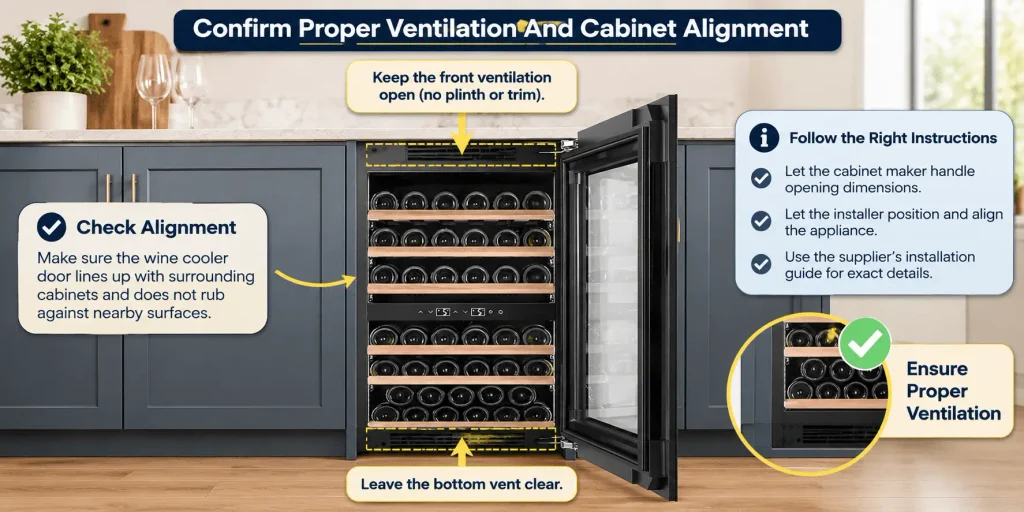
A built-in wine cooler needs the specified ventilation arrangement . You should avoid covering the ventilation openings with decorative plinths, cabinet trim or other finishing pieces.
For example, SUNNAI SH-41P wine cooler has a front ventilation specified. Its installation still needs to follow the model-specific instructions. You should not use the ventilation arrangement of another wine cooler as a substitute.
Also check that the appliance is positioned correctly. See that the door aligns with the surrounding cabinetry. Ensure that the nearby surfaces should not rub against the door or interfere with its movement.
Agree On Installation Responsibilities
The cabinet manufacturer may handle the opening dimensions and surrounding panels. The installer may position and align the appliance.
The appliance supplier should provide the relevant installation instructions and permitted adjustment details.
After installation, you should test the door several times. See the opening, closing and shelf access. If the wine cooler model includes documented alarm, locking or closing functions, you should test those separately. Then provide the user with the correct instructions.
Push-to-Open or Handles: Which Is Easier to Clean?
Both designs have their cleaning points. The difference between the two wine cooler door feature is where fingerprints and dirt will collect.
On a push-to-open door, users make contact with the door surface. If it has a glass glossy or dark finish, then the fingerprints may be more noticeable. This is more likely to happen with strong kitchen lighting.
A traditional handle keeps that contact away from the glass. However, the handle itself needs cleaning. There can be collection of dust and fingerprints around the grip, mounting points and edges.
So when it comes to cleaning and maintenance which wine cooler door style can be better? Well, that too depends on the finish of the wine cooler door and how the appliance will be used.
For a busy kitchen or hospitality project the cleaning routine should be considered before choosing the finish. You can ask for the approved cleaning instructions for the glass, metal surfaces and door seals from the manufacturer.
Unless the manufacturer specifically permits always avoid harsh chemicals or abrasive materials for cleaning.
Which Opening Format Should You Choose for Your Project?
The best option depends on the setting and the people using it.
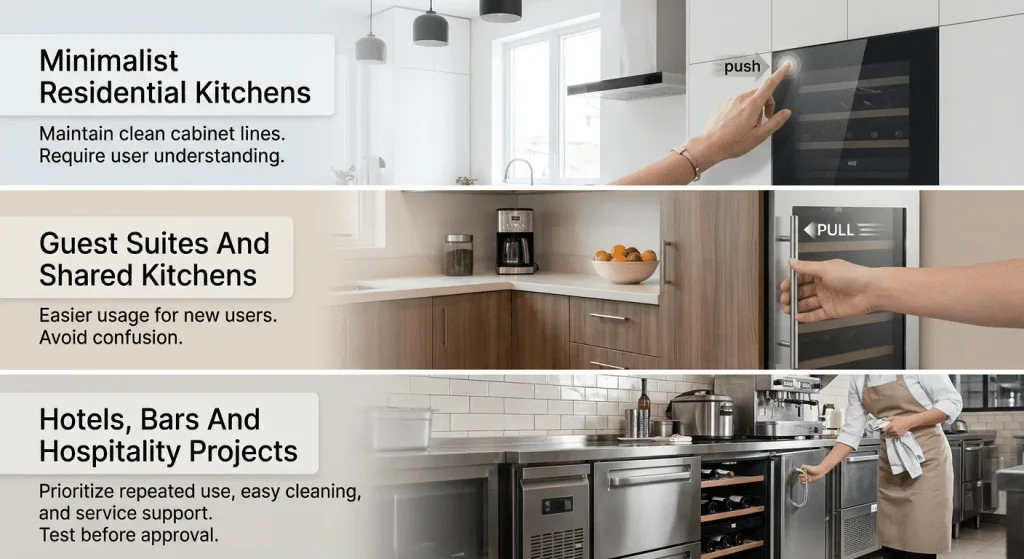
Minimalist Residential Kitchens:
A push-to-open model is a good option for maintaining clean cabinet lines. You should make sure the homeowner understands the opening action of this door style.
Guest Suites And Shared Kitchens:
A traditional handle is easier in usage for users who are unfamiliar with modern appliances. If you prefer a handleless model, you should first test it with people who have not used it before.
Hotels, Bars And Hospitality Projects:
In these types of settings aspects like repeated use, cleaning routines and service support should be thought about. The staff may open the appliance many times during a shift. Hence, you should test the actual model under realistic conditions before approving it.
SUNNAI Push-to-Open Wine Coolers and Handle Options for Kitchen Brands
If you are developing a handleless kitchen range, SUNNAI’s SH-41P is a useful product example.
It is a built-in, push-to-open wine cooler with no external handle. The published specifications include:
- 41-bottle capacity and 112L gross volume
- Dual temperature zones
- Five beech wood shelves plus a lower shelf
- Inverter compressor with fan cooling
- Soft close hinge
- Front ventilation
- Black body and UV-resistant glass
- Temperature range of 5–20°C
- Body dimensions of 595 × 575 × 891.5 mm
These details help kitchen brands assess the appliance as part of a wider cabinet design, rather than looking at the door style alone.
SUNNAI offers a wide range of wine coolers with varying options for handle profiles, glass finishes and other design details.
A Door-Format Approval Checklist for Kitchen Brands
Before placing an order, make sure the project team has confirmed the following:
- Selected opening format: push-to-open or pull handle
- Handle profile and finish, where applicable
- Door glass and frame appearance
- Position of the closed door against cabinet fronts
- Handle projection and full door-opening clearance
- Required opening angle and shelf access
- Cabinet dimensions and ventilation arrangement
- Approved cleaning instructions
- Service responsibilities and replacement-part availability
- Physical sample approval and final installation drawing
Keep the approved drawing and product configuration together. This gives the cabinet manufacturer, installer and supplier the same reference.
Conclusion
Push-to-open wine coolers and traditional handles can both work well in modern kitchen projects. The difference comes down to the look you want, how familiar the opening action is to users and how the appliance fits into the surrounding cabinetry.
A handleless model such as SUNNAI’s SH-41P can suit a minimalist kitchen. On the other hand a wine cooler with a pull handle is a better choice for a kitchen range built around visible hardware.
The wine cooler door style should not be approved based on appearance alone. You need to check the drawing, test the opening action and confirm the installation requirements. Do this before production begins. That small bit of planning can prevent a lot of avoidable adjustments later.
FAQs
1. What is the difference between a push-to-open wine cooler and a wine cooler with a handle?
A push-to-open cooler employs a pressing action. This activates its door-opening mechanism. In a traditional wine cooler model with an external handle the user will grip the handle and pull the door to open.
2. Can every handleless wine cooler be installed flush with kitchen cabinets?
No. Removing the external handle of a wine cooler does not guarantee flush installation. The appliance dimensions, door construction, hinges and installation requirements determine how it fits into the cabinet.
3. How should wine cooler handle projection be included in kitchen plans?
You must show the handle’s projection beyond the closed door face on the kitchen elevation. Make sure to check the full door swing separately. This will make sure it clears nearby cabinets, walls and appliances.
4. Do handleless wine coolers show more fingerprints?
Yes. The push to open door style in wine coolers show fingerprints on the door surface. This is because the users press the door to open it. The extent of visibility of these marks depends on the finish of the door, the lighting and the frequency of usage.
5. What should you check if a push-to-open wine cooler door does not respond?
If your push to open wine cooler door is not working properly, it should be checked for any obvious obstructions first. Next you should see that the appliance and door are correctly aligned. If these two issues are not visible you should consult the user manual for the trouble shooting.
If the problem continues, the qualified technical support team of the manufacturer should be contacted. Do not attempt to make adjustments on your own.