
Introducción
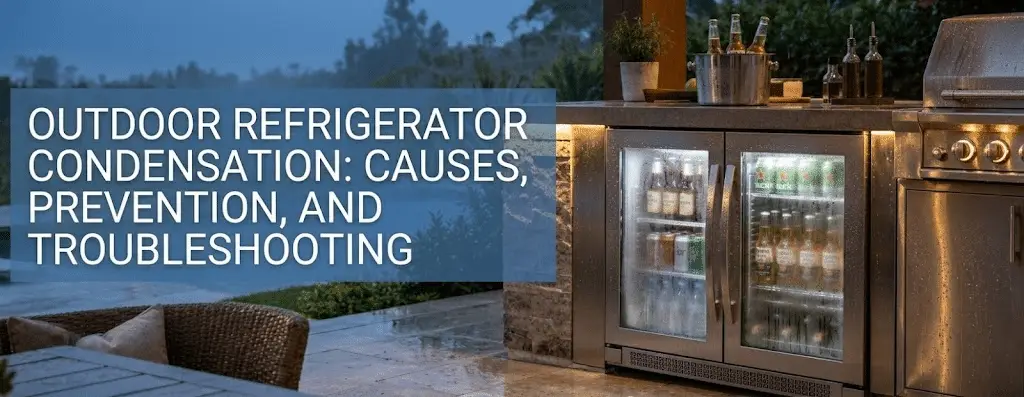
Imagine you’re preparing for a busy day at an outdoor lounge inside a luxury resort. The bar staff just come to you and say the bajo el mostrador glass door is fogged, the door sills are slippery, and there’s a pool of water right under the bebida station just as guest service is about to start. The typical morning routine became a challenging situation for operations.
Light exterior sweating during peak summer humidity is often a standard thermodynamic reaction rather than an equipo failure. However, persistente pooling can lead to:
- Kitchen Safety Issues
- Rots Custom Cabinetry
- Risks Electrical Hazards
Indoor fridges stay inside a warm, temperature-controlled space. Exterior refrigerators battle harsh, constantly-changing weather. Working in alta humedad and variable outdoor air pressure are things interior appliances never have to face.
In this article, we will walk you through the step-by-step process to determine where moisture is coming from, how your local weather and setup affect it, and how to take easy steps to evitar condensation in outdoor refrigerators. If those don’t work, we’ll tell you exactly when and how to contact a Profesional under your warranty.
1. Read the Moisture Pattern Before Choosing a Fix
1.1 Outside the Cabinet: Glass, Door Frames and Exterior Surfaces
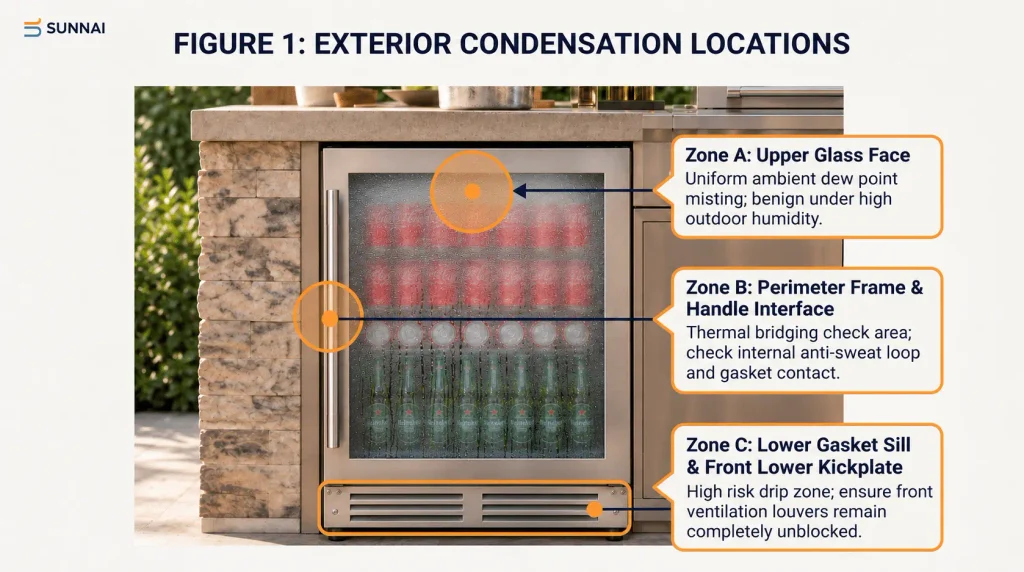
Exterior fogging is a basic psychrometric phenomenon: water vapor condenses into liquid droplets when the temperature of an appliance’s external surface falls below the punto de rocío de ambiente air. When the outdoor relative humidity is above 65% in summer (with temperatures above 28°C), the dew point is in the region of 21-24°C and the cold stainless steel cladding and outer glass become natural attractors for moisture.
Staff should be recording the diurnal moisture shifts and looking at whether the condensation is associated with the morning dew spike or with an influx of coastal humidity. If the condensation is confined to the metallic door edges, then this is likely to be due to thermal conduction through the frame or an inactive internal perimeter anti-sweat Yoder loop. It is important to be able to tell the difference between the glass being uniformly misted and the glass being in fact dripping with dense droplets onto the sill for the purposes of a non-invasive visual diagnóstico.
1.2 Inside the Cabinet: Inner Glass, Shelves and the Cabinet Floor
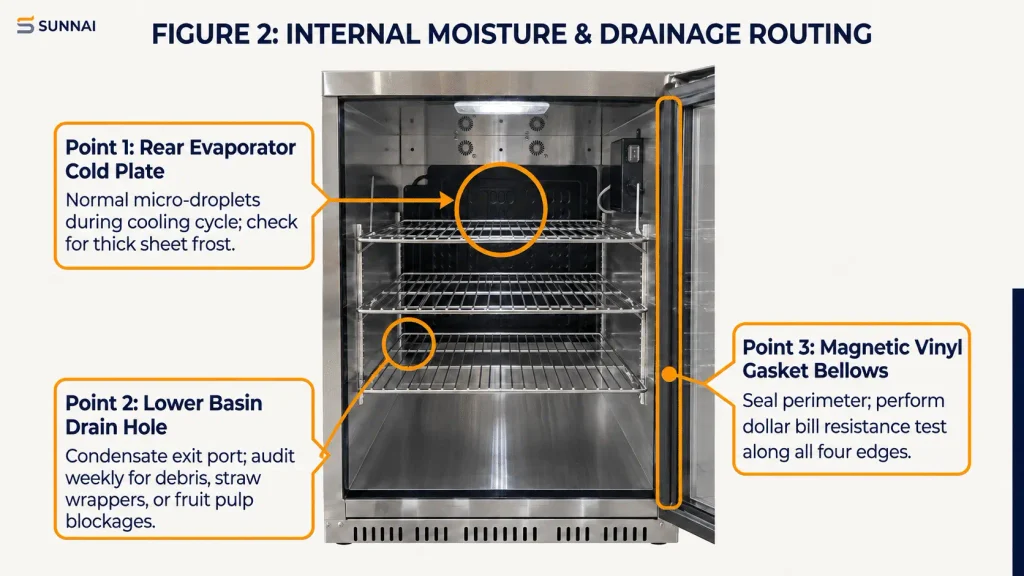
It’s vital to be able to tell the difference between the moisture that gets in during the active period of bar restocking and the internal sweating that continues to occur during the closed door, steady state overnight operation. Symptoms of moisture should be caracterizada in terms of physical state (fine mist on the glass, heavy droplets dropping from the evaporator shroud, sheet frost on the back plate, standing water on the bottom of the cabinet, etc.
Frost build-up is generally an indicator of poor convective air movement or a blocked defrost drain line backing up into the basin. Overstocking the cans against the internal cold air discharge grilles will obviously disrupt the convective currents and create cold pockets. Applying Sub-Zero’s general refrigeration baseline of internal vapor equilibrium, an undisturbed commercial cooling chamber will have positive vapor containment, and any overnight build-up of moisture is a clear indication that warm air is actually getting in at the perímetro sello.
1.3 Surface Condensation, Standing Water and Leakage Need Different Responses
Eficaz diagnóstico is all about the fundamentals of physical distinction. Condensation is water going from a gas to a liquid. Pooling is where the liquid ends up. Leakage is where the water gets in from the outside. Before you jump to the conclusion that an appliance is faulty, you must always rule out any secondary source of water. Spilled drinks, a melted ice bucket, patio hose spray, rainwater running down an awning, etc.Water sitting at the bottom of the cabinet is often due to a bloqueado drain hole (typically blocked by bits of debris, fruit garnish, or sediment) which is preventing the condensate from getting to the rear evaporation pan. It’s important to note that a plumbing fault will give you a localized continuous leak irrespective of the humidity. Condensation, on the other hand, will vary directly with the level of humidity.
Diagnostic Comparison Table: Moisture Manifestations
2. Connect Recurring Moisture to Operating Conditions
2.1 Humidity and Temperature Changes Around Outdoor Service Areas
Relative humidity on its own is not the determining factor in condensación risk. The surface temperature (determined by the insulation and airflow) is equally important. Open-air pool bars and coastal hotel terraces will have their own little microclimates in the splash zones, with the misting systems and the heat of cooking all having a significant effect on the local dew point.
When warm and wet outside air touches a thermal boundary colder than its dew point temperature, the moisture must condense into liquid droplets. Standard operating environments (e.g., Climate Class SN-T from 16°C to 43°C) suggest that the higher the ambient air temperature, the longer the cooling cycle and the more chilled the outside skin. Educational research has shown that a gentle, dry air movement will break up the boundary layer and prevent the surface from dropping below its dew point, thus preventing térmico shock from radiant solar gain heating the outer frames.
2.2 Frequent Door Openings and Restocking Practices
Repeated rapid door opening during peak hotel service results in huge successive volumes of hot, humid outdoor air being sucked into the chilled cabinet. The cold, dense air immediately comes out of the bottom of the cabinet and pulls the humid ambient air in across the upper door sill, resulting in the warm bottles being rapidly coated in humedad.
Organized batch restocking routines dramatically reduce total open door time and reduce the amount of moisture ingested as compared to the haphazard retrieval of individual bottles. Wet beverage cans loaded directly from the melting ice coolers also add a significant liquid load which will eventually pool in the fridge. Having speed rails and under-bar staging wells outside the main cooler during peak volume will proteger the internal beverage coolers from the constant cycle of disruption and vapor trapping.
2.3 Door Closure, Gasket Condition and Localized Moisture
Mechanical closure obstructions (mislaid bottles, shelves that are too far forward, dirt in the hinge mechanisms, etc.) will, of course, prevent full closure and create a continuous micro-gap. Outdoor UV, grease, and temperature cycling will dry out the flexible magnetic door gaskets and break their airtight seal. Moisture beading in one particular location (one side, the top corner, the hinge rail) is a good indicator of a localized seal el fracaso rather than just general ambient humidity.
The non-invasive dollar bill test is the way to go here: just insert a dollar bill between the gasket and the cabinet frame. If it pulls out easily with no real resistance, then cold air is definitely coming out. Sagging hinge pins and cracked door closure cams will evitar the door from closing properly and will result in the door rebounding slightly ajar.
3. Prevent Condensation Through Installation and Daily Operation
3.1 Follow Installation Clearance Guidelines
Follow the manufacturer’s clearance guidelines completely. For a practical planning checklist, review the outdoor refrigerator installation guide covering ventilation, cutout size and door clearance. Units with front-venting louvers must have a clear intake and exhaust path underneath the door. Restricting the bottom front louvers means the condenser heat gets trapped in the island cavity, which in turn leads to increased internal compressor run times, over-chilling of the cabinet edges, and significant sweating. The unit must be installed with a slight backward pitch (1-2 degrees) so that gravity can assist in the door closing and the condensate can run freely to the rear drain trough. Outdoor refrigerators must be hubicada well clear of:
- Jardín Aspersor Arco
- Techo Goteo Líneas
- Directo Luz del sol
- Heat Radiating From An Outdoor Barbacoa
- Seal or Caulk on Bottom of Front Kick Placa
3.2 Build Moisture Checks into the Beverage-Service Routine
Require the bar staff to do their opening shift inspecciones to ensure zero perimeter sweat, clean door sills, and that the internal drainage troughs are dry prior to loading stock. Have the high turnover beers and mixers positioned on the front row of shelving to minimize the time taken to retrieve them when the doors are opened during peak service. Mandate immediate internal spill containment to prevent the build-up of sticky sugary residues which will attract dirt, clog the internal drain holes and eventually destroy the door gaskets.
The shift change procedures must include a visual check of the gaskets and confirmation of perimeter closure. Use soft microfibres to dry the external stainless steel and glass during the humid periods, as the sitting moisture will lead to corrosion of the finishes and staining of the stone tops. Enforce a ‘close on turn’ culture throughout the bar staff.
3.3 Outdoor Beverage Cooler Specification Checks: SUNNAI SY-51
When a hospitality buyer is specifying an undercounter outdoor beverage cooler, the SUNNAI SY-51 product page is a very good example of a specification review sheet for a commercial buyer. The technical specification sheet has to be cross-referenced against the descriptive marketing copy very carefully indeed before you go ahead and specify. For example, you have to be absolutely certain that any reference to an ‘insulated glass door’ in the marketing copy is in fact consistent with the door and glass as specified in the technical table.
At site handover you must formally record the door construction, the gasket seal as seen and the condensation control equipment that is in fact present. You must not assume that there is heated glass, a special gasket construction or that the door will be condensation free unless this is expressly stated in the manufacturer’s technical data. “Outdoor rated” or IPX4 will guarantee protection of the electrical parts against the weather but will not in any way guarantee that there will be no surface condensation in a coastal climate.
4. Troubleshoot Systematically and Prepare a Useful Service Request
4.1 Locate, Dry, Observe and Record
Begin troubleshooting by capturing clear, well-lit baseline buenas fotos showing the exact moisture location before wiping:
- Cara de la puerta
- Bisagra superior
- Lower Gasket Seal
- Interior Back Wall
- Floor Basin
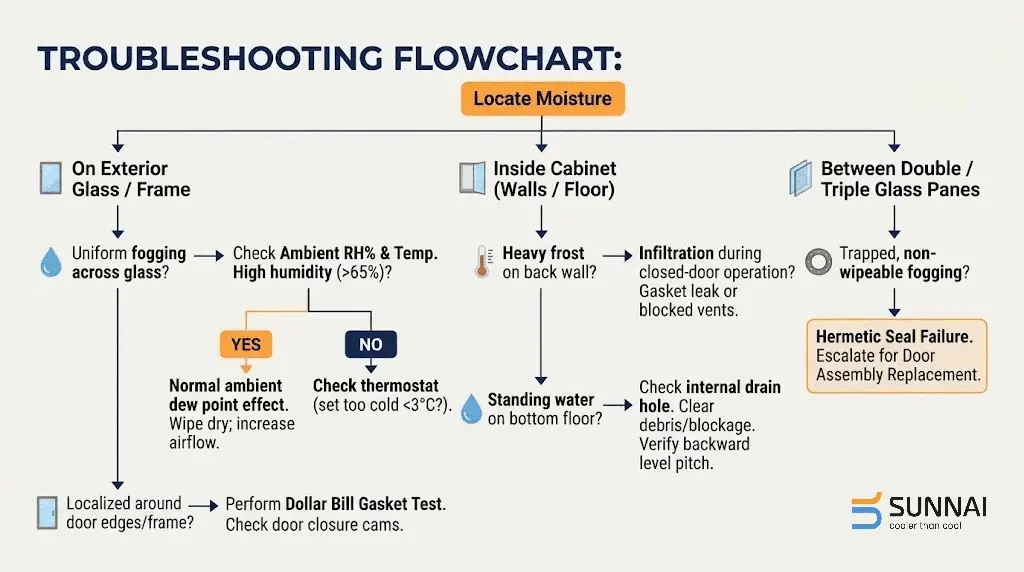
Next, dry all accessible glass, frame, and interior surfaces thoroughly using clean, lint-free towels. Record the ambient dry-bulb temperature, outdoor humidity (via digital hygrometer), service hours, and the last restock. Note how quickly moisture re-accumulates under these ambient conditions. If moisture beads return uniformly across the whole glass face during a humid front, then you are at ambient saturation. If it blooms along one edge, then you have a seal gap. Diagnostics are to be limited to visual inspection only; no disassembly of the factory-sealed internal assemblies.
4.2 Follow the Branch That Matches the Symptom
Symptom Branch A (Exterior Glass Fogging)
If surface mist forms on the exterior glass in high humidity, then check ambient airflow, clean the glass, don’t set the internal temperature too low (below 3-4°C), and make sure the door is cierre correctamente.
Symptom Branch B (Localized Frame Sweating)
If sweating is restricted to the perimeter frame, then check for door gasket deformation, misalignment, or fracasado door closure cams.
Symptom Branch C (Standing Water on Interior Floor)
Check the internal drain trough for any blockage from labels that have fallen in or general debris, and make sure the cabinet hasn’t inclinado hacia adelante.
Symptom Branch D (Water Puddling Beneath Chassis)
Check the external drain hoses, make sure the rear condensate evaporation tray is properly seated and that rainwater isn’t correr off the back of the unit.
4.3 Escalate Persistent or Unexplained Water Problems
Escalate to professional authorized service if moisture is continually pooling under the chassis, the gaskets are visibly torn or warped, or fogging is permanently trapped in the glass. Pass on to the manufacturer only the verified physical observations. Provide a full TRANSPORTE GRATUITO dossier which includes the model number, serial rating plate, photos, temperature and humidity logs, and notes of all non-invasive checks that have been carried out. In case of inadequate cooling refer to the article “¿Tu nevera exterior no enfría? Explicación de la temperatura ambiente, el espacio libre y la ventilación.” for troubleshooting.
Any suspected insulation voids should be reported if heavy condensation is consistently forming on one particular opaque external wall. Don’t let unqualified people go in and investigate the internal wiring or open up the sealed refrigeration lines. The more detailed your operational logs, the better, as they will significantly reduce your response times and allow you to despachar the correct replacement assemblies on the first visit.
Conclusión
Outdoor condensation management requires a disciplined sequence of actions: you need to isolate the exact moisture pattern, correlate that with the local ambient psychrometrics, enforce a strict set of bar operating procedures, and then escalate any mechanical failure in a methodical way. Clear equipment specifications, a disciplined approach to cleaning, and a well-maintained log of all maintenance will protect the hospitality investment and mantener the high standards of beverage presentation.
For commercial hospitality operators, luxury outdoor kitchen builders, and global distributors looking for reliable performance, SUNNAI provides precision-engineered refrigeración exterior solutions. The units are built to a high specification with heavy-gauge 304 stainless steel cabinets, front-vented heat exchangers, and are climate-tested to the highest standard. SUNNAI outdoor beverage coolers and refrigerators are built to last in the most exigente of commercial environments. See the full OEM/ODM range and request engineering specs at www.cnsunnai.com.
Preguntas Frecuentes
Can a damaged door gasket cause condensation?
Yes. If the gasket is torn, badly worn, or not lined up right, cold air will leave and warm, moist air will come in. This will cause pesado condensation along the door sill and the back interior walls.
Does lowering the temperature make the condensation worse?
Yes. Reducing the internal temperature will drop the glass and cabinet frame temperatures even further below the dew point of the ambient air, and that will dramatically increase both the rate and the density of condensation.
Can insulated or heated glass stop all condensation?
No. Insulated double glazing will reduce the conductive heat transfer, and the heated glass will, of course, evaporate the surface moisture. However, if the outdoor humidity is extremely high (above 80% RH), it can still be above the thermal design of the glass.
What does moisture between the glass panes mean?
Moisture, fogging, or mineral droplets trapped between the sealed glass panes is an indication of a comprometida hermetic seal and a saturated desiccant spacer that cannot be cleaned, and the door assembly will need replacing.
When should persistent condensation be checked by a technician?
Contact a technician if water pools continuously under the unit, moisture appears inside the insulated walls, the cabinet fails to hold temperature, or the door seal remains sin asiento despues de limpiar.