Introduction: A Restaurant Wine Cooler Is Part of the Service Workflow
Having both red and white wines on your menu doesn’t always mean you’ll require a dual Zone Wine Cooler. You need to think about the practicalities of your 포도주 냉각기. How much storage do you have? What are you storing? How fast are you turning over bottles? How far are staff having to walk? Often it will come down to what you need to store and what you need to serve. A dual zone cooler may be required behind your bar and a tall storage cabinet may be required for your reserve stock. This article will help you decide what you need when choosing a wine cooler for your restaurant, bar, hotel or hospitality.
1. Single-Zone vs. Dual-Zone Wine Coolers: What Actually Changes in Restaurant Use?
What Does a Single-Zone Wine Cooler Do?
One Consistent Temperature Across the Cabinet
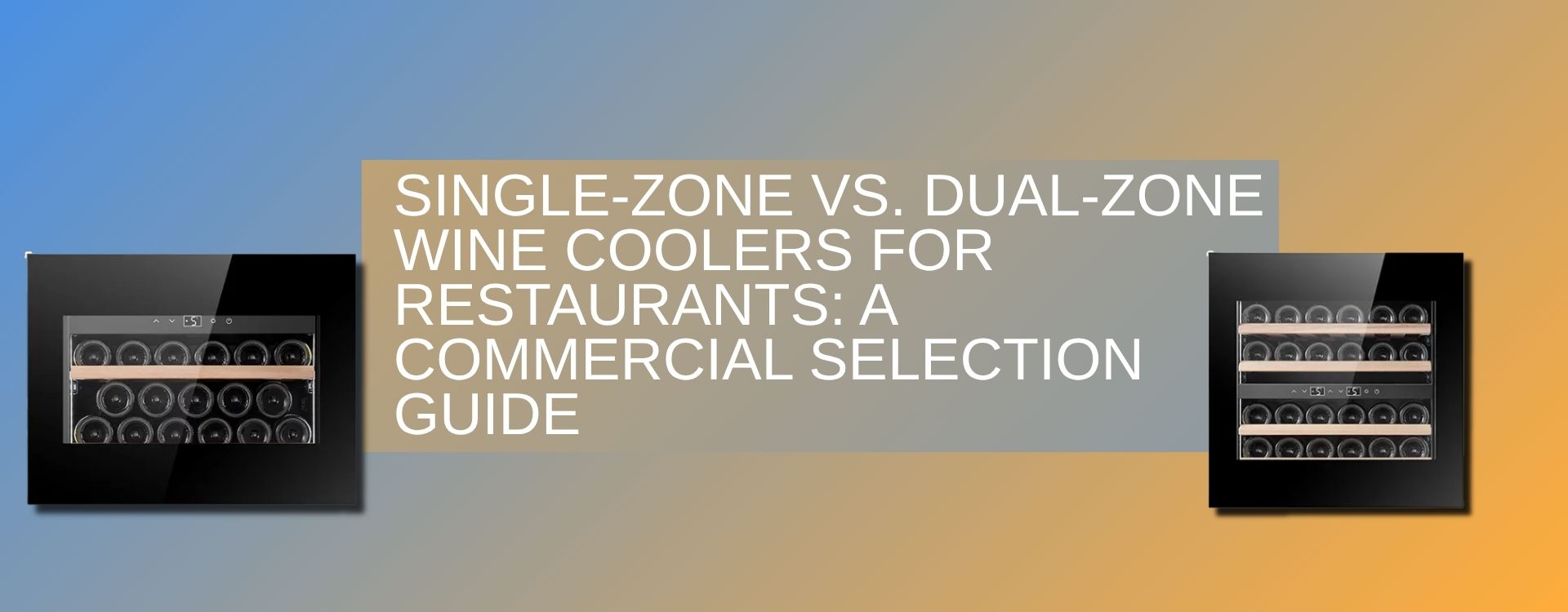
A single Zone Wine Cooler will have one temperature throughout the entire cabinet. This makes it useful for storing your reserve wines as the final serving temperatures are controlled elsewhere. It will have one temperature to monitor and can be organised to suit your stock.
Better Suited to Centralized Wine Storage
Simpler Temperature Management
What Does a Dual-Zone Wine Cooler Change?
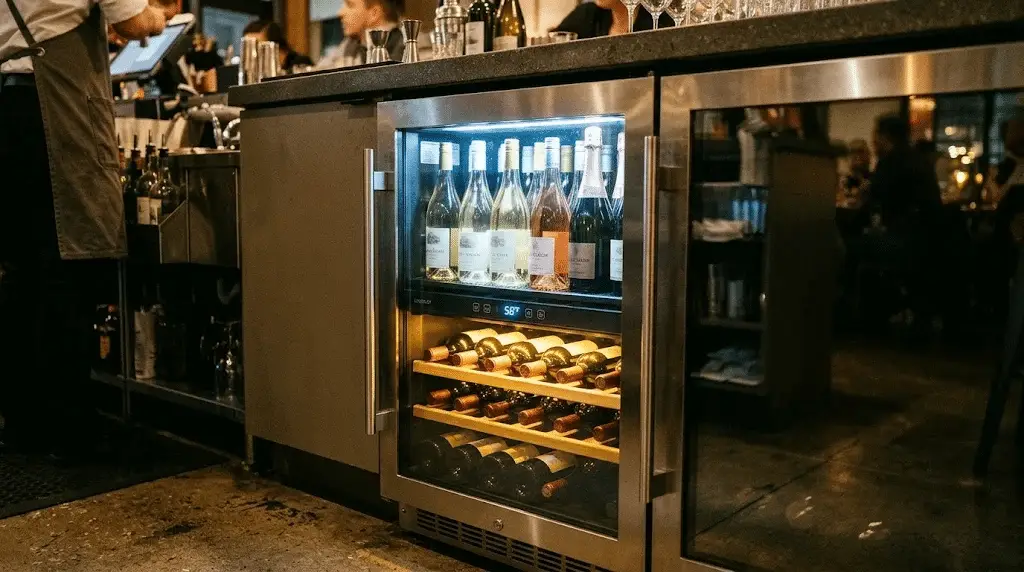
Two Temperature Areas in One Cabinet
A dual Zone Wine Cooler will have two storage areas with different temperatures. Having a dual zone closer to your service area can help keep your sparkling and white wines cooler whilst also providing storage for your reds at a temperature closer to what they would be served at. The amount of storage space, controls and how you can use the space will be dependant on the model.
Greater Flexibility Near the Point of Service
This can be useful for your menu. Different wines will need to be served at different temperatures. For example, WSET mentions that fuller bodied whites should be served slightly chilled, and many reds are served warmer than whites and sparkling.
The Trade-Off Is Not Just Purchase Price
A dual zone may not give you as much storage space or be difficult to use. If one side is going to be mostly empty then you aren’t getting much benefit from the extra complexity. Think about how much usable space there is, how the shelves are arranged, how easy it is to access and how it will fit into your staff workflow.
2. Choose the Temperature-Zone Strategy Around Your Restaurant Wine Program
Start With the Structure of the Wine List
Restaurants With a Focused Wine Selection
If you have a steakhouse and a strong red wine menu then having one single zone for your reserve stock and a smaller cooler for your whites can be useful. However if you have a wide range of wines to serve by the glass then you may need a dual zone cooler. This can help you reduce the number of times you have to grab your red, white, rose and sparkling wines as they are all moving through during the same shift.
Restaurants With Diverse By-the-Glass Programs
Seasonal Wine Lists Change the Equation
If you have seasonal menus then you may need a dual zone. You may have more demand for chilled wines during the summer. Don’t forget to plan for busy periods. A temperature zone won’t solve any issues you may have with your stock plan but having easy access can help with a fast moving menu.
Separate Wine Storage Temperature From Serving Temperature
Long-Term Storage Prioritizes Stability
Having a storage cabinet for your reserve stock and a cooler for serving is two completely different things. WSET mention that you should store your wines between 10-15 degrees for long term storage. However, different wines will be served at different temperatures. The Australian Wine Research Institute mention that wines can be affected by long periods of heat and large temperature changes. If you are storing reserve stock then this should be something to consider. However, if you are using a cooler for serving tonight’s wines then you should plan with the serving temperatures in mind.
Service Refrigeration Has a Different Goal
Restaurants May Need Both Functions
Some restaurants will require both. A larger storage cabinet for reserve stock and a smaller cooler for serving.
Bottle Turnover and Service Volume Matter
Fast-Moving Wine Programs
Fast moving wines should be easy to find. You may not be concerned about the long term storage conditions as you will be topping up the bottles. Premium or reserve wines will require more consideration to the stability of the environment. If you have banquets or events then you will want to size your system to meet peak demand. Weddings can be very busy and you may run out of stock quickly. Average Tuesday sales won’t give you an accurate idea of what you need.
Premium and Reserve Lists
Banquets and Events
3. When Single-Zone Wine Coolers Make More Sense for Restaurants
Large-Capacity Back-of-House Wine Storage
Consolidating Reserve Inventory
Having one large cabinet can help you to store your reserve stock. It can make it easier to label, count and top up. You can store your bulk stock in one place and only move the amount you need for the shift to your front of house fridges. If you are controlling your serving temperatures separately then having multiple zones in your reserve cabinet may not be beneficial.
Prioritizing Capacity Over Multiple Service Zones
Matching Refrigeration to Inventory Flow
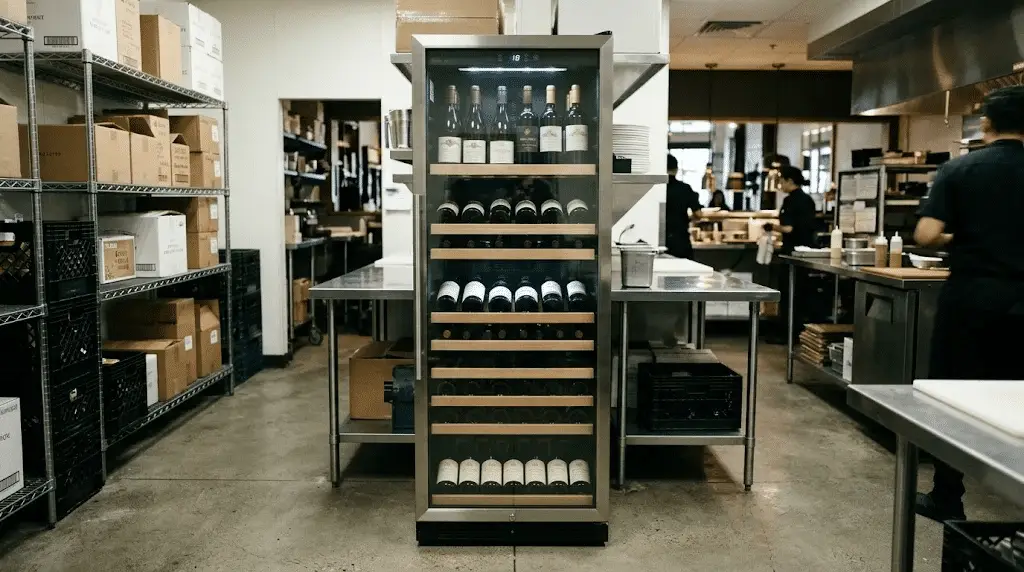
SUNNAI SW-300 Single-Zone Wine Cooler for Restaurant and Hospitality Projects
A 300-Bottle-Class Solution for High-Volume Wine Programs
This is a great example of a single-zone wine cooler. If you have a large amount of reserve stock in your restaurant or hotel then you can have one large standalone compressor. The product page mentions it is a 300 bottle class cooler with a loading capacity of 315. This is just a guide. The actual amount of bottles you can fit will depend on the shape of your bottles and how they are arranged on the shelves.
Single-Zone Temperature Control for Stable Reserve Storage
It has a temperature range of 5-20 degrees so will be useful for your reserve stock. The page also mentions it has a large capacity of 680 litres, 11 beechwood shelves, low vibration cooling and insulated glass to reduce condensation. However it won’t replace your serving cooler as it won’t have multiple zones to store different styles of wine.
Features Relevant to Commercial Buyers
This is a standalone unit. It is 800mm wide x 716mm deep x 1995mm high (excluding handle). It has rear vents. Make sure you have enough space on the floor, access for delivery, enough space for ventilation and easy access for your staff. SUNNAI also mention it has OEM options. This means you can brand it, have a specific handle and internal layout. This is something to consider if you have a restaurant group, hotel or customised installation. It has many approvals including NRTL, CE, CB, GS, RoHS, ErP. Ask your supplier for the relevant documentation for your exact model and market.
When a Single-Zone Cooler May Not Be Enough
Extensive By-the-Glass Programs
If you have a wide range of wines to serve by the glass then you may need different serving temperatures. If you have a small restaurant then you may not have enough floor space for a tall cabinet. A single zone cooler won’t have two areas with different set points. If you expect one unit to handle your reserve stock and all your serving needs then your staff workflow will show this isn’t the right choice.
Limited Back-of-House Space
Restaurants Expecting One Unit to Handle Every Task
4. Single-Zone, Dual-Zone, or a Multi-Unit System: How Restaurants Should Decide
Scenario 1 — Steakhouse or Fine-Dining Restaurant
와인 프로필
Recommended Configuration Logic
Often, if you have a menu full of reds and precious reserve stock then you will want a large single zone cooler. You can have a smaller cooler for your whites.
Scenario 2 — Wine Bar or Restaurant With a Broad By-the-Glass List
와인 프로필
Recommended Configuration Logic
If you are frequently serving a range of wines then having easy access to your serving cooler is key. A dual zone closer to your service area may help. You can still have your reserve stock in separate storage.
Scenario 3 — Hotel, Banquet Venue, or Restaurant Group
와인 프로필
Recommended Configuration Logic
You may have different demands depending on the outlet, event and day. You can have a central reserve cooler with smaller coolers for your staff. If you have events then size your system to meet peak demand.
A Restaurant Wine Cooler Buying Checklist
와인 프로그램
Wine Menu How many SKUs do you have? How many red, white, rose, sparkling and reserve bottles?
행정부
Operations How much turnover do you have? How much do you serve at peak? How are you topping up? How easy is it for staff to access?
Equipment and Supplier
Equipment How much usable space? How many zones? How are the shelves laid out? How well ventilated? How big is it? What type of installation?
Supplier/Project What certification documents can your wine cooler manufacturer provide? Can it be customised? What is the manufacturing capacity? Are spare parts available? What after sales support is available?
Conclusion: The Best Wine Cooler Is the One That Matches the Restaurant’s Workflow
The best wine cooler will be the one that fits your workflow. A dual zone can be useful if you need different wines to be closer to their serving temperature in one unit. However, often a single zone will be the easiest option for your central reserve stock. Larger hospitality projects may require both. A high capacity storage unit and smaller serving coolers. Define your wine menu, turnover, peak demand, layout and supplier requirements before purchasing.
FAQ
Is a single-zone or dual-zone wine cooler better for a restaurant wine list?
It depends on your needs. If you need different serving temperatures in one unit then a dual zone would be best. If you are mainly using it for your reserve stock then a single zone would be best.
How many bottles should a restaurant wine cooler hold?
Your capacity should be based on your actual wine menu. How much reserve stock do you have? How often are you topping up? How much do you serve at peak? Make sure the amount of bottles mentioned will work with your bottle sizes.
Should restaurants use separate wine coolers for storage and service?
Often yes. It can make more sense to have a reserve cabinet and a smaller cooler.
What features should restaurants look for in a commercial wine cooler?
Look for usable space, temperature control, shelving, ventilation, size, type of installation, easy access for serving. Make sure it fits with your room and workflow.
Is a 300-bottle wine cooler suitable for restaurants and hotels?
It can be if you have a large amount of reserve stock. However, it may be overkill for a small venue or tight back of house. Make sure the amount of bottles you can fit will work with your delivery and floor space.